
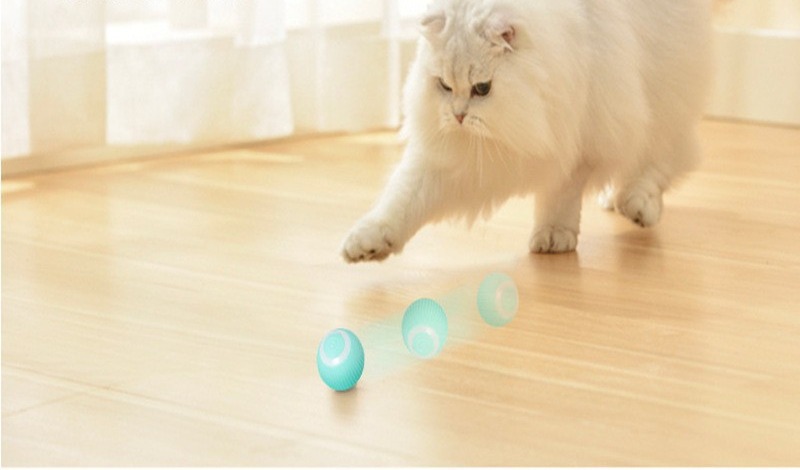
Building a pet brand on someone else’s label has a ceiling. You sell the same toys, feeders, and grooming tools as every other shop, compete on price, and own nothing when the supplier changes terms. Private label pet products remove that ceiling: you take a proven product from an experienced manufacturer, put your brand on it, and sell it as your own. This guide covers the full process – definitions, MOQs, costs, packaging rules, supplier vetting, and margins.
Pet products are a strong private label category: high repeat purchase rates and buyers who spend on perceived quality. Kitchen gadgets are another proven option – see our bulk kitchen gadgets playbook for that side. Below, we focus on pets.
Private Label vs. White Label: Definitions That Matter
The terms get mixed up constantly, and the difference belongs in your contract.
White label means the product is fully standardized. The manufacturer makes one version and multiple buyers put their logos on it. You cannot change the material, size, or features. Turnaround is fast because nothing is engineered for you.
Private label means the product is made or modified for your brand exclusively: custom packaging at minimum, custom colors and features in the middle tier, and full custom development (OEM/ODM) at the top, with the supplier agreeing not to sell your configuration to competitors.
The practical starting point for most pet brands is a hybrid: take a proven product, add your branding and packaging, plus one or two modifications – a different grip on a grooming brush, a wider size range on a harness. Speed plus differentiation, without ground-up engineering costs.
Private Label vs. White Label vs. Dropshipping Compared
| Factor | Private Label | White Label | Dropshipping |
|---|---|---|---|
| Upfront cost | Medium-high: customization plus MOQ inventory, typically $2,000-$20,000 for a first run | Low-medium: logo and packaging fees plus MOQ, typically $500-$5,000 | Near zero: no inventory, pay per order |
| Branding control | Full: your logo, packaging, specs, exclusivity on your configuration | Partial: your logo on a shared product competitors can also sell | None: supplier’s product in supplier’s packaging |
| Margin | Highest: 50-70% gross margin is realistic on accessories | Medium: 35-55%, compressed when rivals sell the identical item | Lowest: 15-30% per order after costs |
| Speed to market | Slowest: 6-12 weeks for customized runs | Fast: 2-4 weeks from catalog selection | Instant: list today, sell tomorrow |
Dropshipping tests demand, white label builds a brand fast on a budget, and private label is where a real brand business gets built. Many pet brands start white label to validate SKUs, then convert best sellers to private label once volume justifies it.
The Private Label Process, Step by Step
- Product selection (week 1). Pick 3-5 SKUs with strong demand and low return rates: silicone slow feeders, nylon harnesses, grooming brushes, interactive toys. Avoid battery-powered products for a first run.
- Quotation (weeks 1-2). Define modifications precisely – colors, dimensions, materials, logo placement. Get a written quote breaking out unit price, tooling, packaging, and freight separately.
- Sampling (weeks 2-4). Budget for 2-3 sample rounds; the first rarely matches spec. Test samples the way customers will use them: wash the harness, chew-test the toy, run the feeder through a dishwasher.
- Packaging approval (weeks 3-5). Finalize dielines, barcodes, and compliance markings in parallel with sampling to save time.
- Production and freight (weeks 5-12). Typically 20-35 days in production; add 25-40 days for sea freight or 5-8 days for air. Agree on an inspection standard (AQL 2.5 is the industry default) and book a third-party inspection for orders over $10,000.
MOQs and Real Costs: What to Budget
White label with custom packaging typically requires 300-1,000 units per SKU. Private label with minor modifications runs 1,000-3,000 units per SKU. Full OEM development starts at 3,000-10,000 units, since the supplier must amortize tooling.
A realistic first-run budget for 3 SKUs at private label level: product cost $3,000-$8,000, custom packaging $800-$2,000, tooling or mold fees $500-$3,000 (one-time), freight $600-$2,500, inspection $200-$400. Total landed: roughly $5,000-$16,000. Plan around that number, not the per-unit price alone.
Negotiating leverage comes from consolidation, not haggling. Suppliers discount when you combine SKUs into one shipment, commit to repeat orders in writing, or accept standard materials over custom grades. Ask for pricing at three volume tiers and negotiate at the tier you plan to reorder at.
Packaging and Compliance: Pet-Specific Rules
Anything touching food or mouths – bowls, feeders, chew toys – should use food-grade materials (food-grade silicone, BPA-free plastics, 304 stainless steel). Request material test reports from suppliers: FDA or LFGB for food-contact items, RoHS for electronics. Keep them on file; marketplaces and customs can ask.
US products need country of origin, material composition, and care instructions; the EU adds CE marking where applicable and per-market language requirements. Pet treats and consumables face stricter rules – US state feed laws and AAFCO labeling apply – which is why most new brands start with accessories and toys.
Packaging is the cheapest differentiation you can buy. A polybag with a sticker reads generic; a full-color retail box with your brand story and usage instructions reads as a brand. Budget $0.30-$1.50 per unit for upgraded packaging.
Vetting a Manufacturing Partner
Your supplier decision matters more than your product decision. Run this checklist before committing to a production run:
- Verify the factory, not just the trader. Ask for a business license, factory photos or video, and recent export records.
- Check export experience in your market. A supplier already shipping pet products to the US or EU understands compliance documentation and labeling standards.
- Test communication discipline. Slow, vague replies during sales become slow, vague replies when your production run has a problem.
- Get everything in writing. Unit price, MOQ, lead time, payment terms (30% deposit / 70% before shipment is standard), defect policy, and exclusivity on your configuration.
- Start with a test order. A 500-unit run reveals quality consistency and logistics reliability before you commit real capital.
A supplier with an established wholesale program shortens this process. The Skyrocs wholesale program supports private label and custom packaging on pet products, with MOQs sized for first production runs. For the distributor-side math, see our pet products distributor guide.
Launch Checklist: From First Sample to First Sale
- Confirm the final sample matches every spec: dimensions, colors, materials, logo, packaging.
- Approve packaging artwork with registered barcodes (GS1 for retail, marketplace-assigned codes for online-only).
- Place the order with written terms: price, quantity, lead time, inspection standard, payment schedule.
- Confirm Incoterms in writing (FOB vs. DDP changes who handles customs and duties).
- Book a pre-shipment inspection for orders over $10,000.
- Prepare listings while goods are in transit: photos of the actual product (not renders), benefit-led copy, your brand story.
- Price on full landed cost, not factory price: unit cost + freight + duties + packaging + platform fees. Target 50%+ gross margin on accessories.
- Launch with 2-4 weeks of safety stock and a reorder trigger at 60 days of cover, given 8-12 week lead times.
Private label rewards patience: sample properly, write everything down, and launch with solid margins instead of racing to the lowest price. If you are weighing categories, the bulk kitchen gadgets playbook is a useful companion read – and when you are ready to talk production, the Skyrocs wholesale program can quote your first run.
Frequently Asked Questions
What is the minimum order quantity for private label pet products?
Expect 1,000-3,000 units per SKU for private label with custom packaging and minor modifications. White label with only your logo needs 300-1,000 units. Many suppliers will lower the first-run MOQ if you commit to a larger reorder in writing.
How long does private label production take?
Budget 8-12 weeks from approved sample to delivered goods: 3-5 weeks production, 1-2 weeks inspection and packing, 3-5 weeks sea freight. Air freight cuts shipping to under a week at roughly 5-8x the cost.
How much does it cost to private label a pet product?
A first run of 3 SKUs costs roughly $5,000-$16,000 landed, covering product, packaging, one-time tooling, freight, and inspection. Per-unit costs typically land 20-40% below comparable branded retail prices, which is where the margin comes from.
Do I need my own packaging design, or can the supplier provide it?
Most suppliers offer standard templates you can brand with your logo – the fastest route. For stronger shelf presence, hire a designer for custom retail packaging ($200-$800 per SKU for dieline-ready artwork). Either way, confirm dielines and print proofs before mass production.
Can I private label pet treats, or only accessories?
Both, but consumables carry heavier regulation: US state feed laws and AAFCO labeling, plus EU feed hygiene rules. Most new brands start with accessories and toys under standard consumer-goods compliance, and add consumables once cash flow is established.
How do I protect my brand when manufacturing overseas?
Register your trademark in your sales market before production. Get a written exclusivity clause covering your specific product configuration, not just your logo. Where possible, split suppliers – one factory for the product, a separate source for packaging – so no single partner holds your complete brand asset.
Pingback: White Label Kitchen Gadgets: Your Brand in 30 Days