
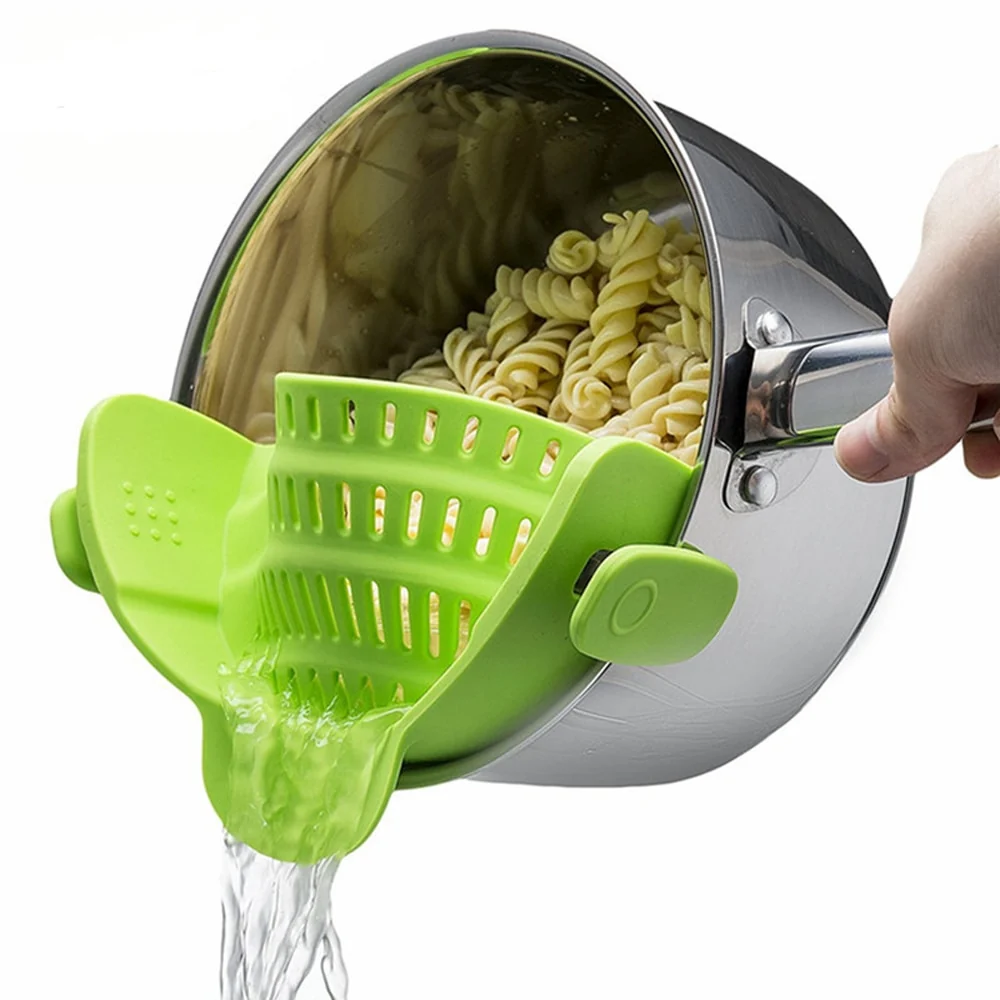
White Label vs Private Label: What Changes for Kitchen Gadgets
Private label means a product built to your specification: unique molds, custom colors, proprietary features. It takes longer, costs more up front, and needs higher volumes before a factory starts a run.
White label means you take an existing, proven product from a supplier catalog and sell it under your own brand. The product already exists, so your effort goes into branding, packaging, and marketing instead of product development. For kitchen gadgets this is a sweet spot: the category is full of mature, well-tested items that sell steadily year after year.
In short: private label is building your own product, white label is putting your brand on a product that already works. For a first kitchen brand, white label is the faster, safer starting point.
Why Kitchen Gadgets Are Ideal for White Label
First, demand is stable. Kitchen tools sell through search traffic, video demos, and gift buying every single year.
Second, the products are compact and light, so shipping costs per unit stay low and protect your margin even at modest volumes.
Third, kitchen gadgets demo well on video: a 15-second clip of a better peeler can do more for sales than any ad copy.
Fourth, the supply base is deep: these items are already made at scale, so you can order samples fast and compare quality side by side.
If you want the full from-scratch approach, our private label pet products guide covers that side of the decision.
The 30-Day Launch Timeline
Thirty days works if you move in parallel instead of waiting for each step to finish.
Days 1-7: Pick Products and Order Samples
Choose 3 to 5 candidate gadgets from a supplier catalog and order samples of each. While they ship, study competitors: read negative reviews on similar listings and build your branding and listing to answer those complaints. Lock your brand name and a simple logo this week too.
Days 8-14: Test, Decide, and Design Packaging
Use the samples the way a real customer would: peel with them, wash them, drop one. Pick your winning 2 to 3 products. In parallel, finalize packaging design. Most suppliers accept your artwork by day 14 without delay, since the product itself needs no changes.
Days 15-21: Production and Quality Control
The supplier runs your branded batch. A basic quality check is non-negotiable: confirm packaging print quality, check that every unit works, and spot-check a random carton. Ask for photos or video from the packing line if you cannot be there in person.
Days 22-30: Freight, Listing, and Launch
Goods ship while you build your listings: photos, bullet points, and a demo video. Go live within a day or two of inventory arriving. Day 30 is launch day, not “start thinking about listings” day.
What It Costs: A Realistic Budget Breakdown
A typical first batch budget:
- Samples (5 gadgets with shipping): 120 to 200 dollars
- Packaging design (freelancer): 150 to 400 dollars
- Packaging surcharge (stickers or sleeves): 0.30 to 0.80 dollars per unit
- First inventory (300 units at around 5 dollars): about 1,500 dollars
- Freight to your warehouse: 300 to 800 dollars depending on the route
- Listing assets (photos, short demo video): 200 to 500 dollars if outsourced
A two-product launch typically lands between 3,000 and 5,000 dollars, while a single private label mold alone can cost more than that before you buy one unit.
Packaging Options: Sticker and Sleeve vs Custom Box
Packaging is where your white label product stops looking generic.
Sticker or sleeve on standard packaging. The fast option. The supplier uses their standard polybag or kraft box and applies your branded sticker, sleeve, or hang tag. Minimal setup cost, fast turnaround, and the right call while you are still validating products. The trade-off is a basic unboxing experience.
Custom printed box. Printed with your brand colors, logo, and selling points. It costs more and adds a few days for printing, but the product feels like a real brand from the first touch. For kitchen gadgets, a clean box with one clear demo image on the front usually beats a text-heavy design.
Start with stickers or sleeves for the first batch, then move winners to custom boxes on reorder.
MOQ Thresholds: How Low Can You Start
Low minimums are a core white label advantage: the factory already makes the product at scale, so your branded batch folds into existing production.
- Stickers or sleeves on standard packaging: 200 to 500 units per SKU
- Custom printed box: 500 to 1,000 units per SKU
- Custom color on the product itself: 1,000 to 3,000 units per SKU
If a supplier quotes 5,000 units as the minimum for a plain white label run with your sticker, keep looking. Plenty of suppliers serve the 300-unit level, which is where the Skyrocs wholesale program aims its support for first-time brand builders.
Start with the smallest MOQ that gets decent unit pricing, then reorder bigger once sales data shows which products earn it.
Margin Math: A Worked Example
Numbers decide whether a product is worth launching. Here is the full margin math for a white label vegetable chopper.
Assumptions for a 300-unit first batch:
- Unit product cost: 4.80 dollars
- Packaging surcharge (branded sleeve): 0.55 dollars per unit
- Per-unit freight to your warehouse: 1.10 dollars
- Landed cost per unit: 6.45 dollars
- Retail selling price: 24.99 dollars
- Platform and payment fees (about 15 percent): 3.75 dollars per unit
- Outbound shipping to the customer: 3.20 dollars per unit
Total cost per unit sold: 6.45 + 3.75 + 3.20 = 13.40 dollars.
Net profit per unit: 24.99 – 13.40 = 11.59 dollars, a net margin of about 46 percent.
On a 300-unit batch that is roughly 3,477 dollars in profit against about 1,935 dollars in landed inventory cost. Run this math on every candidate before ordering. If a gadget cannot clear 30 percent net margin at your realistic selling price, it does not earn a launch slot.
Compliance Basics for Kitchen Products
Kitchen gadgets touch food, so compliance is not optional. Getting this wrong can mean seized shipments or forced recalls.
In the US, materials touching food must meet the relevant FDA food-contact regulations. Products aimed at children, like kids’ cutlery, also fall under CPSIA testing. California’s Proposition 65 requires warnings for listed substances, worth checking on anything with printed inks or soft plastic parts.
For the EU and UK, the framework is Regulation (EC) 1935/2004 on food-contact materials, and Germany’s LFGB standard is commonly requested by EU buyers as extra proof of safety.
Ask your supplier for existing test reports, keep them on file for each SKU, and run your own test on your first batch since you sell under your own brand name. When you use the Skyrocs wholesale program, ask the team which compliance documents are available for each product before you finalize your pick.
Frequently Asked Questions
How is white label different from private label for kitchen gadgets?
White label means selling an existing supplier product under your brand and packaging; private label means the product is designed to your specification. White label launches in about 30 days with lower MOQs and no mold fees, while private label gives exclusivity but takes months and costs far more up front.
What is a typical MOQ for white label kitchen gadgets?
For sticker or sleeve branding on standard packaging, 200 to 500 units per SKU. Custom printed boxes start at 500 to 1,000 units. Custom colors or product changes push the minimum to 1,000 to 3,000 units or more.
How much money do I need to launch a white label kitchen brand?
A two-product first launch usually costs 3,000 to 5,000 dollars all in: samples, packaging design, first inventory of about 300 units per SKU, freight, and listing assets. No mold or tooling fees is what keeps the budget this low.
Can I use my own packaging on white label products?
Yes. Most suppliers accept your sticker, sleeve, or custom box artwork. Stickers and sleeves are cheapest and fastest; custom boxes cost more and take a few extra days but create a far stronger brand impression.
Do white label kitchen gadgets need FDA or other compliance testing?
Any product contacting food must meet the destination market’s food-contact rules: FDA regulations in the US, Regulation (EC) 1935/2004 in the EU, plus extras like LFGB in Germany and Prop 65 in California. Ask your supplier for existing test reports and keep them on file for every SKU under your brand.
How long does a white label kitchen gadget launch really take?
About 30 days from product selection to launch day: one week each for samples and research, testing and packaging design, production and quality control, then freight and listing setup. It holds as long as those tracks run in parallel.
Pingback: Wholesale Kitchen Gadgets Pricing Guide for Retailers