
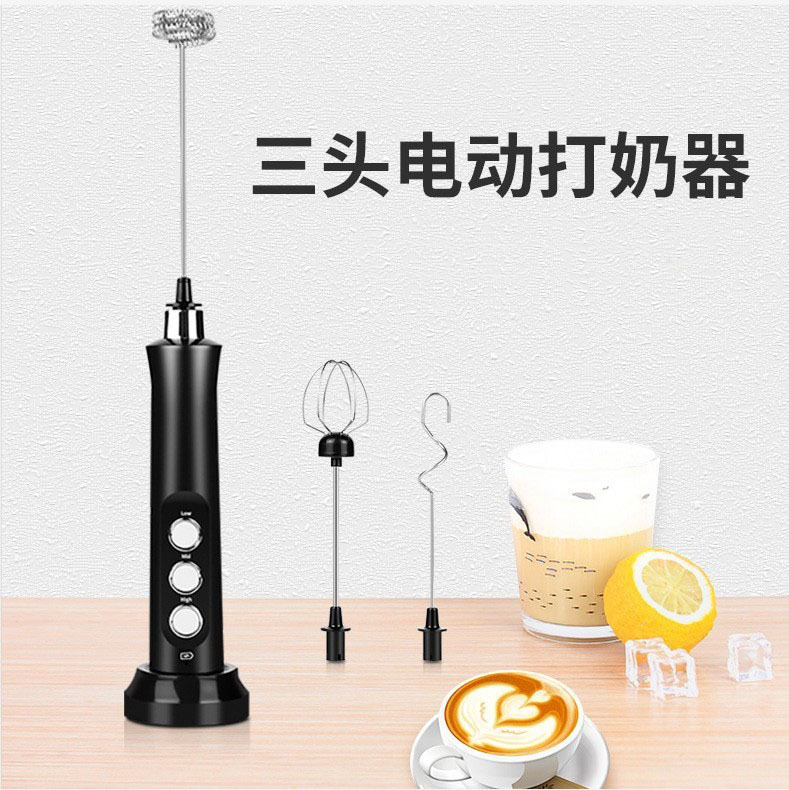
Matcha looks simple: green powder, hot water, a quick stir. But the reality is usually dry lumps floating on the surface, a gritty first sip, and foam that dies before the cup reaches your lips. A rechargeable milk frother for matcha fixes most of these problems in under a minute, no bamboo whisk required. Here is why matcha clumps, the whisking technique that prevents it, the right water temperature, and the foam science behind a cafe-grade cup.
Why Matcha Clumps (and What Foam Has to Do With It)
Matcha is ground finer than flour, often just a few microns per particle. That fineness gives the silky texture, but the tiny particles carry a slight electrostatic charge and stick together. When water hits a clump, the wet outer layer seals dry powder inside, like a dumpling skin around flour. A spoon just pushes the clump around.
Foam is your quality signal. Properly whisked matcha develops a thin layer of fine, jade-green foam, which only forms when the powder is fully dispersed. No foam usually means the matcha is not fully mixed.
Whisking Technique: The W Motion That Prevents Lumps
Tea masters use the bamboo chasen with a rapid zigzag, drawing a W or M across the bowl. The shape matters: a circular stir creates a whirlpool that flings powder to the edges, while the W motion keeps powder in the center of the turbulence and breaks clumps sideways.
With an electric frother, follow the same principle:
- Sift 1 to 2 teaspoons (about 2 to 4 grams) of matcha through a fine mesh strainer into your cup first. This breaks up clumps before water touches them.
- Add 60 to 80 milliliters of warm water to make a thick slurry before adding more liquid.
- Lower the frother head into the liquid before switching it on, then trace a slow W across the cup for 15 to 20 seconds.
- Keep the head just below the surface, or you will redecorate your countertop.
A frother does in seconds what a bamboo whisk takes minutes of wrist work to achieve, at a speed your arm cannot match.
Water Temperature: The Sweet Spot for Smooth Matcha
Temperature controls both dissolving and taste. Boiling water at 100 degrees C (212 F) scorches delicate matcha and makes the cup noticeably more bitter. Water that is too cool barely wets the powder and makes clumping worse.
Aim for 70 to 80 degrees C (160 to 175 F). Without a thermometer: boil the kettle, then let it sit 3 to 5 minutes with the lid off. Use the same range for the slurry in a matcha latte, and warm your milk separately.
Battery vs USB Rechargeable Frothers: What Actually Matters
For matcha, the difference between battery and USB rechargeable frothers is physics, not convenience. Matcha slurry is thicker than milk and needs sustained torque. Battery models start strong but slow as the AAs drain, gradually enough that you may not notice until your foam comes out weak. A USB rechargeable frother runs at full speed until the charge runs low, then tops up from any USB port. Consistent speed means consistent foam, batch after batch.
A daily drinker can burn through AA batteries every couple of weeks, so rechargeable also ends the waste. If the set includes multiple heads, you can dedicate one whisk head to matcha and one spiral head to milk, with no flavor cross-contamination.
Foam Science: Why Matcha Foam Behaves Differently From Milk Foam
Milk foam is stabilized by milk proteins, mainly casein and whey, which form elastic films around air bubbles. Fat shapes the texture, which is why whole milk gives glossy microfoam. This protein network is why a good cappuccino holds its foam for many minutes.
Matcha foam has no protein network. Its bubbles come from saponins, natural foaming compounds in tea leaves, plus fine suspended particles at the bubble surfaces. The bubbles are smaller and the structure is fragile, so matcha foam is delicate and fades within minutes. That is why cafes serve matcha right after whisking.
The practical takeaway: speed and timing matter more than with milk. Whisk briskly for the finest bubbles, and drink or serve immediately. Foam also reveals matcha quality: finer, ceremonial-grade powder foams noticeably better than coarse culinary grades.
Making a Matcha Latte: Cafe-Grade in Your Kitchen
A layered matcha latte is two jobs in order. First, whisk the matcha: sift the powder, add 60 to 80 milliliters of water at 70 to 80 degrees C, and froth with the W motion into a smooth, foamy concentrate. Second, froth the milk: heat it to about 60 to 65 degrees C (140 to 150 F), froth until it grows by roughly a third, and pour it over the matcha. For the layered look, pour the milk first and float the concentrate on top.
One tool handles both steps with interchangeable heads. The USB rechargeable milk frother set comes as a 3-pack, so you can dedicate one head to matcha and one to milk without washing between steps. If latte art is your next goal, our milk frother for latte art guide covers pouring patterns for the milk half of the drink.
Cleaning and Care for Your Frother
Clean immediately, every time. Right after whisking, run the frother in a cup of clean warm water for 10 seconds, rinse the head under the tap, and shake off excess water. Matcha pigment stains plastic over time, so a stainless steel whisk head is worth it for daily drinkers.
Never submerge the motor handle. Store the frother upright so the head keeps its shape, and recharge before the battery dies completely. A well-kept rechargeable frother lasts for years.
What to Look for in a Rechargeable Matcha Frother
Not every frother handles thick matcha slurry. Check for a stainless steel whisk head that will not bend and resists staining, a motor that holds full speed under load, true USB rechargeable power for consistent speed, a comfortable angled grip, and interchangeable heads so matcha and milk each get a dedicated attachment.
For one purchase covering matcha whisking, milk frothing, and a spare for the office, the USB rechargeable milk frother set checks every box above. Browse more home-cafe tools in our kitchen gadgets collection.
Frequently Asked Questions
Can a milk frother replace a bamboo chasen for matcha?
For everyday drinking, yes. A frother reaches higher, more consistent speeds than hand whisking, so fewer lumps and better foam in less time. Keep a chasen for the ritual of a tea ceremony, but for a daily matcha or latte, a frother gives equal or better results with far less effort.
Why does my matcha always have lumps?
The usual causes are skipping the sift, water that is too cool, and stirring in circles instead of a W motion. Fix all three: sift the powder, use water at 70 to 80 degrees C, and whisk in rapid zigzags. If lumps persist, the matcha may be old or coarse low-grade powder.
Should I use hot or cold water with a frother?
For hot matcha, use water at 70 to 80 degrees C. For iced matcha, whisk the powder into a small amount of warm water first to form a smooth concentrate, then pour over ice. Whisking dry powder directly into ice-cold liquid is the fastest route to lumps.
How long should I whisk matcha with a frother?
About 15 to 20 seconds is enough for one serving. Stop when the surface shows fine, even foam with no dry specks. Whisking much longer does not help and can over-aerate into large, unstable bubbles.
Do rechargeable frothers have enough power for thick matcha?
A good one does. What matters is whether the motor holds full speed under load. USB rechargeable models hold top speed until the charge runs low, while battery models fade as the AAs drain. That consistent power is exactly what thick slurry needs.
Can I froth milk and whisk matcha with the same frother?
You can, but rinse between uses, matcha pigment can tint your milk foam green. A 3-pack with multiple heads solves it cleanly: one head for matcha, one for milk, no mid-recipe washing.