
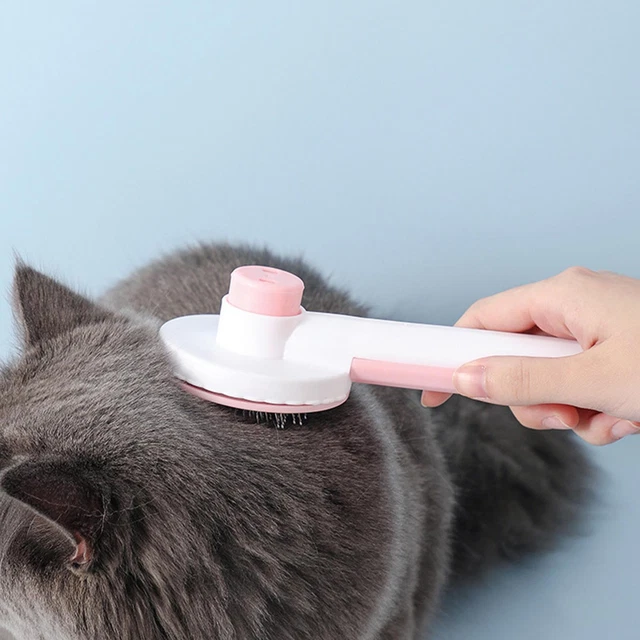
If you run a pet store, sell pet products on Amazon or eBay, or distribute to independent retailers, sourcing wholesale pet supplies at the right price is what separates a profitable business from one that survives on thin margins. This playbook covers how professional buyers vet suppliers, read MOQ terms, and pick SKUs that move off the shelf in 2026.
Why Pet Supplies Wholesale Margins Work
Pet supplies behave like consumables: brushes, leashes, and bowls get replaced as pets grow and wear them out, giving retailers predictable reorders and room for healthy markup.
A typical independent pet retailer targets gross margins of roughly 40-60 percent on hard goods at wholesale cost (illustrative range; your actual margin depends on channel and cost structure). Hitting that range requires landing wholesale unit costs well below the price customers compare against on major marketplaces. Your supplier relationship is your margin, and your margin is your business.
How to Vet a Supplier: A Buyer’s Checklist
Run every candidate supplier through this checklist before your first purchase order. Skipping steps is how retailers end up with late shipments, mismatched products, or dead stock.
- Verify the business. Ask for a business license or reseller certificate workflow. Legitimate wholesale programs require proof you are a reseller. If anyone sells “wholesale” quantities to any buyer with a credit card, they are a retailer with a discount code, not a supplier.
- Confirm product consistency. Order samples before any bulk commitment. Check materials, stitching, hardware, and packaging, and compare the sample to the first production run to catch quality drift.
- Get the full landed cost in writing. Unit price means nothing without freight, duties, warehousing fees, and payment processing. Ask for a written quote breaking out every line item to your door or your 3PL.
- Test communication responsiveness. Email a technical question – a material spec, a packaging customization, a lead-time scenario. Slow answers before you pay mean slower answers after.
- Check reorder and restock terms. Ask what happens when a SKU sells out mid-season. A supplier with no clear restock answer will cost you a selling season.
- Review the returns and defect policy. Wholesale agreements should spell out defective-rate thresholds and who pays return freight. Get it before the first PO, not after the first problem.
When you are ready to move forward, most structured wholesale programs start with a simple application. You can become a Skyrocs distributor through the wholesale program page, and completing wholesale registration unlocks tiered pricing and distributor terms.
Understanding MOQ and Tiered Pricing
MOQ – minimum order quantity – is the lever suppliers use to make production and logistics economical. For pet supplies, MOQs vary by product type and whether the item is stock or customized.
- Stock items (existing designs, standard packaging) carry the lowest MOQs and are the fastest way to test a supplier with limited risk.
- Private label items (your branding on an existing product) require higher MOQs to cover packaging setup and scheduling.
- Custom-developed items carry the highest MOQs and longest lead times, but also the strongest differentiation and margin protection.
Tiered pricing rewards volume: more units per SKU means lower per-unit cost. Negotiate tiers around your realistic sell-through, not the supplier’s ideal batch size. Work backwards from monthly sales velocity: if a SKU moves 200 units a month, a 2,000-unit MOQ is a ten-month bet.
Ask for these terms explicitly: price validity period, payment terms (deposit percentage and balance timing), and whether tier pricing applies per-SKU or aggregates across the order. The difference can be substantial.
Sourcing Models Compared
Each suits a different stage of a retail business.
| Factor | Wholesale Distributor | Direct Import (Factory) | Dropship Supplier |
|---|---|---|---|
| Typical MOQ | Low to moderate; often per-SKU minimums in the hundreds | High; usually thousands of units per SKU | None; order as sold |
| Lead time | Days to weeks (stock usually on hand) | Weeks to months (production + ocean freight) | Days (supplier ships directly) |
| Unit cost | Moderate; distributor margin built in | Lowest at scale | Highest; little margin room |
| Quality control | Easier; smaller batches, faster feedback | Harder; requires inspections and clear specs | Minimal control over packing and timing |
| Best for | New retailers, boutiques, testing SKUs | Established sellers with proven volume | Marketplace sellers validating demand |
Most growing pet retailers use a hybrid: a wholesale distributor for core assortment and cash-flow-friendly reorders, plus direct import for one or two proven hero SKUs. Browse the pet supplies collection to see the assortment structure that supports this approach – grooming tools, feeding accessories, and toys that reorder well.
SKU Selection: What Actually Sells
Wholesale catalogs are full of products. Your shelf space and working capital are not. Filter every SKU before adding it to an order:
- Reorder logic. Prioritize items customers replace: grooming brushes, waste-bag refills, treat-dispensing toys, feeding accessories. Consumables and wear items sell themselves twice.
- Defensible differentiation. Avoid SKUs identical to what every marketplace seller carries unless your price or bundle beats them clearly. Private label or exclusive colorways protect you from direct price comparison.
- Size and weight economics. Bulky, heavy items eat freight and storage budgets. Compact, lightweight accessories keep landed cost per unit low.
- Problem-solving angle. Products that solve a visible annoyance – shedding, tangled leashes – justify premium pricing more easily than generic accessories.
- Seasonal balance. Mix evergreen staples with a measured seasonal layer. Evergreen SKUs fund the business; seasonal SKUs create urgency.
Start narrow. A focused assortment of 15-30 well-chosen SKUs with healthy depth outperforms a sprawling catalog of 200 SKUs you cannot restock properly.
Red Flags to Avoid
Walk away – or at minimum slow down – when you see any of these:
- No verifiable business identity. No company registration, no physical address, no reseller verification. Professional wholesale is a two-sided credential exchange.
- Prices far below every competitor. Wholesale pet supplies have real cost floors in materials and labor. Dramatically lower prices usually mean substituted materials or skipped quality control.
- Pressure to pay in full upfront via irreversible methods. Standard practice is a deposit (commonly 30 percent as an illustrative example) with the balance before shipment or against shipping documents – through traceable channels.
- Refusal to send samples. Any supplier confident in their product will sell or provide samples. Refusal is a data point; treat it as one.
- Vague lead times. “About a month” is not a lead time. You need production days plus freight days, in writing, with Incoterms specified.
- No defect or short-shipment policy. If the agreement is silent on damaged arrivals, assume you absorb the loss – and price that risk accordingly or find another supplier.
Frequently Asked Questions
What is a typical MOQ for wholesale pet supplies?
Stock items from a wholesale distributor often start in the low hundreds of units per SKU. Private label runs require higher commitments to cover packaging setup, and fully custom products can require thousands of units. Confirm whether the MOQ applies per SKU or can be mixed across SKUs – mixed-SKU minimums dramatically lower the barrier to a first order.
Can I get private label packaging on wholesale pet products?
Many suppliers offer private label on existing products: your logo and branding on the product and packaging, sometimes with custom colorways. Expect higher MOQs than stock items and a packaging proof approval step before production. Plan private label launches at least one selling season ahead.
How long do wholesale pet supply orders take to arrive?
For direct import, plan for production time (often 2-4 weeks as an illustrative range) plus ocean freight (typically 3-5 weeks to US ports as an illustrative range) and customs clearance. Build a buffer into your calendar – late arrivals in peak season are the norm.
Should I request samples before placing a bulk order?
Yes, always. Samples let you verify materials, construction quality, sizing, and packaging before committing capital. Compare the sample against the first bulk delivery as well; any drift is grounds for a conversation with your supplier before you pay the balance.
What payment terms are standard in pet wholesale?
A common structure is a deposit with order confirmation and the balance before shipment or against shipping documents. Established relationships may graduate to net terms (for example, net-30 as an illustrative example) after a track record of on-time payments. Keep every term in the written agreement, and be cautious of suppliers demanding full irreversible payment before production.
Can I get exclusive distribution rights for a product or territory?
Sometimes, but exclusivity is earned. Suppliers typically grant territorial or channel exclusivity only against committed volume targets, such as a minimum annual purchase value with quarterly true-ups. A softer alternative is a first-right-of-refusal on new SKUs or an exclusive colorway, which gives differentiation without the volume risk.
Ready to build your wholesale assortment? Complete wholesale registration for distributor pricing – the become a Skyrocs distributor page lays out the full program terms.
Pingback: Pet Products Distributor: MOQ and Margin Guide