
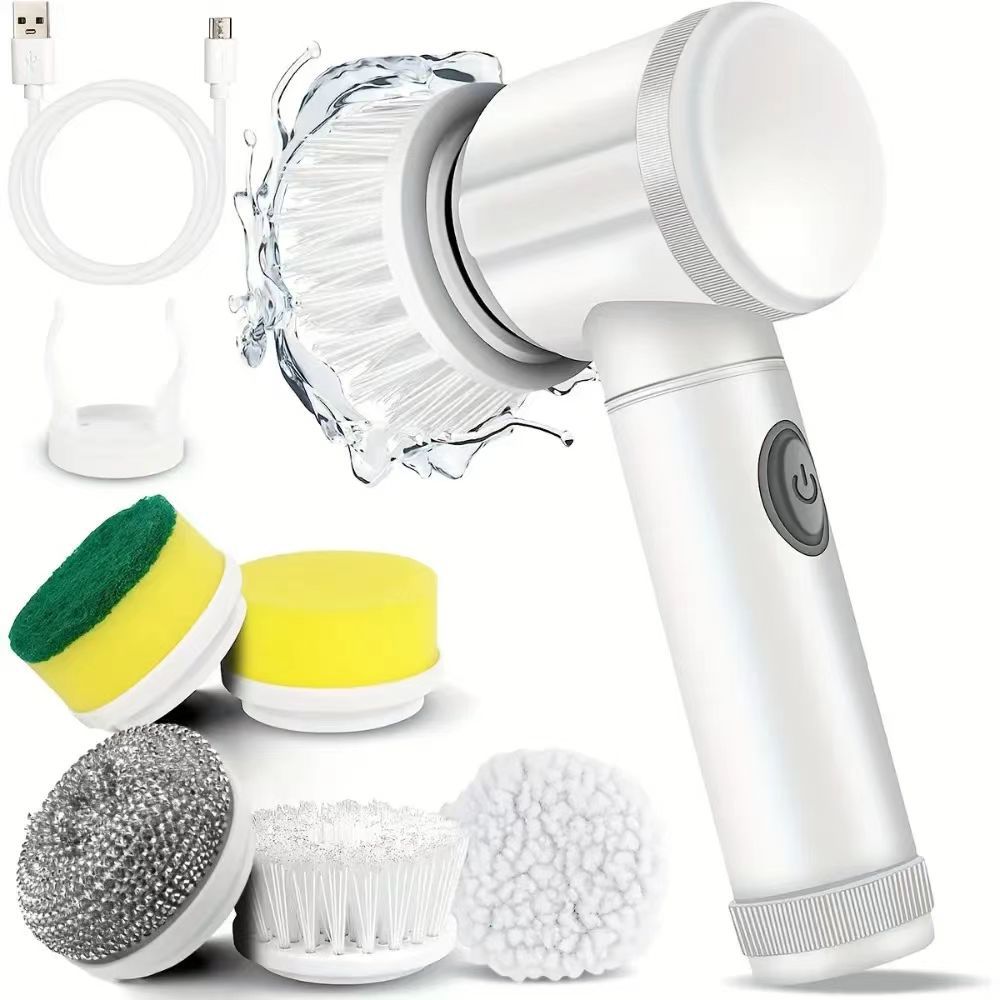
An electric cleaning brush 5 head set takes the elbow grease out of household scrubbing. Instead of working your arm to loosen grime from grout lines, stove grates, and bathroom corners, you press a button and let the rotary motion do the work. If you have ever wondered whether these handheld scrubbers live up to the hype, this guide walks through how they work, what each of the five heads is for, and how to pick the right set for your home.
How It Works
An electric cleaning brush is a handheld tool with a small motor in the handle that spins the attached head in a rotary motion. High-torque rotation is the key: instead of you moving the brush back and forth, the motor drives hundreds of scrubbing cycles while you simply guide the head across the surface.
Most sets, including this one, are cordless and rechargeable, so you are not tethered to an outlet while you work around the kitchen or bathroom. A single press-button operation means there are no complicated settings to learn. You swap heads by pulling one off and clicking the next one on, which takes a few seconds and lets you match the head to the job in front of you.
The basic workflow is the same no matter which head you use: apply your usual cleaner or a bit of dish soap, position the spinning head against the surface, and let the rotation agitate the dirt. You provide the guidance; the motor provides the scrubbing.
The 5 Heads Explained
Five interchangeable heads are the point of the set. Each one is shaped and textured for a different kind of surface, so you are never forced to use the wrong tool on a delicate finish. Here is what each type generally covers:
1. Stiff bristle brush
The workhorse of the set. Stiff bristles dig into narrow crevices, which makes this the head you reach for with grout lines, grill and stove grates, and tile edges where grime packs in. The rotary motion drives the bristles into grooves a flat sponge cannot reach.
2. Soft sponge head
Designed for everyday surfaces that scratch easily. Use it on dishes, glassware, countertops, and appliance fronts. The soft sponge gives you motorized agitation without the risk of scouring that comes from abrasive pads.
3. Round scrubbing pad
A general-purpose head for flat surfaces like sinks, bathtubs, and tile walls. It covers more area per pass than the bristle brush, so it is a good middle ground for larger jobs that still need real scrubbing power.
4. Corner or crevice head
The pointed shape gets into bathroom corners, faucet bases, shower door tracks, and window frames. These are the spots that collect soap scum and mildew precisely because they are hard to reach with a flat sponge.
5. Soft fiber or polishing head
A gentle head for buffing and finishing: shining faucets, polishing stainless steel, or wiping down mirrors and chrome fixtures without streaking.
Where It Beats a Sponge
An electric cleaning brush is not a replacement for every cleaning tool you own. It shines in specific situations:
- Grout and tile joints. Grout is recessed and rough, so manual scrubbing mostly skims the top. A spinning bristle head works the bristles into the joint itself.
- Stove grates and burners. Grease bakes onto these surfaces. Sustained rotary scrubbing loosens it faster than hand pressure alone.
- Bathroom buildup. Soap scum and mildew in corners, shower tracks, and around faucets respond well to powered agitation with a small, targeted head.
- Less strain on hands and wrists. If scrubbing leaves your joints aching, the motor does the repetitive work while you only steer.
- Speed. For a grimy sink or a tiled backsplash, a powered brush typically finishes the same area faster than manual scrubbing.
Where a plain sponge still wins: quick wipe-downs of countertops, washing a single dish, or any task where getting the brush out and swapping heads would take longer than the job itself.
Electric Brush vs Manual Scrubbing
The table below compares the two approaches side by side:
| Electric cleaning brush | Manual scrubbing | |
|---|---|---|
| Scrubbing effort | Motor drives the motion; you guide it | Your arm does all the work |
| Speed on tough grime | Faster, thanks to continuous rotary agitation | Slower; fatigue slows you down |
| Crevice access | Five heads, including corner and bristle heads | Limited by sponge or brush shape |
| Upfront cost | Higher; a 5-head set is one purchase | Nearly free; sponges are disposable |
| Ongoing cost | Rechargeable; heads are replaceable | Sponges need frequent replacing |
| Hand strain | Lower; good for stiff joints | Higher on big scrubbing jobs |
| Quick small jobs | Overkill for a one-second wipe | Perfect for wipes and rinses |
How to Choose the Right Set
Not every electric cleaning brush set is built the same. Before you buy, check these points:
- Head variety. The whole point of a 5-head set is versatility. Confirm the set includes both stiff heads for grime and soft heads for dishes, not five variations of the same stiffness.
- Motor strength. High-torque rotary motion matters more than raw speed. A motor that stalls when you press it against a surface is not doing you any favors.
- Cordless and rechargeable. You will use this in kitchens and bathrooms, so cordless operation keeps it practical. Look for a set you can recharge easily.
- Simple controls. Press-button operation is ideal. You want to start scrubbing in seconds, not study a manual.
- Head attachment. Heads should click on and off firmly without tools. If they wobble or fall off mid-scrub, the set will not last.
- Your actual jobs. Make a list of the three surfaces you dread cleaning most. If they involve grout, grates, corners, or baked-on grease, a powered brush is a good fit. If you mostly need quick wipe-downs, it is optional.
For more kitchen-cleaning helpers, browse the kitchen gadgets collection to see what else fits your routine.
Care Tips
- Rinse heads after every use. Detergent and loosened grime left on bristles harden over time and reduce effectiveness. Rinse under running water and let them air dry.
- Match the head to the surface. Using the stiff bristle head on a nonstick pan or soft sponge on a rusty grill wastes both the head and your time.
- Recharge before it dies. Rechargeable batteries last longer when they are not repeatedly drained to zero. Plug it in after a long cleaning session.
- Store heads dry. Damp storage encourages mildew on sponge heads. Keep the set in a dry spot with the heads removed or facing up.
- Replace worn heads. Once bristles bend or a sponge starts to crumble, it cleans worse and takes longer. Replace the individual head instead of the whole set.
Frequently Asked Questions
What is an electric cleaning brush 5 head set used for?
It is a cordless handheld scrubber with five interchangeable heads for tasks like cleaning grout lines, stove grates, bathroom corners, dishes, sinks, and tubs. The motorized rotary motion replaces the hand scrubbing you would otherwise do with a sponge or brush.
Can it clean grout lines?
Yes. The stiff bristle head is specifically designed for narrow, recessed areas like grout lines. Apply your usual tile or grout cleaner, run the brush along the joint, and the rotary motion works the bristles into the groove.
Is it safe on nonstick pans and glass?
Use the soft sponge head for delicate surfaces like nonstick cookware, glassware, and polished countertops. Reserve the stiff bristle head for grates, grout, and other tough surfaces where scratches are not a concern.
How long does the charge last?
Runtime depends on the motor and how hard you press, so treat any specific number as a rough estimate. As a habit, recharge the brush after long cleaning sessions so it is ready for the next one.
How do I switch between heads?
Heads pull off and click on without tools. Match the head to the job: stiff bristles for grout and grates, soft sponge for dishes, and the corner head for tight spots.
Do I still need sponges and manual brushes?
Yes, for quick jobs. An electric brush excels at tough, repetitive scrubbing, but for a fast countertop wipe or rinsing a single glass, a regular sponge is simpler. Most households keep both, much like they keep both a microwave and an oven. For more on manual kitchen tools, see our manual 3-stage knife sharpener guide for another hand-powered kitchen essential.
Pingback: Electric Scrubber for Bathroom Tiles: Grout to Glass Guide