
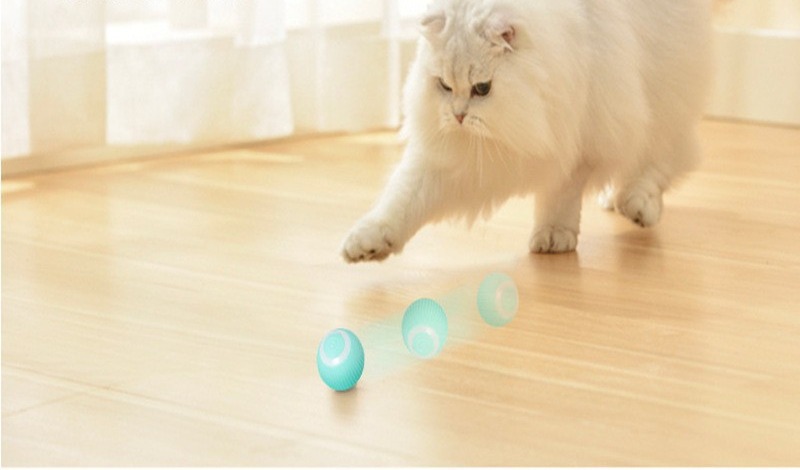
Every pet owner knows the look: it’s 8 PM, you’re exhausted, and your puppy is staring at you with the energy of a small hurricane. Cats aren’t better — they’re just quieter about it until they start knocking things off shelves at 3 AM. The problem isn’t laziness. It’s that modern pets have the bodies of hunters and the lifestyle of couch potatoes.
A smart rolling ball for puppies and cats bridges that gap. Unlike a tennis ball that just sits there, a smart ball rolls, bounces, and changes direction on its own, mimicking the unpredictable movement of prey. Your pet chases, pounces, and problem-solves — burning energy while you handle your actual life.
What Makes a Smart Rolling Ball Different From a Regular Toy
A regular ball requires a human. That’s its fatal flaw: the moment you stop throwing, playtime ends, and the ball becomes floor decoration.
A smart rolling ball is self-propelled. It contains a motor and motion sensors that let it:
- Move on its own — rolling forward, bouncing off walls, and zigzagging without any remote control.
- React to your pet — many models have touch sensors or vibration triggers, so the ball “wakes up” when your dog or cat bats at it.
- Enter rest mode — after a few minutes of play, it pauses so your pet can rest, then reactivates on touch.
That combination of autonomous movement and interactivity is what keeps pets engaged far longer than a passive toy.
Why Puppies Benefit Most From Interactive Play
Puppies have two jobs: grow and learn. Play is how they do both. A smart ball helps with:
- Energy management. A 15-minute session with a rolling ball can tire out a puppy more effectively than a 30-minute walk, because chase-and-pounce engages sprint muscles, not just endurance.
- Independent play. Puppies that only play when humans initiate them develop clingy habits. A self-moving ball teaches them that play can happen on their own terms.
- Mental stimulation. Unpredictable movement forces a puppy to anticipate, track, and adjust — real cognitive work that reduces boredom behaviors like chewing furniture.
- Prey-drive safety valve. Chasing the ball channels the chase instinct into something safe, instead of your cat, your kid, or the mail carrier.
A smart interactive pet toy ball that’s USB rechargeable means no hunting for replacement batteries every few days — one less chore on an already long list.
And It’s Not Just for Puppies — Cats Love Them Too
Cat owners often assume interactive dog toys are too rough for cats. A good smart rolling ball works for both because the underlying instinct is identical: small thing moves unpredictably → must be hunted.
The differences that matter for cats:
- Size and weight. The ball should be light enough that a cat can bat it across the floor, not so heavy it just sits there under paw pressure.
- Quiet motor. Cats spook at sudden loud noises. A smooth, quiet rolling motion keeps them in hunting mode instead of hiding-under-the-bed mode.
- Gentle bounce, not hard launch. The ball should change direction when it hits obstacles, not fire itself across the room.
If your cat already plays with crinkle balls or laser pointers, a rolling ball is the natural upgrade — it combines the tactile satisfaction of a physical toy with the unpredictability of a laser dot. Pair it with a flopping fish cat toy for a full interactive play rotation.
Key Features to Look For
Not all smart balls are equal. Before buying, check these:
USB rechargeable battery
Balls that eat disposable batteries get expensive and annoying fast. USB rechargeable models run for hours on a single charge — charge it overnight next to your phone.
Automatic shut-off
A good ball plays for a few minutes, then naps until your pet touches it again. This prevents the motor from running all night and teaches your pet that their interaction restarts the fun.
Durable, pet-safe materials
Expect it to get chewed. Look for tough, non-toxic outer shells (ABS or silicone) with no small parts that could break off. Check the product specs for bite-resistance claims.
Easy to clean
A ball that rolls on the floor collects dust, slobber, and fur. Smooth surfaces that wipe clean beat textured ones that trap grime. Most quality balls can be wiped down with a damp cloth.
Size appropriate to your pet
Too big and a cat can’t move it; too small and a large puppy can swallow it. Check the diameter against your pet — as a rule, the ball should be clearly too large to fit entirely in your pet’s mouth.
How to Introduce Your Pet to a Smart Rolling Ball
Some pets take to it instantly. Others need a few days. Here’s the safe ramp-up:
- Let them sniff it first. Turn the ball off and let your pet investigate. Treats near the ball build positive associations.
- Start in a small room. Fewer obstacles means the ball stays in play and your pet can focus on chasing, not searching.
- Short sessions. Five to ten minutes at a time, two or three times a day. Stop while they’re still having fun — you want them to want more.
- Never leave it on unsupervised at first. Watch for chewing on the charging port cover or obsessive behavior. Most pets settle into healthy play patterns within a week.
- Charge between sessions. A ball that dies mid-chase teaches your pet that toys are unreliable. Keep it topped up.
When a Smart Ball Is (and Isn’t) the Right Toy
Great for: under-exercised puppies, high-energy cats, pets left alone during work hours, senior pets that need gentle encouragement to move.
Not a replacement for: actual walks (dogs still need outdoor time and sniffing), social play with other animals, or training sessions. Think of it as a supplement to a good routine, not the routine itself.
Skip it if: your dog is an extreme power chewer that destroys “indestructible” toys in minutes — no electronic toy survives that, and a mouthful of battery components is a vet visit waiting to happen.
The Bottom Line
A smart rolling ball for puppies and cats is one of the highest-value pet gadgets you can own: it buys you time, burns off energy, and keeps pets mentally sharp. The key is picking one with USB recharging, auto shut-off, and durable materials — features that separate the toys that last months from the ones that die in a week.
If your evenings involve a wired puppy and a guilty conscience, it might be time to let a ball do some of the parenting. Browse the Skyrocs shop for more pet gadgets that make life easier.
Frequently Asked Questions
Is a smart rolling ball safe for puppies?
Yes, when sized correctly. Choose a ball too large to fit entirely in your puppy’s mouth, made of non-toxic materials, and supervise play until you know your puppy’s habits. Look for models with covered charging ports.
Do cats actually play with automatic rolling balls?
Most do, especially younger and high-energy cats. The unpredictable movement triggers the same hunting instinct as a laser pointer, but with a physical object they can catch — which many cats find more satisfying.
How long does the battery last on a USB rechargeable ball?
It varies by model, but most run 2–4 hours of active play per charge, plus much longer in standby with motion-activated wake. Charging typically takes 1–2 hours over USB.
Can the ball be used on carpet?
Most smart balls work best on hard floors, where they roll freely. On thick carpet, movement slows significantly — play on tile, wood, or low-pile rugs for best results.
Will my pet get bored of it?
Eventually, possibly — the same way they get bored of any toy. Rotate the ball with other toys every few days to keep it novel, and the motion-activated features help extend interest well beyond a passive toy.