
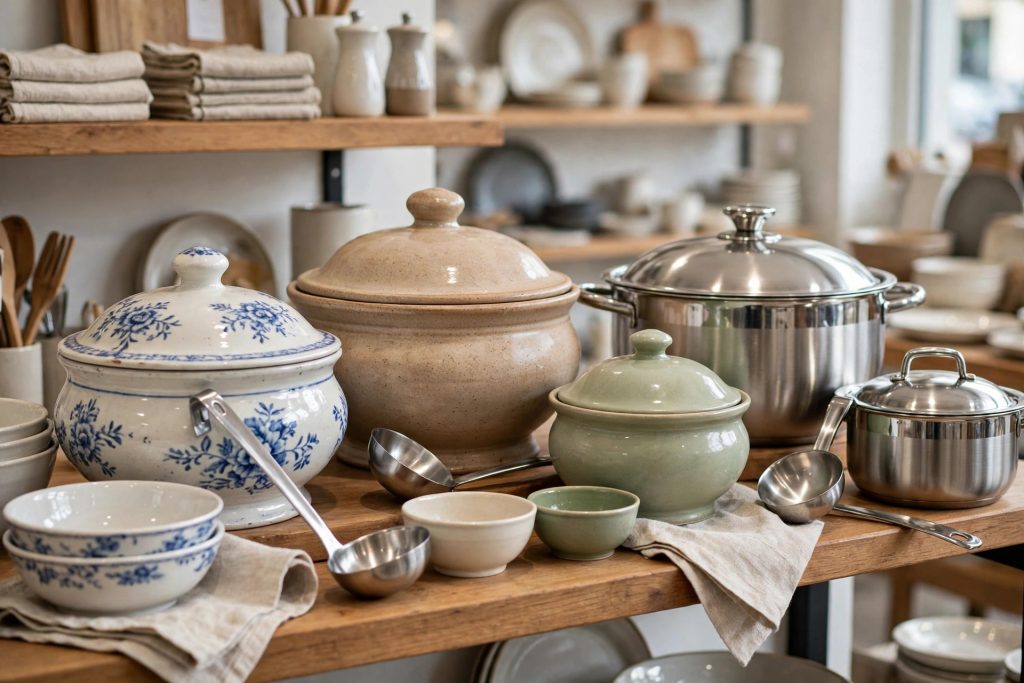
Wholesale soup tureens suppliers help a kitchen shop stock soup tureens that home cooks trust, so shelves stay full of serving pieces that sell steadily through the year. Kitchen tools sell well when they solve a daily task with grace, and a tureen does just that, since soup is served in homes every week and hosts like to serve it well. This guide explains why soup tureens sell well, what a good range covers, how to choose a supplier, how to price and order, and how to display stock so it moves. A shop that stocks the right tureens in the right sizes will see steady sales, and a little care in choosing a supplier keeps the range fresh.
Why Wholesale Soup Tureens Sell Well
Home cooks buy tureens for family meals, holiday tables and gifts, so demand runs through the year rather than in one season. A tureen is also a gift item, chosen for weddings, housewarmings and hostess gifts, which adds sales beyond everyday cooks. Steady demand like this makes tureens a reliable line for a kitchen shop.
Buyers often return for a matching ladle or a second tureen in another size, which builds repeat visits. A range that covers several needs sells better than a single style alone.
Soup tureens carry a higher ticket than small tools, so each sale adds real value to the till without needing deep discounts. A well made tureen feels worth its price when the buyer lifts it and feels the weight, the lid fit and the steady base. Shops that show quality tureens beside everyday soup tools give buyers a clear reason to trade up. A higher ticket with steady demand is a healthy mix for any kitchen shop.
What a Good Wholesale Range Covers
A good wholesale range covers several sizes, since tables differ and one size never fits every home. Small tureens suit couples and small families, mid sizes suit everyday family meals, and large tureens suit gatherings and holiday tables. Stocking three sizes gives buyers a real choice and lets staff guide each buyer to the right fit. A range that covers small, mid and large sells more than a shelf of one size alone.
A good range also covers more than one material, since buyers weigh looks, weight and care differently. Ceramic and porcelain tureens suit formal tables and hold heat well, while stainless steel suits busy kitchens and buyers who want toughness. Glass tureens suit modern tables and buyers who like to see the soup inside. Offering a few materials lets the shop serve formal hosts and everyday cooks from the same shelf.
Lids, ladles and matching bowls round out a range, since buyers often want the full serving set rather than a single piece. A tureen sold with a matching ladle feels complete, and matching bowls lift the sale further. Spare lids and knobs are less common, yet a supplier that can offer them helps the shop serve buyers who need a part. A range that thinks in sets rather than single pieces lifts the average sale.
Choosing a Supplier You Can Trust
Choosing a supplier you can trust starts with the quality of the goods, so inspect samples before you place a large order. Lift each tureen, check the lid fit, feel the handles and set the piece on a flat surface to check for rocking. A supplier that sends honest samples and welcomes checks is one worth keeping. Quality that you have felt with your own hands is easier to sell than a promise on a page.
Reliable delivery matters as much as quality, since a shop cannot sell stock that has not arrived. Ask how long orders take, how breakage is handled, and what happens if a delivery arrives damaged. A supplier with clear packing, steady lead times and a fair breakage policy protects the shop from empty shelves and lost sales. Skyrocs is one place where a shop can start looking at a steady wholesale offer, and the range there gives a useful point of comparison when weighing suppliers.
Clear terms build trust, so read the order minimums, payment terms and return rules before you commit. A supplier that states terms plainly and answers questions quickly is easier to work with than one that hides detail. Check whether small top up orders are allowed, since tureens sell steadily and a shop needs to restock without ordering a full case each time. Fair terms keep the relationship smooth when sales rise or dip.
Pricing and Ordering for Your Shop
A tureen that looks cheap at unit price can cost more once packing and freight are counted. Work out the margin on each size and material, since large pieces carry more freight and small pieces may sell faster. A clear cost picture keeps prices fair to buyers and healthy for the shop.
Set prices that reflect the piece, since a heavy ceramic tureen and a light steel one are not the same buy. Price the range in clear steps, so buyers can see the move from everyday to gift quality without confusion. Avoid pricing so low that the shop cannot cover breakage, and avoid pricing so high that buyers walk past. A tidy price ladder helps staff guide buyers and helps the shop hold margin.
Order in line with demand, starting with the sizes that sell fastest and adding slower lines in smaller numbers. Keep a close eye on which sizes move, since family tables and gift buyers do not buy the same pieces. Order ahead of the cold season and holiday peaks, when soup serving and gift buying rise together. A shop that orders early avoids empty shelves at the moment buyers want tureens most. The wholesale range can serve as a reference when planning the next order.
Displaying Wholesale Soup Tureens to Sell More
Set one tureen open with its lid beside it, so buyers can see the inside, lift the lid and feel the weight. Place a ladle across the top or beside the piece to show how serving works. A display that invites touch sells better than a shelf that only invites a glance.
Group tureens with matching bowls and ladles, so buyers see a full table setting rather than a single piece. A small dressed table with a tureen, bowls and a cloth shows the buyer how the meal will look at home. Gift buyers in particular respond to a set, since a set feels ready to give. Grouped displays lift the average sale by turning one piece into a table.
Use simple signs that state size and material in plain words, so buyers can compare without asking staff for every detail. A sign that says the piece suits family meals or holiday tables helps buyers picture it at home. Keep signs short and honest, and let the tureen itself do most of the talking. Clear signs speed up choice and free staff to help buyers who need guidance.
Frequently Asked Questions
How do wholesale soup tureens suppliers help a kitchen shop?
Wholesale soup tureens suppliers help a kitchen shop by offering a range of sizes, materials and styles in one place, so the shop can stock a full shelf without chasing many makers. They also give steady supply, clear terms and samples to check, which keeps shelves full and quality steady.
What should wholesale soup tureens suppliers offer in a range?
Wholesale soup tureens suppliers should offer several sizes, more than one material and a spread of styles and prices. A good range also includes ladles and matching bowls, so buyers can build a full serving set.
How do I choose among wholesale soup tureens suppliers?
To choose among wholesale soup tureens suppliers, inspect samples for lid fit, handle strength and a steady base, then check delivery times, breakage cover and order terms. A supplier with clear terms, honest detail and quick answers is easier to work with.
What should a shop order first from wholesale soup tureens suppliers?
A shop should order first the sizes that sell fastest, usually a small and a mid size in a sturdy material, with a few large pieces for gatherings. Add matching ladles and bowls to lift the sale, and keep the first order modest until sales show which lines move.
Where should a shop display stock from wholesale soup tureens suppliers?
A shop should display stock from wholesale soup tureens suppliers with space around each piece, grouped with matching bowls and ladles so buyers see a full table. Put best sellers at eye level, use short honest signs, and give tureens pride of place in cold months and holidays.