
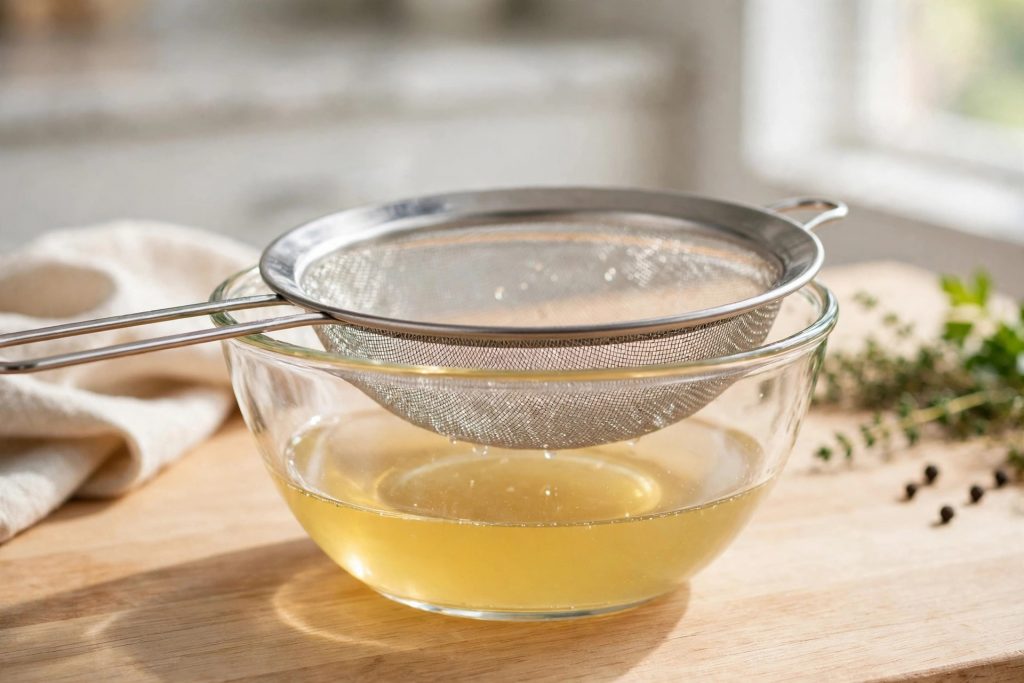
A mesh strainer for smooth straining catches lumps, seeds and stray bits so sauces, stocks and batters turn silky and smooth. Cooks who strain well get clearer broth, smoother sauces and lighter batters, and the tool that does it is small, simple and cheap. A good strainer sits steady over a bowl, lets liquid pass freely and holds back everything that would spoil the texture. This guide explains why smooth straining matters, how a strainer works, what to look for when you buy one, how to use it well, and how to clean and store it so it stays ready.
Why Smooth Straining Matters
Smooth straining matters because texture shapes how food feels, and a silky sauce or a clear broth tastes better than a lumpy one. Lumps in a sauce catch on the tongue, seeds in a stock look careless, and bits in a batter bake into hard spots. A strainer removes all of that in one quick pass, leaving food that looks polished and tastes clean. Small care at this step lifts the whole dish.
Straining also protects later steps, since a smooth base blends, pours and sets more evenly than a rough one. A strained stock makes clearer soup, a strained sauce coats food without clumps, and a strained batter fries into even cakes. Cooks who skip straining often fight lumps later, while cooks who strain once save time at the end. One pass through mesh prevents a string of small fixes.
A strainer earns its place by serving many jobs, from rinsing rice and draining pasta to sifting flour and straining tea. One tool can handle wet jobs and dry jobs alike, which makes it useful every day rather than once a month. A kitchen with a good strainer reaches for it often, and each use is quick. Versatility like this is why a strainer belongs in every kitchen drawer.
How a Mesh Strainer for Smooth Straining Works
The mesh is stretched across a frame, and the size of its holes decides how fine the strain is. Fine mesh catches tiny seeds and fine pulp, while coarser mesh drains faster and suits larger bits. The cook pours slowly, the liquid passes, and the solids stay behind in the bowl of the mesh.
The frame gives the mesh its shape and strength, and a good frame holds the mesh taut without sagging under a full load. Handles vary, from a single long handle to two side handles, and each suits a different grip. A steady frame and a taut mesh are what make straining smooth rather than messy.
Mesh size matters more than most buyers expect, since the wrong mesh either clogs or lets too much through. Very fine mesh suits sauces and stocks where silkiness matters, while medium mesh suits rinsing grains and draining vegetables. Some kitchens keep two strainers, one fine and one medium, to cover both jobs. Choosing the mesh for the job is the heart of smooth straining. Home cooks can browse Skyrocs for kitchen tools that suit everyday meals.
Choosing the Right Mesh Strainer for Your Kitchen
Choosing the right mesh strainer for your kitchen starts with mesh size, since the mesh decides what the strainer can do. Fine mesh suits sauces, stocks and custards where a silky finish matters, while medium mesh suits rinsing rice, draining pasta and washing vegetables. A kitchen that cooks often may want both, while a small kitchen can start with a medium mesh that covers most jobs. Match the mesh to the food you strain most.
Size shapes use as well, since a strainer should fit the bowls and pots you already own. A small strainer suits straining tea or a single sauce, while a large one suits stock pots and big batches of pasta. A strainer that rests across your widest bowl will serve most jobs, and a rim that hooks over the edge keeps it steady. Measure your bowls before you buy, and choose a strainer that sits well on them.
Material shapes care and life, so weigh steel against other choices before you buy. Stainless steel mesh resists rust, washes easily and suits hot liquids, which makes it the common choice for everyday kitchens. Plastic strainers are light and cheap, though they can stain and may not suit very hot stock. A steel frame with a firm handle will outlast a flimsy one, and a strainer that feels solid in hand will serve longer. Homes that share their kitchen with a cat or a dog can also browse the pet supplies range for everyday pet care needs.
Using Your Mesh Strainer for Smooth Straining
Using your mesh strainer for smooth straining starts with setting it steady over a bowl or a pot before you pour anything. Rest the rim across the bowl so it cannot slip, and keep the bowl large enough to hold all the liquid without overflowing. Pour slowly in a thin stream, letting the mesh catch solids while liquid passes through. A steady setup and a slow pour prevent spills and keep the strain smooth.
Stir gently with a spoon when straining thick sauces or pulpy stock, since stirring keeps liquid moving through the mesh. Press soft solids lightly to draw out flavour, yet avoid hard pressing that forces pulp through fine mesh. If the mesh clogs, lift the solids out with a spoon and carry on, rather than forcing the pour. Gentle handling keeps the result clear and the mesh in good shape.
Shake the strainer lightly to shed water, and spread the contents with a spoon if they clump. For flour and dry goods, tap the rim gently so fine powder falls through while lumps stay behind. One tool covers wet and dry jobs with the same calm method.
Cleaning and Storing Your Mesh Strainer for Smooth Straining
Cleaning your mesh strainer for smooth straining is easiest right after use, before food dries into the fine weave. Rinse it under running water, then brush the mesh gently with a soft brush or an old toothbrush to lift trapped bits. Wash with mild soap and warm water, and rinse again until the water runs clear. Quick cleaning keeps the mesh open and the strain smooth.
Dried food in mesh needs soaking, so leave the strainer in warm soapy water until the bits soften, then brush them away. Avoid hard scraping that can tear fine mesh or bend the frame, and avoid harsh pads that can fray the weave. A soak and a soft brush will clear most clogs without damage. Patience in cleaning protects the fine mesh that does the work.
Dry the strainer fully before it is stored, since a damp mesh can smell stale and can spot over time. Shake off water, then stand the strainer upright or hang it by its handle so air moves through the mesh. A dry strainer stores clean and is ready at once when it is next needed. Hanging also keeps the mesh from being crushed under other tools.
Frequently Asked Questions
Is a mesh strainer for smooth straining needed for home cooking?
A mesh strainer for smooth straining is needed in any kitchen that makes sauces, stocks or batters and wants them silky. It also serves rinsing, draining and sifting, so it earns its place through many jobs.
How does a mesh strainer for smooth straining work?
A mesh strainer for smooth straining works by passing liquid through a fine woven mesh that holds back solids while letting liquid flow through. The frame holds the mesh taut, the rim rests across a bowl, and a slow pour lets gravity do the work.
What mesh size should a mesh strainer for smooth straining have?
The mesh size a mesh strainer for smooth straining should have depends on the food you strain most. Fine mesh suits sauces, stocks and custards where silkiness matters, while medium mesh suits rinsing grains and draining vegetables.
Can a mesh strainer for smooth straining handle hot liquids?
A mesh strainer for smooth straining can handle hot liquids when it is made from heat safe material such as stainless steel, though the handle and rim may grow hot and need a cloth. Plastic strainers may not suit very hot stock, so check the guidance from the maker before pouring boiling liquid.
What should I look for when buying a mesh strainer for smooth straining?
When buying a mesh strainer for smooth straining, look for a mesh size that matches your cooking, a frame that holds the mesh taut, a rim that rests steady on your bowls, and a handle that feels firm.