
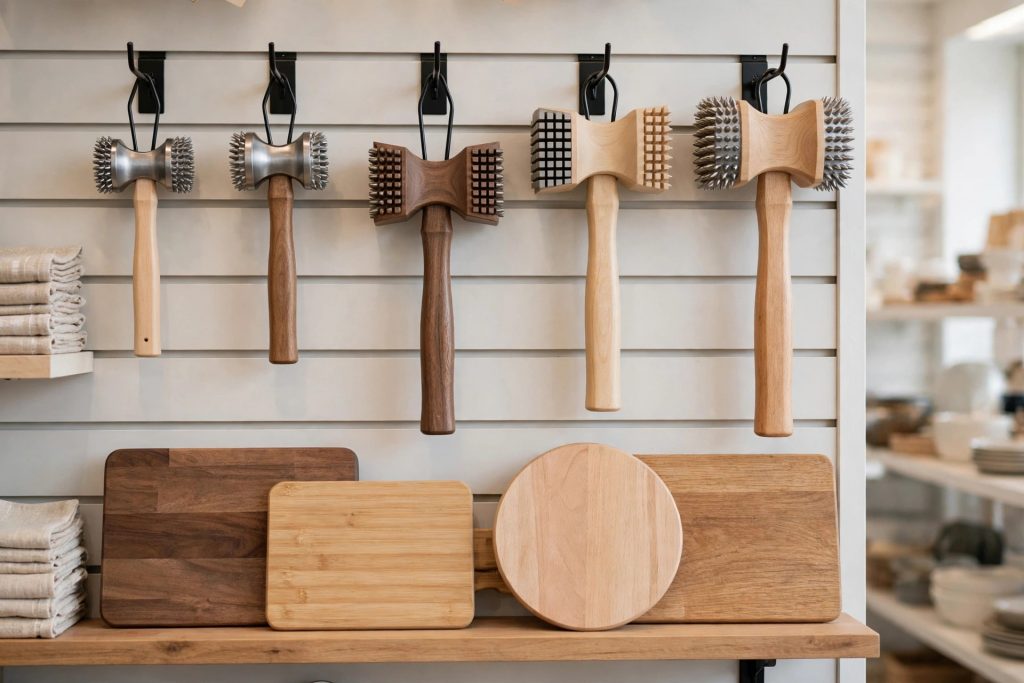
Shops use wholesale meat tenderizers suppliers to stock sturdy tenderizers that home cooks trust, since a tool that softens tough cuts sells itself once buyers try it. Shops that stock meat tenderizers well often find that buyers come back for more, since a tool that works earns trust and trust brings repeat visits. A good range does not need to be huge, since a few solid choices in the right sizes cover most buyers. This guide explains why meat tenderizers sell well, what a good wholesale range covers, how to choose a supplier you can trust, how to price and order for your shop, and how to display stock so it sells. A shop that plans its range with care will sell more with less waste, since the right stock in the right spot does the work. The tenderizer also suits shops that serve budget cooks, since it turns a cheap tough cut into a tender meal.
Why Wholesale Meat Tenderizers Sell Well
Wholesale meat tenderizers sell well because home cooks buy tools that solve a daily chore, and a meat tenderizer does one job clearly and well. Buyers also trust a tool they can hold and test, since weight and grip tell them more than a picture ever could. A shop that stocks meat tenderizers gives buyers a reason to visit, since the range covers a need that every kitchen shares. Repeat sales follow, since a buyer who likes one tool often comes back for another when the first one earns its place. Seasonal cooking also lifts sales, since roasts and gatherings bring more cooks into the shop looking for tools that help. A fair price helps too, since a tool that feels worth its cost sells faster than one that looks dear for what it does. A shop known for solid tools builds a name, and a good name brings buyers who ask for the shop by habit. Budget cooks lift tenderizer sales, since a tool that softens a cheap cut saves money on every meal. A buyer who tries a tenderizer on a tough steak often comes back for a spare, since the tool earns its place fast. A shop that listens to buyers learns fast, since every question at the counter is a hint about what to stock next.
What a Good Wholesale Range Covers
A good range covers the sizes buyers ask for most, since one size rarely suits every kitchen. It also covers a spread of prices, since some buyers want a basic tool and others will pay more for a sturdier build. Materials matter too, since a range that offers both light and heavy builds suits more buyers. A range that covers spares and care items helps as well, since buyers like to find everything they need in one visit. The range should suit the shop too, since stock that fits the shelf and the budget sells better than stock that crowds both. A supplier that keeps core lines in stock helps the shop reorder fast, so shelves never sit empty. A range that grows slowly with demand beats a range that starts too big, since slow growth keeps cash free for the lines that move. A good range covers tenderizers with flat and textured heads, since buyers differ on whether they flatten or soften a cut. It also covers handles in more than one grip, since a firm grip suits a heavy hand and a light grip suits a quick job. Stock that turns over quickly frees cash, and free cash lets a shop try the next line without risk.
Choosing a Supplier You Can Trust
Choosing a supplier starts with trust, since a shop needs stock that arrives as described and on time. Ask how the supplier packs and ships, since a tool that arrives damaged costs the shop time and money. Check that the supplier answers questions quickly, since a slow reply today often means slow help when a problem comes up. Look at the range as a whole, since a supplier with a broad range saves the shop from chasing many small orders. A supplier that stands behind its goods earns a long place on the shelf, so ask how faults are handled before you order. Start with a small trial order, since a modest first order shows how the supplier works before the shop commits more cash. Ask the supplier how the heads are packed, since a scratched head is a lost sale and safe packing keeps every tool ready to sell. Check that the heads are firmly fixed, since a loose head will not survive daily use. For shops looking for a steady wholesale source, Skyrocs offers a helpful starting point, and the wholesale range covers stock for kitchen shops.
Pricing and Ordering for Your Shop
Pricing starts with knowing your costs, since a shop must cover freight and shelf space before it counts a sale as a win. Order a small first batch, since a modest order tests demand without tying up cash in stock that may sit. Watch which lines move fastest, and reorder those first, since the best sellers deserve the shelf space. Keep a simple record of what sells and when, so the next order follows real demand rather than a guess. A steady price builds trust, since buyers who see the same fair price each visit come back with confidence. Leave room for a small display or a bundle, since a visible tool sells faster than one hidden at the back. Review prices each season, since a price that suited last year may not suit the range you sell now. Price tenderizers so the cheapest line still feels solid, since a buyer who trusts the basic tool will trade up later. Order more when steak season comes round, since demand climbs when grills fill the calendar. A tidy shelf sells more than a crowded one, since buyers trust a shop that looks cared for.
Displaying Wholesale Meat Tenderizers to Sell More
Displaying meat tenderizers well starts with putting them where buyers can see and hold them, since a tool in the hand sells faster than one behind glass. Keep the range tidy, with each size in its own spot, so buyers can compare without hunting through a pile. A simple sign that names the job the tool does helps buyers choose, since many shoppers buy the tool that matches their chore. Put the best sellers at eye level, since the lines that move fastest deserve the clearest spot on the shelf. Keep the display clean and full, since an empty shelf tells buyers the shop has nothing to offer. A small demo or a sample on the bench can help too, since buyers who try a tool understand it at once. Change the display when the season changes, since a fresh look brings regular buyers back to the shelf. Put a tenderizer beside the cutting boards, since buyers shopping for prep tools will spot the tool that softens a cut. A small card that shows the textured head at work helps buyers see the job the tool does. Shops that keep their best lines in stock win repeat visits, since buyers come back where they know they will find what they need.
Frequently Asked Questions
How do wholesale meat tenderizers suppliers help a kitchen shop?
They stock sturdy tenderizers that home cooks trust, so a shop can offer a tool that softens tough cuts. A steady supply also keeps shelves full through steak season.
What should wholesale meat tenderizers suppliers offer in a range?
A good range covers heads that are flat and textured, handles in more than one grip, and builds that suit heavy and light hands. The range should suit beef, pork, and chicken cooks alike.
How do I choose among wholesale meat tenderizers suppliers?
Look for safe packing, firmly fixed heads, quick replies, and a range that covers the heads your buyers ask for. A supplier that stands behind its goods earns a long place on the shelf.
What should a shop order first from wholesale meat tenderizers suppliers?
Order a small first batch across the common heads, so you can test demand without tying up cash. Reorder the lines that move fastest and add grips buyers ask for.
Where should a shop display stock from wholesale meat tenderizers suppliers?
Put tenderizers beside the cutting boards at eye level, where buyers shopping for prep tools will spot them. A small card that shows the textured head at work helps buyers see the job.