
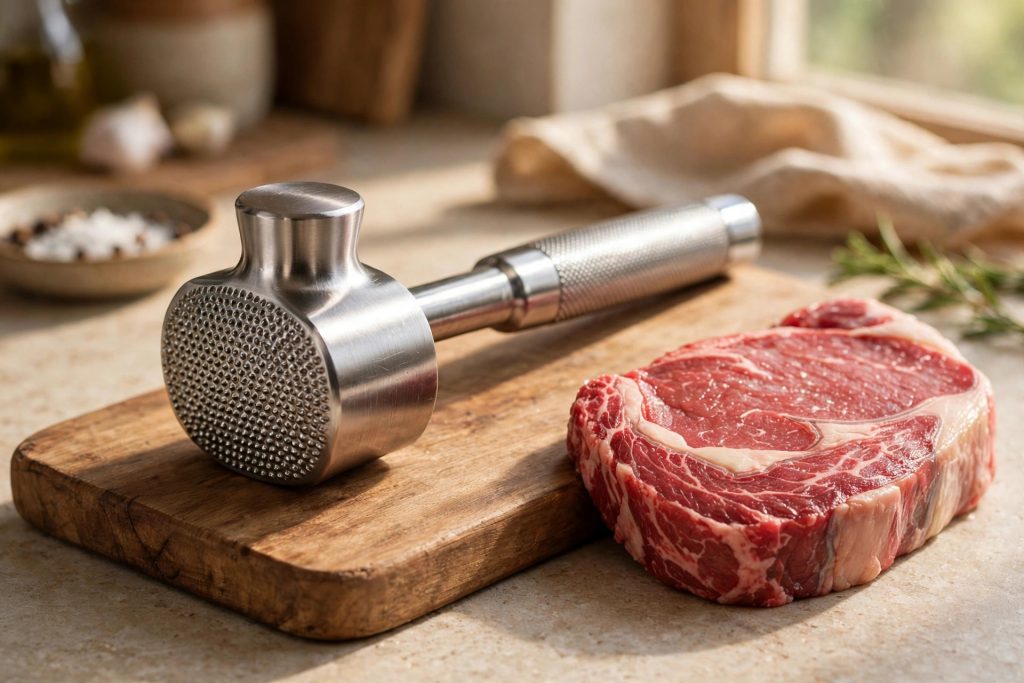
A meat tenderizer for tender meat softens tough cuts, so steaks cook evenly and chew easily without long marinating. Many home cooks want tender meat without extra work, and a simple tool that does one job well can make the whole meal feel easier. A meat tenderizer fits that role, since it is easy to reach for, easy to use, and easy to keep clean after the meal. This guide explains why tender meat matters, how a meat tenderizer works, what to look for when you buy one, how to use it well, and how to clean and store it so it stays ready. A home that cooks often will get the most from such a tool, since daily use is where small helpers prove their worth. The tenderizer also suits chicken and pork, so one tool can lift many meals, and a cook who tries it once often keeps it by the chopping board.
Why Tender Meat Matters
Tender Meat matters because a meal that tastes good brings people back to the table, and small details often decide whether a dish feels plain or special. A meat tenderizer helps with tender meat in a direct way, since it tackles the job itself rather than working around it. Home cooks who use a meat tenderizer often find that everyday meals improve, since the tool removes a small chore that used to slow them down. A tidy kitchen also follows, since a tool that does its job well keeps the bench clear and the cook calm. When cooking feels easy, it gets done more often, and a simple meat tenderizer helps a home cook enjoy the kitchen again. A meat tenderizer that is always at hand means the job gets done at once, before the moment passes and the meal is served plain. A cook who trusts the tool reaches for it without thinking, and that habit is what turns a good meal into a regular one. Tough meat can spoil a good meal, since chewing through a chewy steak takes the pleasure out of the plate, and a tenderizer fixes the cut before it reaches the pan. A tender cut also cooks more evenly, since heat reaches the centre faster when the fibres are loosened.
How a Meat Tenderizer for Tender Meat Works
The stainless steel build suits daily use, since it stands up to washing and keeps its shape through many meals. The size and shape suit a home kitchen, since the tool earns its spot on the bench without crowding out the rest. A meat tenderizer that feels steady and balanced is easier to live with, since the cook can work without strain and keep control through the whole job. The design also suits many dishes, since the same tool can serve a weekday meal and a weekend roast alike. A meat tenderizer that wipes clean saves time after the meal, since smooth surfaces dry fast and stay fresh. A well made meat tenderizer feels steady in the hand, and that steady feel tells the cook the tool will last. The tool needs no power and no fuss, so it is ready the moment the cook reaches for it. A meat tenderizer works because its textured head presses into the meat and breaks down tough fibres, so the cut softens without losing its shape. Even pressure across the whole cut gives an even result, so no single spot stays tough while the rest turns soft.
Choosing the Right Meat Tenderizer for Your Kitchen
Choosing a meat tenderizer starts with the job you do most, since a tool that suits your cooking will earn its place faster than a tool that only looks good. Check that the meat tenderizer feels solid and steady, since a tool with a firm build lasts longer than a light one that wobbles. Look at the head too, since a well made head works smoothly and keeps working after many washes. Size matters as well, since a meat tenderizer that fits your kitchen will be reached for often, while one that is hard to store stays in the drawer. A meat tenderizer that is easy to clean saves time after the meal, so look for smooth surfaces and parts that rinse clean without a fight. Colour and finish matter less than build, yet a meat tenderizer that looks good on the bench is one the cook will enjoy using. Look for a head with both a flat side and a textured side, since the flat side flattens and the textured side breaks down fibres. A handle that fits the hand gives better control, so the cook can press firmly without the tool slipping. For cooks looking for everyday kitchen tools, Skyrocs offers a helpful starting point, and the pet supplies range covers daily items for homes that share their kitchen with a cat or a dog.
Using Your Meat Tenderizer for Tender Meat
Using a meat tenderizer well starts with matching the tool to the job, since the right approach gives a better result with less effort. Keep the meat tenderizer close at hand while you cook, so it is ready the moment you need it and the meal stays on track. Work slowly and steadily, since a calm pace gives a neater result than rushing through the job. Check the result as you go, and adjust your touch until the meal looks and feels right. Handle the meat tenderizer with care between uses, so the head stays clean and the bench stays tidy. A little practice goes a long way, since the second and third uses feel far easier than the first. Clean as you go when you can, since a tidy bench makes the next step of the meal easier. Lay the meat on a board, cover it with wrap, and press the tenderizer in even strokes, turning the cut once so both sides get the same treatment. Press firmly but do not pound through the meat, since a gentle even touch softens the fibres without tearing the cut.
Cleaning and Storing Your Meat Tenderizer for Tender Meat
A meat tenderizer earns its place when it is easy to clean, since a tool that stays dirty will not be reached for again. Clean the meat tenderizer after each use, and wash it with mild soap when it looks dull or feels sticky. Dry the meat tenderizer fully before you store it, since a damp tool can pick up smells and spots in a closed drawer. Store the meat tenderizer where it is easy to reach, rather than buried under heavier tools that could mark the head. Keep the meat tenderizer apart from sharp tools when you can, so the head stays smooth and safe to handle. A meat tenderizer that is washed well stays in good shape and keeps working for a long time. A quick rinse right after the meal beats a long scrub later, since fresh mess comes off far easier than dried mess. Wash the tenderizer in warm soapy water after use, since meat juices can hide in the textured head, and dry it fully before you store it. Store the tenderizer with the head down or covered, so the textured surface stays clean and safe in the drawer.
Frequently Asked Questions
Is a meat tenderizer for tender meat needed for home cooking?
It is not needed, yet it turns a tough cheap cut into a tender meal, since loosened fibres chew easily and cook evenly. A cook who buys tougher cuts will find it worth keeping by the board.
How does a meat tenderizer for tender meat work?
Its textured head presses into the meat and breaks down tough fibres, so the cut softens without losing its shape. Even pressure across the whole cut gives an even result.
Can a meat tenderizer for tender meat handle different meats?
Yes, it suits beef, pork, and chicken, and the flat side flattens cutlets while the textured side softens steaks. Very thin cuts need a light touch, since too much pressure can tear them.
How do I clean a meat tenderizer for tender meat after use?
Wash it in warm soapy water, scrub the textured head to clear meat juices, rinse well, and dry it fully before you store it. A brush helps reach the small grooves in the head.
What should I look for when buying a meat tenderizer for tender meat?
Look for a solid head with flat and textured sides, a handle that fits your hand, and a build that feels steady and easy to wash. A tenderizer that feels balanced will give better control with each press.