
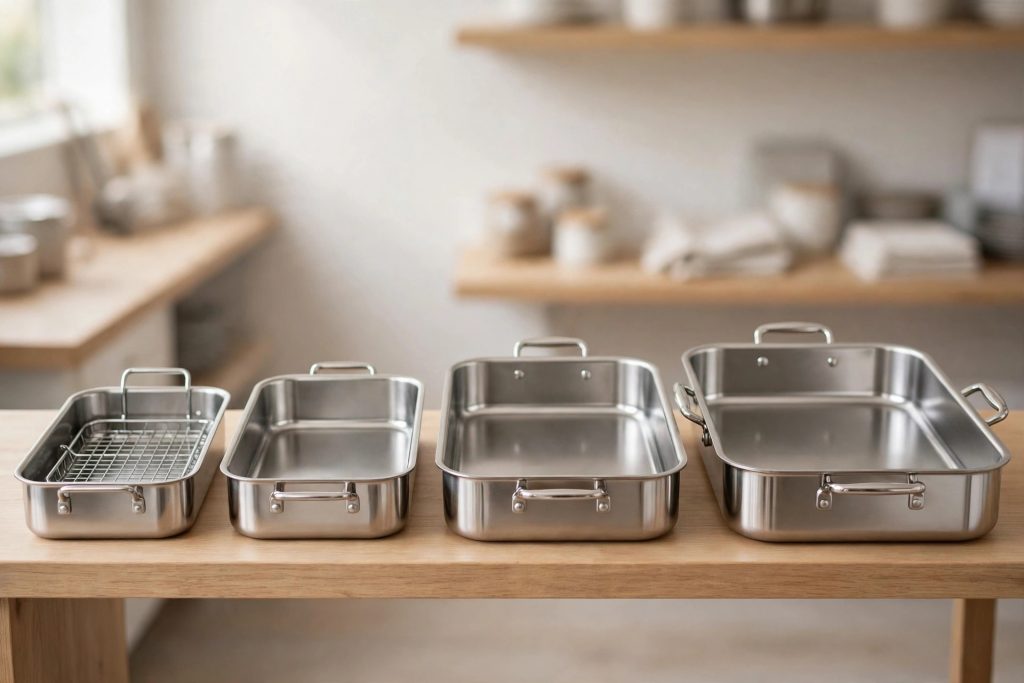
Shops that sell kitchenware know that wholesale roasting pans suppliers are the quiet backbone of a good roast season, since a sturdy pan is the item a home cook reaches for whenever a family meal is on the table. Roasting pans sell steadily through the year, and demand rises sharply when holidays and family gatherings come around, so a shop that stocks them well rarely sits on dead stock. A pan is also a gift item, since shoppers buy roasting pans for new homes and for cooks who are setting up a kitchen, which gives the range a second reason to sell. This guide explains why roasting pans sell well, what a good wholesale range covers, how to choose a supplier you can trust, how to price and order for your shop, and how to display the pans so they sell more. A shop that gets the range right will see steady sales, happy cooks, and repeat visits from shoppers who trust the shelf.
Why Wholesale Roasting Pans Sell Well
Roasting pans sell well because roasting is a cooking style that never goes out of fashion, and every home that owns an oven needs a pan to roast in. A roast is the centre of many family meals, and a cook who wants juicy meat and crisp skin will look for a pan that holds heat well and catches the juices. The pan also suits many foods, from chicken and pork to beef, lamb, and roast vegetables, so one item serves many kinds of cooking and many kinds of shopper. Pans also wear out and get replaced, since a thin pan warps and a scratched surface sticks, so shoppers return for a better pan after a cheap one lets them down. A good pan is a lasting item, and shoppers are willing to pay for one that feels solid in the hand.
What a Good Wholesale Range Covers
A good wholesale range covers the sizes a home cook actually needs, from a small pan for a chicken to a large pan for a holiday roast, so every shopper finds a fit. The range should cover the main materials too, since stainless steel suits cooks who want a pan that lasts, enamelled steel suits cooks who want easy cleaning, and non stick suits cooks who want a fast wipe down after the meal. A range with racks included suits most buyers, since the rack lifts the meat and lets hot air move around it, yet a range should also offer pans without a rack for shoppers who already own one. Handles matter in a range, since sturdy handles that grip well with oven gloves make a heavy roast safe to lift, and shoppers will notice the difference at once.
Choosing a Supplier You Can Trust
Choosing a supplier starts with the quality of the pans themselves, since a shop that sells a pan that warps or sticks will hear about it from unhappy cooks. Ask for a sample before you order in bulk, and test the pan yourself, since a pan that feels solid in the hand and sits flat on a bench is worth stocking, while a thin pan that flexes is not. Check that the supplier offers steady stock, since a range that runs out before a holiday is a lost sale, and a supplier who can restock fast is worth more than one who offers a low price once. Look for clear terms on damaged stock too, since a few pans in every delivery may arrive dented, and a supplier who replaces them quickly keeps your shelf full and your shoppers happy. For shops building a kitchenware range, Skyrocs offers a helpful starting point, and the wholesale range covers everyday items for shops that want steady stock.
The supplier should also give you clear facts about each pan, since your staff need to answer questions about size, material, and care. A supplier who shares honest details about weight, finish, and rack size helps your staff sell with confidence, while a supplier who hides those facts leaves your staff guessing. Check the packaging as well, since a pan that arrives in a sturdy box with a clear label is easy to shelve and easy to gift wrap, while a pan in flimsy packaging looks cheap on the shelf. A supplier who answers messages quickly and fixes problems without a fuss is the kind a shop can build on, and a trial order is the best way to learn how a supplier behaves before you commit to a larger range.
Pricing and Ordering for Your Shop
Pricing a roasting pan starts with the cost of the pan and the value it gives the cook, since a pan that lasts for years is worth more than a thin pan that warps in a season. Set a price that leaves room for your margin and still feels fair to the shopper, and keep the price steady so shoppers learn to trust the shelf. Offer a value pan at a friendly price to bring shoppers in, and place the premium pan beside it so shoppers who want the best can trade up without leaving the shop. Watch how fast each size sells, since a size that moves quickly deserves more shelf space, while a size that sits should be ordered in smaller numbers. Keep a small buffer of stock before holidays, since roast season brings a rush and a shop that runs out loses sales to the shop next door.
Displaying Wholesale Roasting Pans to Sell More
Displaying roasting pans well starts with putting them where shoppers can lift one and feel its weight, since a pan that feels solid sells itself. Place the pans at a height that is easy to reach, and stack them with the largest at the bottom so the display looks tidy and safe. Put a rack beside a pan so shoppers can see how the pair works, and add a basting brush and a carving knife nearby to build a small roast display that sells several items at once. A sign that speaks about juicy roasts and even heat will catch the eye of a shopper who came in for something else, and a pan that sits near the ovenware will catch the cook who is already thinking about dinner. Keep the display clean and the pans facing forward, since a dusty pan looks like old stock.
Seasonal displays lift sales further, since a roast display near a holiday will catch the shopper who is planning a family meal. Place a recipe card or a simple serving idea beside the pans, since a shopper who can picture the roast on the table is more likely to buy the pan. Group the pans by size so a shopper can compare them at a glance, and place the premium pan at eye level so the best pan is the first one seen. A window display with a pan, a rack, and a few fresh herbs will stop a passer by and bring them inside. A shop that displays its pans with care will sell more of them, and the range will keep earning its place on the shelf.
Frequently Asked Questions
How do wholesale roasting pans suppliers help a kitchen shop?
They give a shop a steady source of sturdy pans in the sizes and materials home cooks want, so the shelf stays full through the year and the shop can meet holiday demand without running out.
What should wholesale roasting pans suppliers offer in a range?
They should offer small, medium, and large pans, a choice of stainless steel, enamelled steel, and non stick finishes, pans with and without racks, and a spread of prices from value to premium.
How do I choose among wholesale roasting pans suppliers?
Order a sample first and test the weight, the flatness of the base, and the strength of the handles, then check stock reliability, clear terms for damaged pans, and how quickly the supplier answers and fixes problems.
What should a shop order first from wholesale roasting pans suppliers?
Order a modest set that covers the main sizes with racks included, plus a value pan and a premium pan, then reorder the sizes that sell fastest once the sales pattern is clear.
Where should a shop display stock from wholesale roasting pans suppliers?
Place the pans at easy reach near the ovenware, stack them largest at the bottom, set a rack and a basting brush beside them, and build a seasonal roast display near a holiday to catch shoppers planning a family meal.