
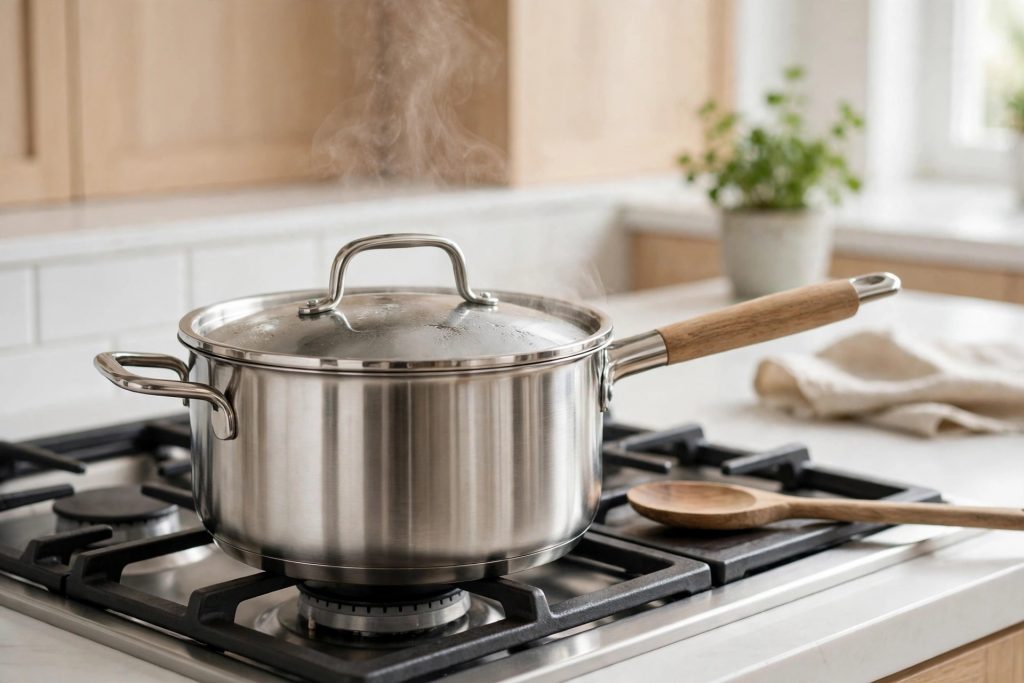
A saucepan for easy cooking is the pan a home cook reaches for most days, since it handles sauces, soups, grains, and reheating with a calm ease that a larger pot cannot match. A good saucepan heats evenly from base to rim, so a sauce thickens smoothly instead of catching at the edges, and the spout pours cleanly so not a drop is lost on the bench. Many cooks blame their own skill when a sauce splits or a soup scorches, yet the pan often makes the difference, since a thin base lets heat spike while a sturdy base keeps it steady. A saucepan with a comfortable handle and a lid that fits well turns everyday cooking into a smooth routine, and a pan that suits your hob will earn its place on the stove. This guide explains why easy cooking matters, how a saucepan works, what to look for when you buy one, how to use it well, and how to keep it clean and ready for the next meal. A pan that fits your kitchen will make cooking feel lighter, and a sauce made in it will taste better for it. A pan that fits your hob, feels balanced in your hand, and pours without dripping will be the one you reach for first every day.
Why Easy Cooking Matters
Easy cooking matters because the meals a family eats most often are the simple ones, and a pan that makes them simple will be used every day. A sauce that comes together without lumps, a soup that heats without scorching, and a grain that cooks evenly are small wins that add up to calmer evenings in the kitchen. When cooking feels easy, a cook is more likely to make a meal from scratch, and a family that eats at home more often eats better and spends less. Easy cooking also suits busy days, since a pan that heats fast and cleans fast fits the gap between work and dinner, and a meal that takes little effort is a meal that actually gets made. A saucepan that works well takes the strain out of the daily routine, and the cook gains time for the table instead of the sink.
How a Saucepan for Easy Cooking Works
A saucepan works by spreading heat evenly across its base, so the food cooks at the same pace from edge to edge. The pan is usually made from metal that holds heat well, and the thick base stops hot spots from forming, which is what scorches a sauce at one edge while the rest stays thin. The straight sides of the pan matter too, since they hold the liquid in a deep pool that heats evenly, and they also make stirring easy, since a spoon can reach every corner without missing a spot. A lid that fits well traps steam and heat, so soups and grains cook faster and stay moist, and a lid with a small vent lets steam escape gently without lifting. The handle stays cool enough to grip, and a handle that balances the pan makes pouring safe and steady.
Choosing the Right Saucepan for Your Kitchen
Choosing a saucepan starts with the size of the meals you cook most, since the pan must hold the sauce or soup you make without crowding the sides. Think about the dishes you cook each week, and pick a pan that holds the largest sauce you make with room to stir. The material matters too, since heavy stainless steel holds heat well and cleans easily, while enamelled steel offers a smooth surface that resists stains. Look for a pan with a sturdy handle that stays cool and feels balanced in the hand, since a full pan of hot soup is heavy and a weak handle is a risk. A lid that fits snugly is worth having, since it traps heat and keeps the food moist, and a glass lid lets you watch the food without lifting it. For cooks looking for everyday kitchen tools, Skyrocs offers a helpful starting point, and the pet supplies range covers daily items for homes that share their kitchen with a cat or a dog.
Using Your Saucepan for Easy Cooking
Using a saucepan well starts with heating the pan gently before the food goes in, since a pan that heats slowly gives a sauce time to thicken without catching. Add a little fat or liquid first, and let it warm through, then add the rest of the food and stir from the base, since stirring from the base keeps the sauce moving and stops it from sticking. Keep the heat at a level that suits the dish, since a sauce needs a gentle simmer while a soup can take a firmer boil. Stir often with a wooden spoon, since a wooden spoon reaches the corners and will not scratch the surface. Put the lid on when the dish needs to hold its moisture, and take it off when the sauce needs to reduce and thicken. A sauce that is stirred well and heated gently will turn out smooth every time.
Cleaning and Storing Your Saucepan for Easy Cooking
A saucepan earns its place when it is easy to clean, since burnt sauce left in the pan will spoil the next meal. Soak the pan in warm water with a little mild soap as soon as it cools, and the stuck on sauce will loosen without hard scrubbing. Use a soft cloth or a non scratch sponge to clear the base and the sides, and pay attention to the rim and the spout where sauce gathers and hardens. A little baking soda helps with stubborn marks, and the lid should be washed with the pan so its rim stays clean too. Dry the pan at once with a clean towel, since water left in the pan can dull the finish over time, and a dry pan stores better than a damp one. Avoid harsh scourers on a non stick surface, since scratches catch food and make the next sauce stick.
Store the pan where it is easy to reach, since a pan buried under heavy pots will be hard to lift out and easy to damage. Keep the lid with the pan so the pair stays together, and slip a soft cloth between the pan and any pan stacked on top of it to guard the surface. A cool cupboard away from heat suits the pan best, since heat can warp thin metal over time. Check the handle now and then to make sure it stays firm, since a loose handle on a pan full of hot soup is a risk. A pan that is cleaned and stored well will last for many years, and it will be ready whenever a sauce is on the menu. Good care is simple, and it keeps the pan working as well as the day you bought it.
Frequently Asked Questions
Is a saucepan for easy cooking needed for home cooking?
It is not needed, yet it makes a clear difference, since a sturdy pan heats evenly, pours cleanly, and holds a sauce at a steady simmer. Cooks who make sauces and soups often will find it worth the cupboard space, while cooks who rarely cook can manage with a larger pot.
How does a saucepan for easy cooking work?
The thick base spreads heat evenly so no edge scorches, the straight sides hold the liquid deep enough to stir, the lid traps heat and moisture, and the pour spout lets a hot sauce flow cleanly into a bowl.
What size saucepan for easy cooking should I buy?
Buy a pan that holds the largest sauce or soup you make with room to stir, and check that the base sits flat on your hob. A pan that is too large lets a small sauce spread thin and burn, while a snug pan keeps it deep enough to cook evenly.
How do I clean a saucepan for easy cooking after use?
Soak it in warm water with a little mild soap as soon as it cools, clear the base, rim, and spout with a soft cloth, use a little baking soda for stubborn marks, and dry it fully before you store it.
What should I look for when buying a saucepan for easy cooking?
Look for a thick base that holds heat, a sturdy handle that stays cool, a lid that fits snugly, a pour spout that flows cleanly, and a size that fits both your usual meals and your hob.