
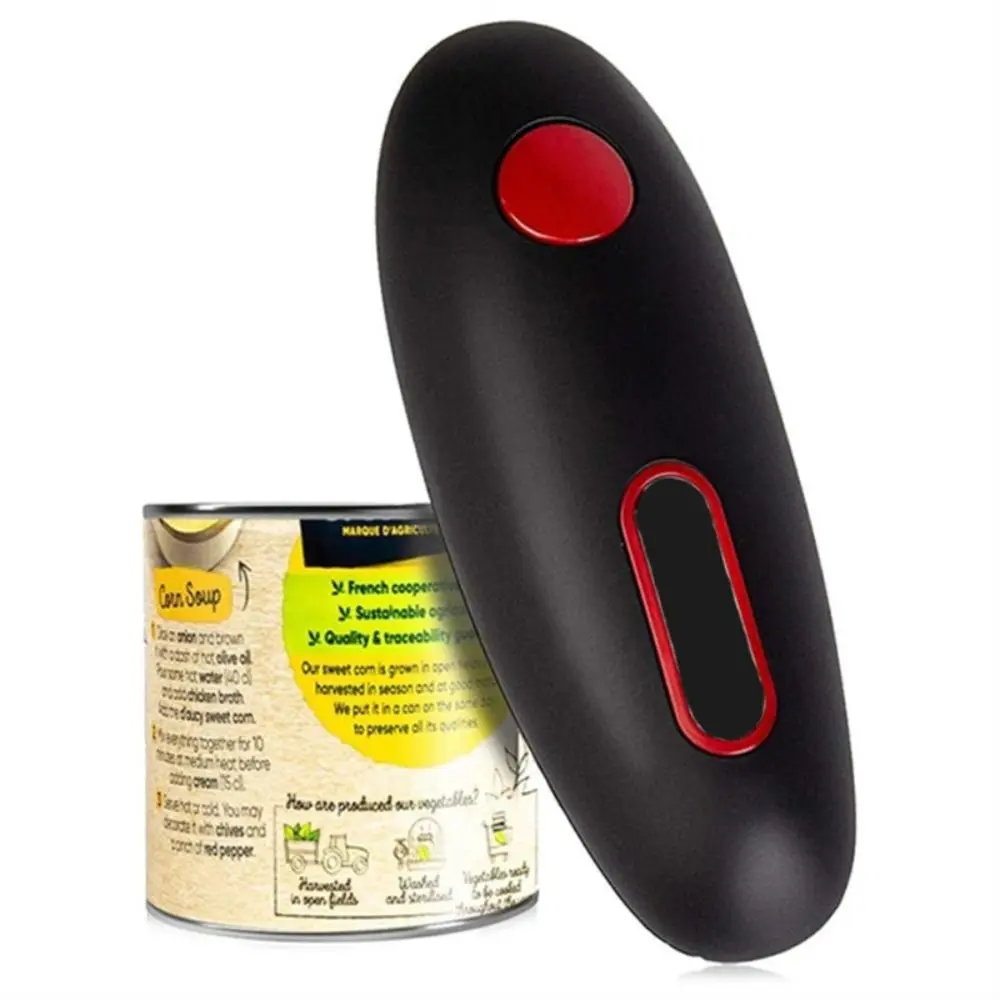
Opening a can shouldn’t be the hardest part of making dinner. But for millions of seniors with arthritis, the simple act of twisting a manual can opener turns into a painful battle — stiff fingers can’t grip the handles, the knob won’t turn, and the sharp lid it leaves behind is an accident waiting to happen.
An electric can opener for seniors with arthritis removes all of that. You place it on the can, press one button, and walk away. No gripping, no twisting, no sharp edges. If you or someone you love has been avoiding canned foods because the opener is too painful to use, this small gadget genuinely changes the daily routine.
Why Manual Can Openers Are Brutal on Arthritic Hands
A standard manual can opener demands three things arthritis takes away: grip strength, wrist rotation, and sustained pressure. You clamp the handles (grip), crank the knob (rotation), and hold everything steady (pressure) — all while your knuckles are inflamed and stiff.
It gets worse with age. Manual openers leave jagged lids that are hard to lift and easy to cut yourself on, especially when hand control is already shaky. Many seniors quietly switch to asking family members for help, or they stop buying canned goods altogether — which means fewer affordable, nutritious meal options.
An electric model flips the equation: the machine does 100% of the work, and your hands do nothing but press a button.
How a One-Touch Electric Can Opener Works
The best modern designs are compact, battery-powered units that sit on top of the can — not the bulky countertop machines from decades ago. Here’s the sequence:
- Place it on the lid. The opener’s magnetic head locks onto the top of the can automatically.
- Press the button once. A small motor drives a cutting wheel around the rim.
- It cuts and walks. The opener rotates itself around the entire lid in about 20–30 seconds, then stops on its own.
- Lift the lid with the magnet. The lid comes off attached to the opener’s magnet — no prying with a knife, no touching sharp edges.
Because it cuts along the side of the rim (a “smooth edge” cut) rather than punching through the top, the lid and the can edge are both smooth to the touch. That matters enormously for seniors with thin skin or poor grip control.
Key Features That Matter for Arthritis Sufferers
Not every electric opener is equally senior-friendly. Here’s what to prioritize:
True one-touch operation
The whole point is zero effort. Look for a model where a single press starts the cycle and it stops automatically — no holding the button down, no second press to release.
Zero grip strength required
The opener should lock onto the can by itself. If you still have to squeeze, clamp, or hold the unit in place, it defeats the purpose. A one-touch electric can opener with an auto-locking magnetic head is the gold standard here.
Smooth-edge cutting
Side-cut openers leave no sharp edges on the lid or the can. This isn’t just comfort — it’s safety for anyone with reduced sensation in their fingertips who might not feel a cut immediately.
Fits all standard can sizes
Soups, tuna, beans, pet food — the opener should handle the full range of can diameters without adapters or adjustments. One tool for the whole pantry.
Long battery life
Battery-powered models that run for dozens of cans per charge beat corded ones for convenience, and they work during power outages. USB rechargeable versions are ideal since there’s no battery drawer to fumble with.
How to Use It: Five Simple Steps
Even someone who’s never touched an electric opener can learn it in a minute:
- Set the opener on top of the can, centered on the lid. The magnet grabs it — you’ll feel it click into place.
- Press the button once. The motor starts and the cutting wheel engages.
- Let go. The opener walks itself around the rim. You can literally walk away.
- Wait for it to stop. It halts automatically when the cut is complete.
- Lift the opener. The lid comes with it, held by the magnet. Tilt it over the trash and press the release — lid drops, done.
Total hand effort: one button press. Total time: under 30 seconds.
Electric vs. Manual: A Quick Comparison
| One-Touch Electric Opener | Manual Twist Opener | Under-Cabinet Electric | |
|---|---|---|---|
| Grip strength needed | None | High | Low |
| Wrist twisting | None | Constant | None |
| Sharp lid edges | No (smooth cut) | Yes | Sometimes |
| Learning curve | 1 minute | Years of practice | Moderate (mounting) |
| Portability | Drawer or countertop | Drawer | Fixed to cabinet |
| Best for | Arthritis, seniors, weak hands | Able-bodied users | Users with counter space |
For anyone with arthritis, the one-touch electric style wins on every dimension that matters.
Other Arthritis-Friendly Kitchen Swaps Worth Considering
Once the can opener problem is solved, these are the next biggest pain points seniors report — and each has a modern gadget answer:
- Jar lids — look for electric jar openers or silicone grip pads.
- Chopping — push-down vegetable choppers replace knife work for onions, garlic, and herbs.
- Oil control — a spray mister replaces heavy pour bottles for cooking with less oil.
- Cleaning — electric scrubbing brushes with long handles save bent wrists and backs.
Small upgrades compound. A kitchen where every tool respects your hands is a kitchen you’ll actually cook in.
The Bottom Line
An electric can opener for seniors with arthritis isn’t a luxury — it’s an independence tool. It returns canned foods to the menu, eliminates a daily source of hand pain, and removes the sharp-lid safety risk, all for the cost of a few restaurant meals.
If stiff hands have been making dinner harder than it needs to be, start here. It’s the single highest-impact kitchen upgrade most seniors can make — a one-touch electric can opener pays for itself the first week you don’t have to ask for help. Browse the Skyrocs shop for more kitchen gadgets designed to make cooking easier on your body.
Frequently Asked Questions
Will an electric can opener work if my hands are very weak?
Yes — that’s exactly what they’re designed for. A one-touch model requires only enough finger movement to press a button. The opener locks onto the can magnetically, so no gripping, squeezing, or holding is involved at any point.
Is it safe for someone with shaky hands?
Safer than a manual opener. The smooth-edge cut leaves no sharp edges, the lid is lifted by magnet (no fingers near the rim), and there’s no blade exposed during operation. Supervision is still wise for anyone with severe tremors, but the risk profile is much lower.
Can it open all can sizes, including large ones?
Most one-touch models handle standard cans from small tuna tins up to large 28-ounce tomato cans. They don’t work on rimless cans or certain pull-tab lids, but those don’t need an opener anyway.
How long do the batteries last?
A quality battery-powered opener typically opens 40–60 cans per charge. USB rechargeable models are the most convenient — no battery compartment to open with stiff fingers.
Is it hard to clean?
Very easy. Wipe the cutting wheel and magnetic head with a damp cloth after use. Because it cuts from the side, food rarely contacts the mechanism, unlike top-cutting manual openers that drag through the contents.
Does it work for left-handed users?
Yes. One-touch openers are fully ambidextrous — there’s no crank to turn and no handedness to the design. Place, press, done.
Pingback: One-Touch Electric Can Opener: Hands-Free Guide
Pingback: Knife Sharpener for Dull Kitchen Knives | Skyrocs