
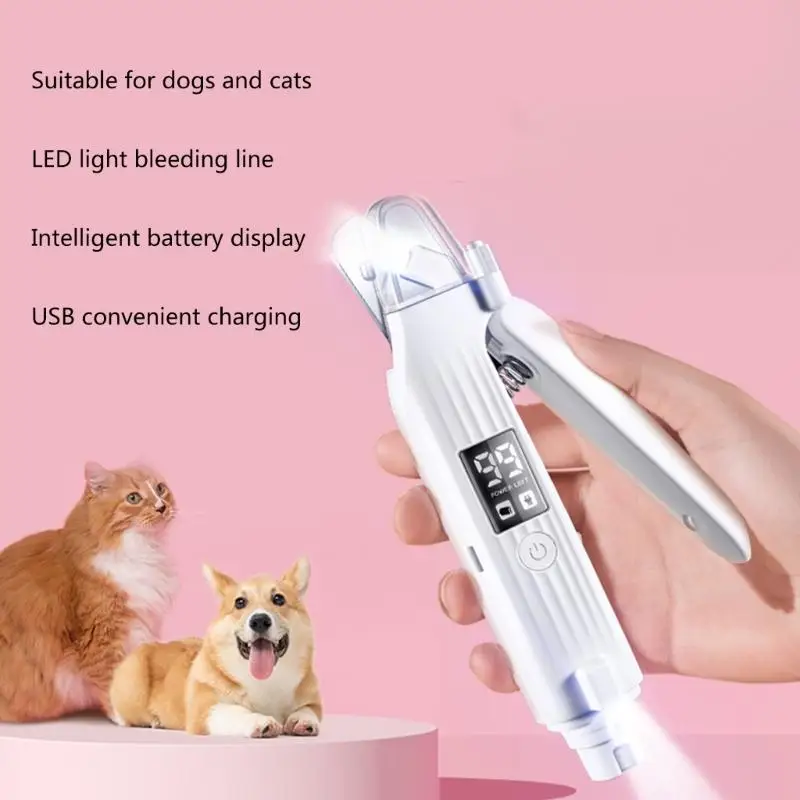
A pet nail grinder low noise model changes nail care from a wrestling match into a calm routine. Clippers squeeze the nail before they cut, and that pressure can startle or hurt a pet, especially if the nail is thick or dark and you cannot see the quick. A grinder files the nail down gradually instead, with no sudden squeeze and no sharp edge left behind. When the motor is also quiet, the whole experience becomes far less stressful for both of you.
Why Grinders Beat Clippers for Many Pets
Clippers work fast, but speed is not always kindness. One wrong cut on a dark nail can nick the quick, cause bleeding, and create a memory that makes the next session much harder. Even a correct clip leaves a flat edge that can snag on carpets and furniture, and some pets chew at that rough edge afterward.
A grinder removes a thin layer at a time. You can stop, check your progress, and round the tip so it feels smooth. That control matters most for dogs with thick nails, older pets whose nails grow brittle, and cats that will only tolerate brief handling. A low-noise grinder adds one more advantage: the sound stays in the background instead of becoming the scariest part of the session.
Grinders are not perfect for every pet. Very long, overgrown nails still need several short sessions rather than one marathon grind, and pets that hate having their paws touched need gradual training first. But for regular maintenance, a quiet grinder is often the gentlest tool available.
What Makes a Grinder Quiet
Grinder noise comes from the motor, the vibration in the handle, and the friction of the grinding head. Low-noise models tackle all three with smaller motors, better balance, and smoother grinding surfaces.
Look for a motor described as low vibration, and a speed range rather than a single high speed. As an example, a grinder with two or three speeds lets you start on the lowest setting for a nervous pet and only move up once they relax. A single-speed grinder that runs at full power from the first second gives you no way to ease in.
The grinding head matters too. Diamond-coated drums tend to file smoothly and last longer than rough sandpaper bands, which can wear unevenly and chatter. A drum that spins true, without wobble, sounds softer and files more evenly. If a grinder rattles in your hand, check that the drum is seated straight before blaming the motor.
Weight and grip also affect perceived noise. A slim, lightweight grinder that sits comfortably in your hand transfers less vibration to your fingers, and you hold it more steadily. A steady hand means shorter contact per nail, which means less total noise exposure for your pet.
Choosing the Right Low-Noise Grinder
Match the grinder to your pet’s size. Small grinders suit cats and small dogs, while larger dogs with thick nails need a stronger motor and a wider drum. Using an underpowered grinder on thick nails forces you to press harder and grind longer, which defeats the purpose of a quiet tool.
Consider power source as well. Rechargeable grinders are convenient and quiet enough for home use, and a USB-charged model avoids the cost and waste of disposable batteries. Corded models run longer without fading, but the cord can get in the way when a pet shifts. For most households, a rechargeable model with at least 2 hours of charge as an example covers several grooming sessions before it needs plugging in.
Check the safety features. A good grinder has a guard or a small opening that limits how much nail touches the drum, which helps prevent over-grinding. Some models include a built-in light that makes the nail easier to see, which is especially helpful for dark nails. Neither feature replaces careful technique, but both reduce the chance of a mistake.
Finally, think about cleanup. A grinder that opens easily lets you brush out nail dust after each session. Dust buildup dulls the drum and adds noise over time, so a design you can actually clean will stay quieter for longer.
Desensitizing Your Pet, Step by Step
The quietest grinder still fails if your pet panics at the sight of it. Desensitization works best in short, positive steps spread over a week or two, not in one long session the day you need a trim.
Start by letting your pet sniff the grinder while it is off, and pair that with treats. Next, hold a paw gently for a few seconds, treat, and release. Then turn the grinder on across the room so your pet hears the sound at a distance, and reward calm behavior. Over several days, bring the sound closer, touch the handle (not the drum) to a paw, and finally grind one nail for two or three seconds before stopping with a treat.
Keep early sessions to one or two nails. Ending while your pet is still calm teaches them that grooming stops before it gets scary. If your pet pulls away, growls, or freezes, stop and try again tomorrow at an easier step. Pushing through fear undoes days of progress.
For cats, work during a relaxed moment, such as after a nap, and keep the total session under five minutes as an example. For dogs, pair grinding with a walk or play session afterward so the routine ends on a positive note. Consistency beats intensity: two calm minutes twice a week will get nails shorter than one stressful twenty-minute battle.
A Safe Grinding Routine
When your pet is ready, work in good light and grind each nail for short bursts of two to three seconds, checking the tip between passes. On light nails, stop when you see a pale pink dot in the center, which signals you are nearing the quick. On dark nails, grind a little at a time and watch for a darker, moist-looking center, then stop.
Hold the paw firmly but gently, and keep the grinder at a slight angle rather than pressing straight onto the nail tip. This rounds the edge naturally and avoids heat buildup. If a nail feels warm, pause and move to another nail. Heat is a sign you have stayed on one spot too long.
After grinding, smooth any rough spots with one light pass and wipe paws clean. Reward your pet, even if you only finished a few nails. You can always finish the rest tomorrow. A routine that ends calmly is one your pet will accept again.
Frequently Asked Questions
Is a low-noise nail grinder really quieter than a regular one? Yes, in practice, because low-noise models use smaller, better-balanced motors and smoother drums. The difference is most obvious at low speeds. No grinder is silent, but a good one sounds like a soft hum rather than a loud buzz.
Can I use a nail grinder on a cat? Yes, with a small, low-speed grinder and patient desensitization. Cats usually tolerate brief sessions best, so grind one or two nails at a time and keep the total session short.
How often should I grind my pet’s nails? Most pets need attention every two to four weeks as an example. Active dogs that walk on pavement may wear nails down naturally and need less frequent grinding, while indoor pets and older animals often need it more often.
What if I accidentally grind too far? Stop immediately, apply styptic powder or cornstarch to the nail tip, and hold gentle pressure for a few minutes. Bleeding usually stops quickly. Give your pet a treat and a break, and resume at an easier step next time.
Grinder or clippers: which should I buy first? If your pet is nervous, has dark nails, or has had a bad clipping experience, start with a low-noise grinder. If your pet already tolerates clippers calmly, either tool works, and a grinder is still useful for smoothing edges after a clip.
A low-noise pet nail grinder turns a dreaded chore into a manageable habit. Pick a quiet, well-balanced model, introduce it slowly, and grind a little at a time. Your pet stays calmer, nails stay smooth, and neither of you dreads the next session. For more clever home and pet finds, browse Skyrocs, and if you buy for a shop or rescue, see the wholesale program for distributor options.
Browse matching pet gear in the Pet Supplies collection.