
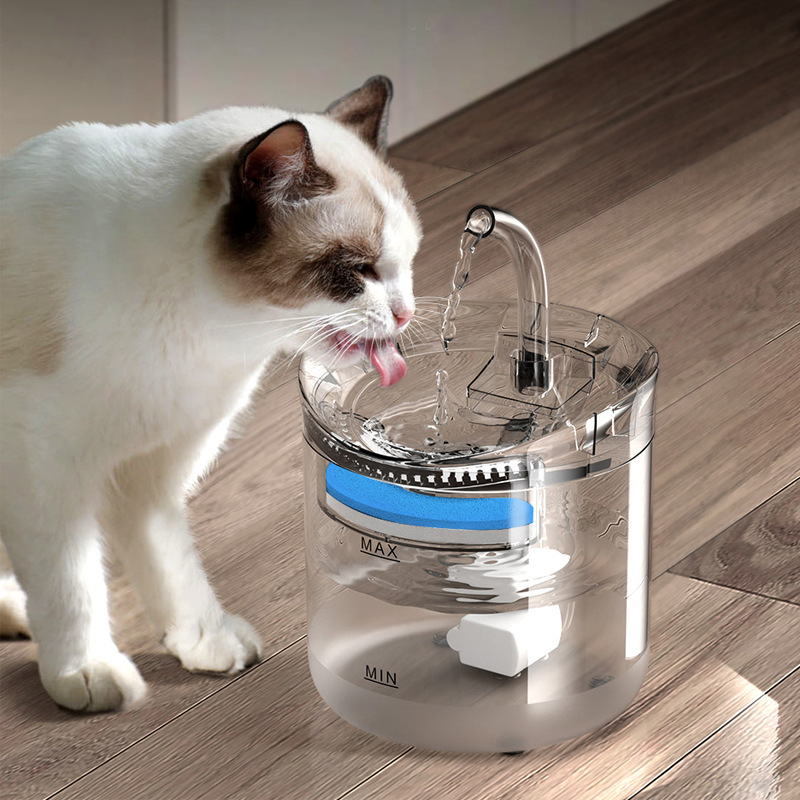
A cat water fountain quiet pump solves the most common reason fountains end up unplugged in a closet: noise. Cats are drawn to moving water, but they are also easily startled by humming motors, rattling impellers, and buzzing vibrations on a hard floor. A good quiet pump keeps water circulating and oxygenated while staying soft enough that you forget it is running and your cat drinks without hesitation. This guide explains what makes a pump quiet, how to choose one, and how to keep it silent over time.
Why Cats Prefer Running Water in the First Place
In the wild, still water can be stale or unsafe, while moving water is more likely to be fresh. Many house cats carry that instinct into the kitchen. They paw at a bowl, drink from a dripping tap, or ignore a full bowl that has sat out all day. A fountain answers that instinct by keeping water in motion, which also helps it stay cooler and better oxygenated than a stagnant bowl.
The problem is that a loud fountain works against the same instinct. A cat that approaches cautiously, hears a new buzz, and backs away may not try again for days. Noise-sensitive cats, older cats, and newly adopted cats are especially likely to avoid a fountain that hums or vibrates. Choosing a quiet pump is therefore not a luxury feature. It is the difference between a fountain your cat uses every day and one that only decorates the counter.
What Actually Makes a Pump Quiet
Pump noise comes from three sources: the motor itself, vibration transferred to the surface below, and water turbulence inside the fountain. Good designs address all three rather than relying on a single fix.
First, look for a low-wattage submersible pump with a sealed motor. Submersible pumps sit under water, and the water itself dampens sound. A pump rated for small fountains, typically in the range of 2 to 5 watts as an example, usually runs softer than an oversized pump forced to push water through a narrow spout. Oversized pumps also create splashing, which adds noise of its own.
Second, check how the pump mounts. A pump that sits on small rubber feet or a silicone pad transfers far less vibration to the countertop than one resting directly on hard plastic or ceramic. If your fountain buzzes against the floor, a thin silicone mat underneath often cuts the noise more than any other single change.
Third, consider the water path. A gentle, smooth stream is quieter than a tall, thin jet that falls several inches into a basin. Adjustable flow controls let you dial the stream down until it is barely audible while still keeping the water moving. A fountain that only offers one loud setting gives you no room to tune it to your home.
How to Choose a Quiet Pump Fountain for Your Cat
Start with size and placement. A fountain for one cat does not need a large reservoir, and a smaller basin usually means a smaller, softer pump. As an example, a 2-liter fountain suits one or two cats well, while a household with three or more cats may need a larger model so the water level stays high between refills. A low water level is a common cause of noise, because a pump that starts sucking air will gurgle loudly.
Next, look at materials. Stainless steel and ceramic basins tend to feel sturdier and are easy to clean, while plastic fountains are lighter and cheaper but can pick up scratches that harbor odor over time. Either material can house a quiet pump. The pump quality matters more than the basin material, so read the pump specifications rather than judging by the outside alone.
Also think about where the fountain will live. A quiet corner away from the food bowl works well, because many cats prefer to drink away from where they eat. Keep it off a hollow wooden shelf or a thin tray that can act like a soundboard. A solid countertop or a tile floor with a mat underneath is a better acoustic base. If the fountain must sit in a bedroom, test it overnight before deciding it is quiet enough.
Finally, check how easy the pump is to remove and clean. A pump that twists out in seconds will actually get cleaned. One that requires tools or force will be skipped, and a dirty pump is a noisy pump.
The Maintenance Routine That Keeps It Silent
Most quiet pumps do not stay quiet on their own. Hair, food particles, and mineral scale build up on the impeller, and the first symptom is usually a new hum or rattle. A simple routine prevents that.
Rinse the pump and basin once a week. Pull the pump out, remove its cover, and rinse the impeller under running water. Wipe away any slimy film, which is biofilm, and check for trapped hair around the shaft. In hard-water areas, soak the impeller in a mix of equal parts water and white vinegar for 20 minutes as an example, then rinse well before reassembling. This one habit resolves most noise complaints.
Change or rinse the filter on the schedule the maker suggests, often every two to four weeks as an example. A clogged filter forces the pump to work harder, which raises both noise and wear. Top up the water daily so the level never drops near the pump intake. If your fountain has a water-level window or an indicator light, use it rather than guessing.
Every few months, listen for changes. A pump that gradually gets louder may be wearing out. Replacement pumps for common fountain styles are usually inexpensive, and swapping a worn pump restores silence far more cheaply than replacing the whole fountain.
Helping a Hesitant Cat Learn to Use It
Even the quietest fountain needs an introduction. Start by placing the new fountain next to the old bowl, unplugged, for a day or two. Let your cat sniff and investigate it without any sound or moving water. Then run it on its lowest flow setting for short periods while you are nearby, and keep the old bowl available.
Reward calm approaches with a treat or quiet praise, and never push your cat toward the fountain or splash water at them. Patience here pays off: a cat that chooses the fountain freely will keep using it, while one that is startled on day one may avoid it for weeks.
Frequently Asked Questions
How quiet should a cat water fountain pump be? There is no single standard, but a good target is a soft hum you cannot hear from the next room with the door open. If you can hear it clearly from across the house, check the water level, clean the impeller, and add a mat underneath before assuming the pump is faulty.
Why did my quiet fountain suddenly get loud? The most common causes are a low water level, a dirty impeller, or a clogged filter. Top up the water, rinse the pump, and check the filter. If the noise stays after cleaning, the pump may be worn and due for replacement.
Do cats drink more from a fountain than from a bowl? Many cats do, because moving water matches their instincts and stays fresher. Results vary by cat, and some cats prefer a wide, shallow bowl. A fountain is worth trying if your cat ignores a still bowl or seems to drink very little.
How often should I clean a cat water fountain? Rinse the basin and pump weekly, change filters every two to four weeks as an example, and do a deeper clean monthly. Homes with hard water or several cats may need slightly more frequent cleaning.
Can I run a cat water fountain overnight? Yes, if the pump is genuinely quiet and the water level is full. Overnight running is one of the main benefits of a fountain, since cats often drink at night. If the noise disturbs your sleep, lower the flow setting or move the fountain to a tiled area away from the bedroom.
A quiet pump turns a cat water fountain from a gadget into a daily habit. Choose a small, submersible pump with adjustable flow, place it on a solid surface, and keep it clean. Your cat gets fresher water all day, and you get a home that stays peaceful. For more clever home and pet finds, browse Skyrocs, and if you buy for a shop or rescue, see the wholesale program for distributor options.
Browse matching pet gear in the Pet Supplies collection.