
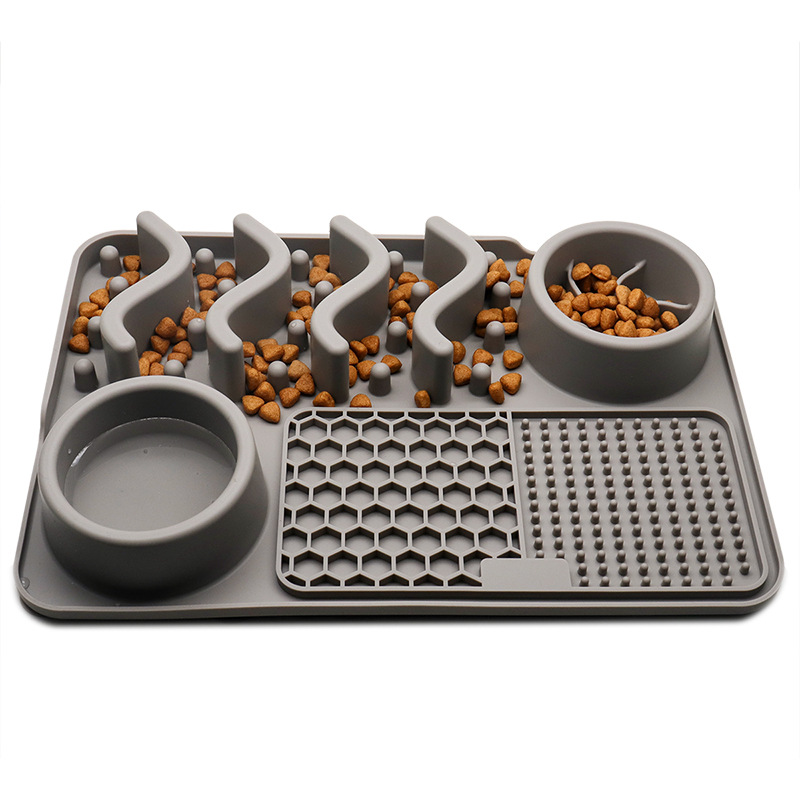
Repetitive licking is one of the few behaviors that genuinely calms a dog down. When a dog licks a flat, textured surface, it releases calming hormones and focuses its attention on a single, simple task. That is the idea behind a lick mat for dogs anxiety relief. It is a flat mat covered with small ridges, grooves, or suction cups, spread with soft food, that turns a few minutes of licking into a calming routine. Owners use lick mats during thunderstorms, fireworks, vet visits, grooming, and the first weeks of alone-time training.
Lick mats are not a cure for serious anxiety, and they do not replace training or veterinary advice. A dog with severe separation anxiety, panic, or destructive behavior needs a broader plan, and a vet or qualified behaviorist should be involved. But for everyday stress, boredom, and the mild restlessness that many dogs show at predictable moments, a lick mat is a cheap, low-effort tool that many owners reach for first. This guide explains how lick mats work, how to choose one, what to spread on it, and how to use it safely.
Why Licking Calms Dogs
Licking is a self-soothing behavior in dogs, similar to the way some people find repetitive tasks calming. Studies of canine behavior often describe licking as a way dogs release tension, and many owners notice that their dog settles after a long chew or lick session. A lick mat gives that instinct a safe outlet. Instead of licking paws, furniture, or the air, the dog licks food from a textured surface. The result is usually a slower heart rate, relaxed body language, and a dog that lies down quietly after finishing.
The calming effect also comes from focus. A dog that is licking a mat is not scanning the room, pacing, or barking at sounds. That redirection is useful during short stressful events. For example, a dog that panics at the sound of thunder may cope better if the lick mat appears a few minutes before the storm peaks, paired with a safe resting spot and background noise. The mat does not remove the fear, but it gives the dog something else to do while the fear passes.
When a Lick Mat Helps Most
Lick mats work best for short, predictable stressors. Bath time, nail trims, and grooming are classic uses: stick the mat to the tub wall or floor with its suction cups, and the dog stays still and focused while you work. Vet waiting rooms are another setting, since a mat can keep a nervous dog occupied without disturbing other animals. During fireworks or storms, a mat can be part of a calm-down kit alongside a covered crate, a white noise machine, and a familiar blanket.
Lick mats also help with boredom and feeding. Dogs that eat too fast can have part of their meal spread on a mat, which slows them down and adds mental stimulation. Dogs on restricted diets or weight plans benefit too, because a small amount of food spread thinly feels like a bigger treat than the same amount eaten from a bowl in seconds. For example, a spoonful of plain yogurt or mashed banana spread over a mat can occupy a medium dog for ten to fifteen minutes, which is a meaningful chunk of enrichment for very little effort.
Choosing the Right Mat
Most lick mats are made from food-grade silicone or thermoplastic rubber. Silicone mats are flexible, easy to clean, and often dishwasher-safe, which makes them a good default choice. Thicker mats last longer with enthusiastic lickers, while very thin mats may curl or tear. Suction cups on the back are useful for fixing the mat to a smooth floor or tub, but they are not essential if you plan to use the mat on carpet or grass. Size matters as well: a small mat suits toy breeds, while a large mat suits big dogs that need a longer session.
Texture is the other key choice. Shallow, wide patterns are best for beginners, puppies, and flat-faced breeds that struggle with deep grooves. Deeper patterns, with small squares or crosshatch ridges, hold thicker spreads and last longer for experienced dogs. Some mats combine two textures on one surface, which lets you use the easy side first and the harder side later. Avoid mats with sharp edges or very small parts that a strong chewer could bite off. A lick mat is meant for licking, not chewing, and it should be removed as soon as the food is gone.
What to Spread on a Lick Mat
Keep spreads simple, soft, and safe for dogs. Plain yogurt, mashed banana, pureed pumpkin, and peanut butter made without xylitol are popular options. Wet dog food, soaked kibble mashed into a paste, and low-sodium broth frozen onto the mat also work well. For a longer session, freeze the prepared mat for an hour or two before use: a frozen mat can last twice as long as a room-temperature one, which is helpful during long storms or grooming sessions.
Watch portions. It is easy to overfeed with lick mats, because spreads are calorie-dense and owners tend to reload the mat several times a day. Count the spread as part of the daily food allowance, especially for dogs on a weight plan. Avoid toxic foods entirely: chocolate, grapes, raisins, onions, garlic, and any peanut butter containing xylitol must never go on a mat. If your dog has allergies, a sensitive stomach, or a medical diet, check new spreads with your vet before trying them.
- Safe starters: plain yogurt, mashed banana, pureed pumpkin, xylitol-free peanut butter.
- Longer sessions: freeze the prepared mat for one to two hours before use.
- Portion rule: count every spread toward the daily food allowance.
- Never use: chocolate, grapes, raisins, onions, garlic, or xylitol products.
- After use: rinse or wash the mat and remove it until next time.
Using a Lick Mat Safely
Always supervise the first few sessions. Some dogs try to pick the mat up and chew it, especially if they finish the food and want more. If your dog starts biting the mat, remove it calmly and try again another day with a thicker mat or a shorter session. Never leave a dog alone with a lick mat until you are confident it will lick rather than chew. Inspect the mat before each use: discard it if it has tears, bite marks, or loose pieces, since a damaged mat can be swallowed in pieces.
Clean the mat after every use. Food residue left in grooves can grow bacteria and attract insects, especially in warm weather. Most silicone mats rinse clean under running water, and many can go in the dishwasher. If your mat has deep grooves, use a brush to clear them. Rotate between two mats if you use them daily, so one can dry fully while the other is in use. As an example, owners who use a mat every evening often keep one in the freezer, ready to go, and one drying on the rack.
Frequently Asked Questions
Can a lick mat cure separation anxiety?
No. A lick mat can reduce stress during short absences and support a training plan, but true separation anxiety needs gradual desensitization, and sometimes medication, guided by a vet or behaviorist. Treat the mat as one helpful piece of a bigger plan.
How often can I use a lick mat?
Once or twice a day is reasonable for most dogs, as long as portions are counted. Daily use is fine if the mat is cleaned after each session and the dog is supervised. If your dog becomes obsessed with the mat or refuses regular meals, cut back and talk to your vet.
Are lick mats safe for puppies?
Yes, with supervision and a shallow pattern. Puppies enjoy licking, but they also chew more than adult dogs, so keep sessions short, remove the mat when the food is gone, and choose a thick, durable design.
Can I use a lick mat for cats?
Many cats enjoy lick mats too, especially with wet food or pureed treats. Use a smaller mat, a shallow pattern, and cat-safe spreads, and supervise the first sessions the same way you would with a dog.
Conclusion
A lick mat for dogs anxiety relief is a simple, affordable way to add calm moments to a dog’s day. It works by giving a natural self-soothing behavior a safe outlet, and it doubles as enrichment, slow feeding, and a grooming helper. Choose a sturdy, easy-to-clean mat, use safe spreads in sensible portions, supervise early sessions, and clean the mat after every use. If you want to explore related feeding and enrichment options, browse the pet supplies category. Used well, a lick mat can turn the hardest ten minutes of a dog’s day into its calmest.