
Why Pet Beds Deserve a Deliberate Stocking Plan
Pet beds look like a simple category, but they behave like three categories in one. A small apartment dog, a senior large breed, and a cat that sleeps in sunbeams all need different beds, and a shop that stocks only one style will miss two of those customers. Retailers who plan the range deliberately, by bed type, size, and price tier, sell more beds per square foot of shelf than shops that buy whatever a supplier pushes that month. Working with wholesale pet beds suppliers rewards that planning, since suppliers offer better terms to buyers who order a coherent range rather than a random assortment.
The category also carries a repeat logic that many pet products lack. Beds wear out, get chewed, get washed until the filling flattens, and get replaced when a puppy grows into an adult dog. A customer who buys the right bed once comes back for a second one, for a second pet, or as a gift for another pet owner. A bed that flattens in a month costs you the repeat sale and the review, while a bed that holds up earns both.
Bed Types: Donut, Orthopedic, and Cooling
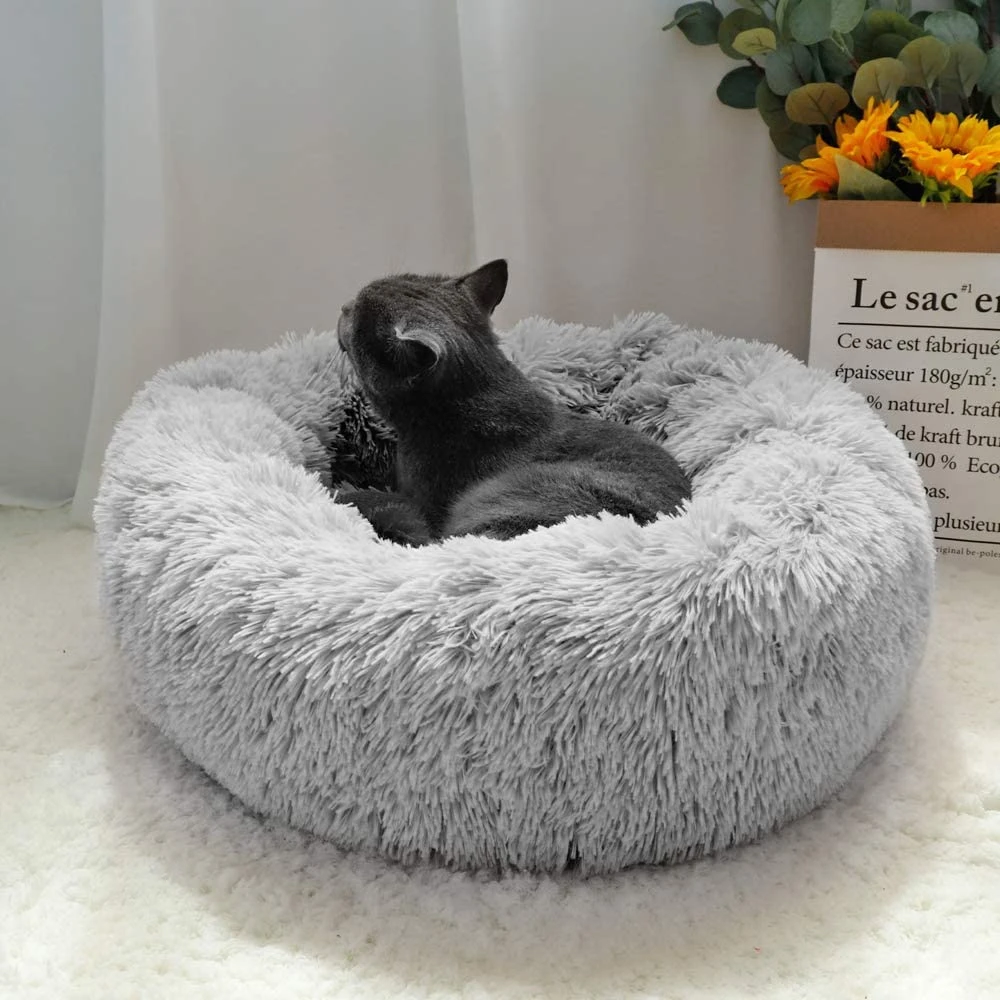
Donut beds, also called bolster beds, have raised edges around a sunken center, and they suit pets that like to curl up and rest their heads on a rim. They are the most popular style for small and medium dogs and for cats, and they photograph well for online listings. The key quality check is the bolster itself: it should spring back after compression, not stay flat, since a bolster that collapses in a week turns a donut bed into a flat mat. Check the stitching where the bolster meets the base, because that seam takes the most stress when a pet steps in and out.
Orthopedic beds use dense foam, often memory foam, to support joints and distribute weight, and they target senior pets, large breeds, and pets recovering from injury. The selling point is real, but the quality range is wide. Cheap foam that feels soft in the store compresses permanently under a heavy dog within weeks, while dense foam holds its shape for years. Ask suppliers for foam density specifications, and test a sample under weight for several days before committing to a large order. A short test now prevents a wave of returns later.
Cooling beds use gel layers, breathable mesh, or elevated frames to move heat away from the pet, and they sell best in warm climates and during summer. Their weakness is durability: gel layers can leak if punctured, and mesh tears if a pet digs. Stock cooling beds seasonally rather than year-round in temperate markets, and pair them with clear care instructions so customers know not to machine wash a gel insert. A cooling bed that leaks in the first wash is a return and a bad review in one package.
The Size Matrix: Stock by Pet, Not by Shelf
The most common stocking error is buying sizes by guesswork. Build your matrix from pet sizes, not from what fits neatly on a shelf. A workable starting matrix covers four tiers: small (cats and toy breeds), medium (beagles, corgis, and similar), large (labradors, boxers, and similar), and extra-large (great danes and similar giant breeds). Within each tier, stock one donut option and one orthopedic option at different price points, so every customer finds both a style and a budget that fit. That structure gives a shop of modest size a full-looking range without overinvesting in slow sizes.
Weight limits matter more than the size label. Two beds both labeled large can differ by ten kilograms in rated capacity, and a bed rated below the pet’s weight will flatten and fail early. Print the weight range on your shelf tags and in your online listings, not just the size name, and train staff to ask the pet’s weight before recommending a bed. Returns drop sharply when the recommendation starts from weight rather than from breed guesses. If a supplier cannot give weight ratings, treat that as a gap in their product data, not as a detail you can skip.
MOQ: How to Read It and Negotiate It
Minimum order quantity, or MOQ, is the smallest order a supplier will accept per style, color, or size, and it shapes your cash flow more than the unit price does. A low unit price with a high MOQ can lock your money into a slow size for a year, while a slightly higher unit price with a low MOQ lets you test a new style with little risk. Before negotiating price, negotiate structure: ask whether the MOQ applies per size or per style, whether colors can be mixed within one MOQ, and whether a first order can be smaller as a trial. Many suppliers will flex on structure for a new retail account, even when they hold firm on price.
Margin Math: A Worked Example
Margin math for pet beds is straightforward, but retailers often skip it and discover too late that a popular bed earns almost nothing. The formula is simple: subtract the landed cost, meaning the wholesale price plus shipping, import costs, and any per-unit fees, from the retail price, then divide by the retail price. The result is your gross margin percentage. Always use landed cost, not the catalogue price alone, since shipping on bulky beds can erase several points of margin.
Consider an illustrative example only, not real supplier data: a retailer buys a donut bed at a landed cost of 20 currency units and sells it at 45 currency units. The gross profit is 25 units, and the margin is about 56 percent. That sounds healthy, but it is not the full picture. Subtract payment processing, packaging, staff time, and the cost of returns, and the net margin falls. If returns run at 5 percent and processing takes another 3 percent, the realistic margin lands closer to 48 percent. This example is illustrative only, and your numbers will differ by supplier, market, and channel. The discipline is what matters: run this math for every bed before you stock it, not after it fails to pay for its shelf space.
Returns and Quality Checklist
Agree return terms before the first order, not after the first defect. Ask the supplier to state in writing who pays return shipping for defective units, what defect rate triggers a batch replacement, and how quickly replacements ship. A supplier who answers clearly is usually a supplier who has handled defects before, which is a good sign. A supplier who waves the question away is a risk, since unclear terms become your cost when the first batch arrives with a flaw.
Run this checklist on every incoming batch. First, inspect seams and zippers on a sample from each size, pulling gently to test stitch strength. Second, compress the filling and the bolster and check that both spring back within seconds. Third, wash one cover exactly as the care label instructs, and check for shrinkage, color bleeding, and zipper function after drying. Fourth, weigh the bed and compare it to the stated specification, since underweight filling is a common quiet shortcut. Fifth, check the label for accurate care instructions, materials, and weight limits, because wrong labels create returns even when the bed itself is fine. Reject or quarantine any batch that fails two or more checks, and photograph the failures before contacting the supplier.
Retailers building a wholesale pet range should also review the wholesale cat toys suppliers guide for a companion buying framework, and visit the wholesale program page to see how to open a trade account and request current terms.
Frequently Asked Questions
How many sizes should a small shop stock?
Four size tiers, small through extra-large, with one donut and one orthopedic option per tier, cover most customers without overinvesting. Add cooling beds seasonally in warm markets. Track sell-through by size and adjust the second order from that data.
What MOQ should a new retailer accept?
Accept an MOQ that covers about three months of expected sales per size, and negotiate mixed colors within one MOQ where possible. A low unit price is not a bargain if the MOQ locks cash into a slow size for a year.
How do I test orthopedic foam before ordering?
Request a sample, place a weight equivalent to your target pet on it for several days, and check whether it springs back fully. Ask the supplier for foam density specifications, and compare samples from two suppliers side by side before committing.
What defect rate should trigger a batch claim?
Agree the threshold in writing before ordering, since it varies by supplier. As a starting point, a defect rate above 3 to 5 percent on seams, zippers, or filling warrants a batch conversation, and photograph failures before raising the claim.