
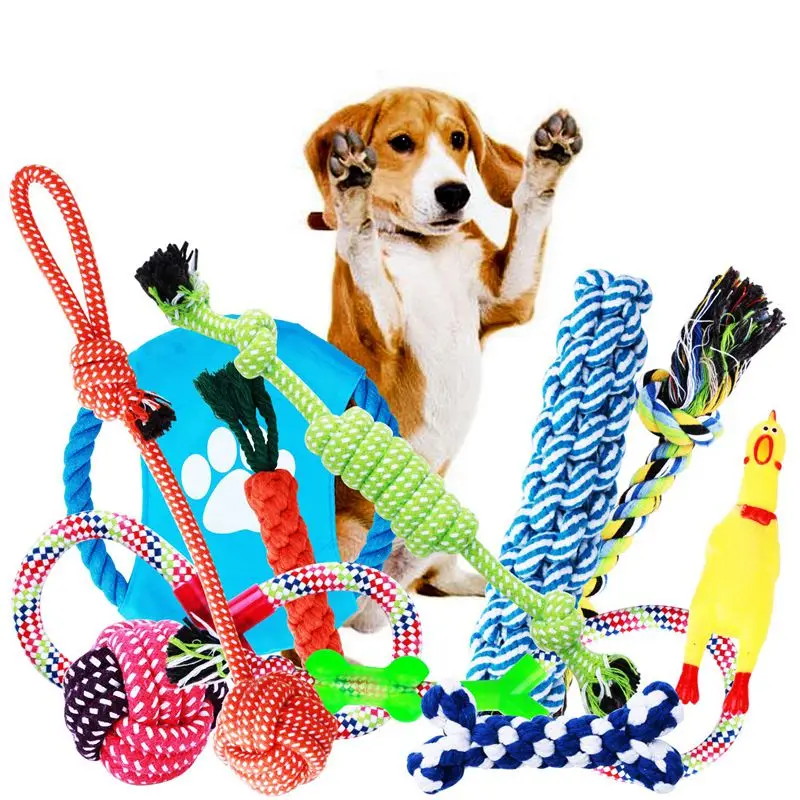
Finding dependable wholesale dog toys suppliers is one of the highest-leverage decisions a pet retailer makes. Dog toys are repeat-purchase products with strong margins, but they are also chewed, shredded, and swallowed, which means quality failures turn into refunds, chargebacks, and one-star reviews. This guide walks through a vetting process: what to check in samples, which safety standards actually matter, how to run the margin math, and how to structure a low-risk test order before you commit to a full container’s worth of plush squeakers.
Start With the Supplier’s Paper Trail
Before requesting a single sample, verify the supplier is a real, traceable business. Ask for a business license or company registration document and check that the name on the paperwork matches the bank account name on the proforma invoice. Request factory audit reports if they manufacture in-house; a BSCI or Sedex audit within the last 12 months is a good baseline signal. Check whether they have export experience to your market: a supplier already shipping to the US or EU will understand labeling, barcoding, and documentation requirements without hand-holding.
Order Samples Like a Quality Inspector
Never place a bulk order off a catalog photo. Order samples of every SKU you plan to stock, and test them the way a determined dog would. Pull on sewn seams with steady force. Twist and bend rubber and nylon chews, then look for cracking at stress points. Squeeze squeakers repeatedly and check whether the squeaker housing can be dislodged through the fabric. If a toy fails at the sample stage, the bulk shipment will fail at a higher rate, because mass production adds variation rather than removing it.
Ask the supplier to send the sample from the same production line that will run your order, with the same packaging you will receive in bulk, so you can evaluate packaging quality, barcodes, and hang-tab durability at the same time.
Dog Toy Safety Standards That Actually Matter
There is no single global regulation dedicated to dog toys the way children’s toys have EN 71 or ASTM F963, but the relevant standards still exist and serious suppliers test against them. Here is what to ask for:
- Non-toxic materials: Ask for lab reports showing the toy passes lead, cadmium, and phthalate limits. Many importers test against the children’s toy limits (for example, EN 71-3 for migration of heavy metals) as a conservative benchmark.
- No small detachable parts: Eyes, noses, and decorative buttons on plush toys should be embroidered rather than glued or sewn plastic pieces. Ask whether the supplier uses embroidered features as standard.
- AZO-free and formaldehyde-free textiles: Relevant for fabric and rope toys; ask for textile test reports.
- CPSIA compliance: If you sell in the US, your supplier should provide documentation supporting Children’s Product Certificate-style testing for total lead and phthalates, since pet products sold alongside children’s items face scrutiny.
- REACH compliance: For EU sales, ask for a statement of compliance with REACH substance restrictions.
A supplier that cannot produce a single lab report for any product should be disqualified. A supplier that volunteers reports before you ask is signaling exactly the kind of quality culture you want to buy from.
Compare Suppliers Side by Side
When you have two or three candidate suppliers, score them on the same criteria so the comparison is honest. Use a simple weighted table like this example:
| Criterion | Weight | Supplier A | Supplier B |
|---|---|---|---|
| Unit price (illustrative: $1.80 vs $1.65) | 20% | 7/10 | 9/10 |
| Sample quality (seam strength, finish) | 25% | 9/10 | 6/10 |
| Safety test reports on file | 20% | 9/10 | 4/10 |
| MOQ flexibility (illustrative: 500 vs 2,000 units) | 10% | 8/10 | 5/10 |
| Lead time (illustrative: 25 vs 40 days) | 15% | 8/10 | 6/10 |
| Communication responsiveness | 10% | 9/10 | 7/10 |
| Weighted total (example) | 100% | 8.25 | 6.15 |
The cheapest unit price rarely wins once quality, safety documentation, and lead time are weighted honestly. A supplier that is 15 cents cheaper per unit but ships with a 5% defect rate will cost you more in replacements and lost customers than the premium you “saved.”
Run the Margin Math Before You Commit
Work the numbers from the retail shelf backward. A common structure for independent pet retailers is a 2.5x to 3x markup on landed cost, where landed cost includes the unit price, freight allocation, customs duties, and inbound shipping to your warehouse. Here is an illustrative example, not a guarantee:
- Wholesale unit price: $2.00 (example)
- Freight + duties + inbound allocation: $0.60 (example)
- Landed cost: $2.60 (example)
- Retail price at 2.8x markup: $7.28, rounded to $7.99 (example)
- Gross margin per unit: about $5.39, roughly 67% (example)
Then subtract the real costs: defect replacements, payment processing fees, storage, and platform commissions if you sell online. If your net margin after all of that clears 40%, the SKU is worth a test order. Below 30% net, you are working for the supplier.
Structure a Low-Risk Test Order
A test order should be large enough to measure real defect rates but small enough that a total loss does not hurt you. For most small retailers, that means 200-500 units per SKU across 3-5 SKUs (illustrative range). Put the test terms in writing:
- Define the acceptable defect rate. For dog toys, 2% or less is a reasonable contractual target. State that defects above the threshold are replaced or credited.
- Agree on a defect definition. “Broken seam within 30 days of normal use” is enforceable; “poor quality” is not.
- Confirm lead time with a buffer. If the supplier quotes 25 days (example), plan for 35 in your inventory calendar.
- Pay with protection. Use a payment method with recourse for the first order, and move to wire transfer only after two clean deliveries.
- Inspect on arrival. Open a statistically meaningful sample, at least 10% of cartons, and test before the goods hit your shelves.
Track defect reports from your own customers for 60-90 days after launch. If the defect rate holds under your threshold and sell-through is healthy, scale up. If not, you have data, not just disappointment, to take back to the supplier or to a competitor.
Frequently Asked Questions
What is a typical MOQ from wholesale dog toys suppliers?
MOQs vary widely, but many suppliers accept 300-1,000 units per SKU for standard designs (illustrative range), with lower minimums for private label runs once you have a relationship. Always confirm whether the MOQ is per SKU, per color, or per order.
How long does a bulk dog toy order take?
Standard production lead times run 20-35 days (illustrative), plus 15-30 days for ocean freight depending on your market. Custom or private label designs add tooling and sampling time, so budget 60-90 days end to end for a first custom run.
Do dog toys need safety certifications to sell retail?
Requirements depend on your market. US and EU sellers commonly request lab reports for heavy metals, phthalates, and textile safety, and keep them on file for customs or marketplace compliance checks. Requirements are stricter on major marketplaces than many sellers expect, so confirm platform rules before listing.
What defect rate should I accept on a wholesale dog toy order?
A well-run supplier should hold defects at or under 2% (illustrative target). Set the acceptable rate in your purchase agreement and define exactly what counts as a defect so replacements and credits are enforceable.
Should I start with private label or generic wholesale dog toys?
Start with generic wholesale stock to validate demand with minimal risk, then move winning SKUs to private label for better margins and brand control. Private label adds sampling rounds and higher MOQs, so it pays only after you know what sells.
How do I check a supplier’s reliability before the first order?
Verify business registration, request recent audit reports, order samples from the real production line, check export references, and score candidates on a weighted comparison table covering price, quality, documentation, MOQ, lead time, and communication.
Conclusion: Vet Hard, Then Buy With Confidence
The retailers who thrive on dog toys are not the ones who found the cheapest unit price. They are the ones who vetted wholesale dog toys suppliers on paperwork, samples, safety documentation, and margin math before ordering inventory. Run the comparison table, structure a test order with written defect terms, and measure real customer outcomes for 60-90 days before scaling.
If you are building a pet retail or distribution business and want a supplier partner set up for wholesale from day one, review the Skyrocs wholesale program and compare it against the vetting checklist above. For a broader look at building the business around wholesale supply, read our 2026 wholesale playbook for pet products distributors. When you are ready to talk terms, start with the wholesale inquiry page and bring your test order plan.