
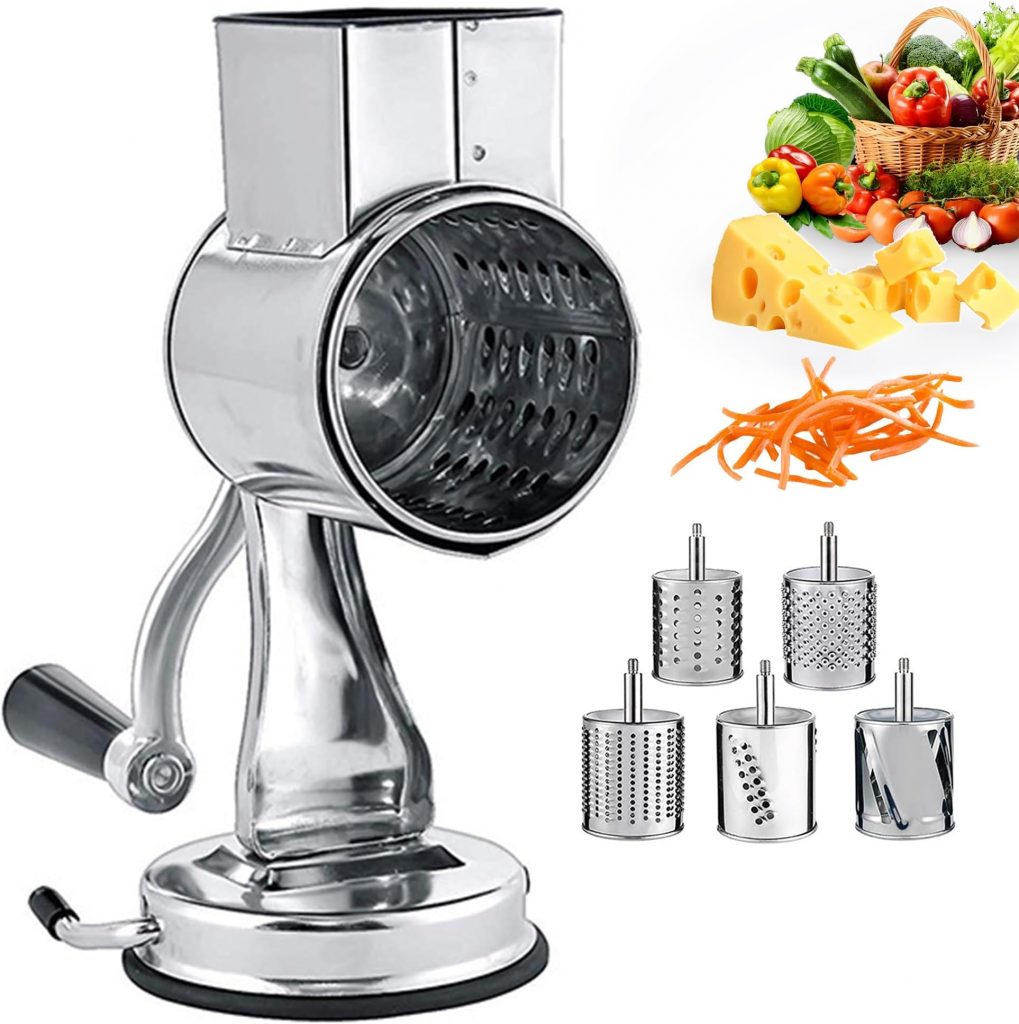
A rotary cheese grater with 3 drums turns one hand-cranked tool into a fine grater, a coarse shredder, and a slicer. You load a chunk of cheese, a handful of nuts, or a cucumber into the top hopper, lock in the drum you want, and crank. Food presses against the spinning drum and comes out the bottom in the texture you picked, straight into a bowl or onto the plate. No box grater knuckle scrape, no electric grater to wash, no drawer full of single-purpose tools.
How the 3-Drum System Works
The design is simple. The body is a short cylinder with a wide mouth on top and a hand crank on the side. Inside sits one of three interchangeable stainless steel drums. Each drum has a different pattern of cutting edges: fine holes for grating, large punched teeth for shredding, and a single angled blade for slicing. You slide the drum out through the side and click in the one you need. Swapping takes a few seconds.
The crank drives the drum through a direct gear connection, so one smooth turn produces an even, continuous result. A food pusher or plunger caps the hopper, which keeps your fingers away from the cutting surfaces and presses food down against the drum at the same time. A suction base locks the unit to the counter so you can crank with one hand and guide food with the other.
What Each Drum Is For
The Fine Grate Drum
This drum has small, closely spaced holes. It handles hard cheese like parmesan and aged cheddar, turning a solid wedge into the powdery snow that melts instantly over hot pasta. It also works for garlic, ginger, and whole nutmeg: drop the piece in, crank, and you get fresh aromatic pulp without mincing. If you bake, this drum grates chocolate into fine curls for decorating cakes and tiramisu.
The Coarse Shred Drum
This drum has large punched openings. It produces the classic chunky shred you want for mozzarella on pizza, for cheddar in tacos, and for any cheese that should melt in visible strands. It shreds a block of chocolate in seconds for brownies, breaks walnuts and almonds into salad-sized pieces, and turns cooked carrots or beets into shredded salad toppings. Anything soft to medium-firm goes here.
The Slicing Drum
This drum carries a single slicing blade that cuts thin, even rounds. It slices cucumber for salads, potatoes for gratins, zucchini for stir-fries, and carrots into coins. Because the blade sits on the drum wall, every slice comes out at a consistent thickness, which matters for dishes like potato gratin where even slices cook at the same rate. As an example, a medium cucumber goes through in roughly ten seconds of steady cranking.
Rotary Grater vs Box Grater vs Electric Grater
A box grater gives you similar textures, but you drag food down the side of the box with your bare knuckles inches from the blades, and the last stub of cheese is always a gamble. A rotary grater keeps the cutting surface inside the body and uses the plunger to push food through, so your fingers never meet the blades. Cleaning is easier too: instead of fishing shreds out of a box, you rinse a single drum under the tap.
An electric grater or food processor is faster for huge batches, but it takes up counter space, costs more, and adds assembly, cord-winding, and multiple parts to wash. For the volume most home cooks prepare, which is one or two blocks of cheese, a few nuts, or a couple of vegetables, a rotary grater is ready in the time it takes an electric one to be plugged in. It also travels well: no cord, no motor to burn out, and it goes in a drawer when you are done.
Cleaning Your Rotary Grater
Cleanup is where this tool earns its keep. After use, pop the drum out and rinse it under the tap. Cheese residue washes off stainless steel easily if you rinse right away; dried cheese is the only real enemy. For sticky foods like chocolate, run the drum under warm water and give it a quick swipe with a sponge. There is no motor, no blade assembly with hidden crevices, and no deep container to scrub. Rinse, shake dry, and it is ready for the next meal. If you want to be thorough, wash the drum, body, and plunger in warm soapy water after heavier sessions, then air dry.
What to Check Before Buying
Not every rotary grater is built the same. Use this checklist to pick one that lasts:
- Stainless steel drums: they stay sharp far longer than plated plastic and do not rust. Look for solid-feeling drums with cleanly punched cutting edges.
- Suction base: a firm suction lock keeps the unit from walking across the counter while you crank. Twist-lock bases generally hold better than simple press-down pads.
- Hopper size: the feed mouth should accept a good chunk of cheese or a small potato without pre-cutting everything into tiny pieces. A roomy hopper cuts prep time.
- Drum fit: the drum should slide in and click firmly with no wobble. A loose drum produces uneven shreds.
- Easy disassembly: the drum, body, and plunger should come apart in seconds with no tools. If it is fiddly in the shop, it will be fiddly every day.
- Comfortable crank: a longer handle with a smooth knob is easier on your wrist during longer jobs like a full gratin of potatoes.
Recipe Ideas That Put All Three Drums to Work
- Weeknight tacos: coarse shred a block of cheddar for the filling, fine grate a little parmesan to sprinkle over, and slice cucumber for a quick pickle side. Three drums, one tool, under five minutes of prep.
- Homemade pizza night: coarse shred mozzarella so it melts in proper strands, slice mushrooms thin, and fine grate parmesan to finish after baking.
- Potato gratin: slice potatoes on the slicing drum so every round is the same thickness, which keeps the bake even. Fine grate cheese over the top before it goes in the oven.
- Chocolate bark: coarse shred dark chocolate and almonds, melt together, then fine grate a little extra chocolate over the top for texture.
- Fresh salads: slice cucumber, shred cooked beets, and fine grate ginger into the dressing.
If your kitchen is short on prep tools, a rotary cheese grater is a compact upgrade. The rotary cheese grater with 3 drums at Skyrocs comes with all three stainless steel drums, a suction base, and a wide hopper, so it covers grating, shredding, and slicing from day one. Browse the full kitchen gadgets collection for more time-saving prep tools, or pair it with our vegetable chopper for onions and perfect dice to handle chopping alongside grating, shredding, and slicing.
Frequently Asked Questions
Can a rotary grater handle hard cheese like parmesan?
Yes, that is what the fine grate drum is designed for. Hard cheese grates more easily than soft cheese because it does not stick. Cut the cheese into a chunk that fits the hopper, press it down with the plunger, and crank at a steady pace.
How do you change the drums?
Open the body or slide the drum out from the side, depending on the design, and click in the drum you want. There are no screws or tools involved. The swap takes only a few seconds, so switching mid-recipe is practical.
Is it really safer than a box grater?
Meaningfully safer for the last stub of food. On a box grater your knuckles ride down the cutting surface; on a rotary grater the plunger holds and pushes the food, and the blades stay inside the body. Your hands never go near the cutting edges during normal use.
Can it grate chocolate and nuts, or only cheese?
It handles both. Use the fine drum for chocolate curls and the coarse drum for shredding chocolate and nuts into salad- or baking-sized pieces. Cold chocolate works best because it holds its shape against the blades.
How thick are the slices from the slicing drum?
Thin, even rounds, typically in the 2 to 3 millimeter range depending on the model. The blade sits on the drum wall at a fixed angle, so every slice comes out at the same thickness without you measuring or adjusting anything.
Do the drums go in the dishwasher?
Stainless steel drums are generally dishwasher-safe, but a quick rinse under the tap right after use is usually enough and avoids the long drying cycle. Wash the body and plunger in warm soapy water or in the dishwasher according to the product instructions.