
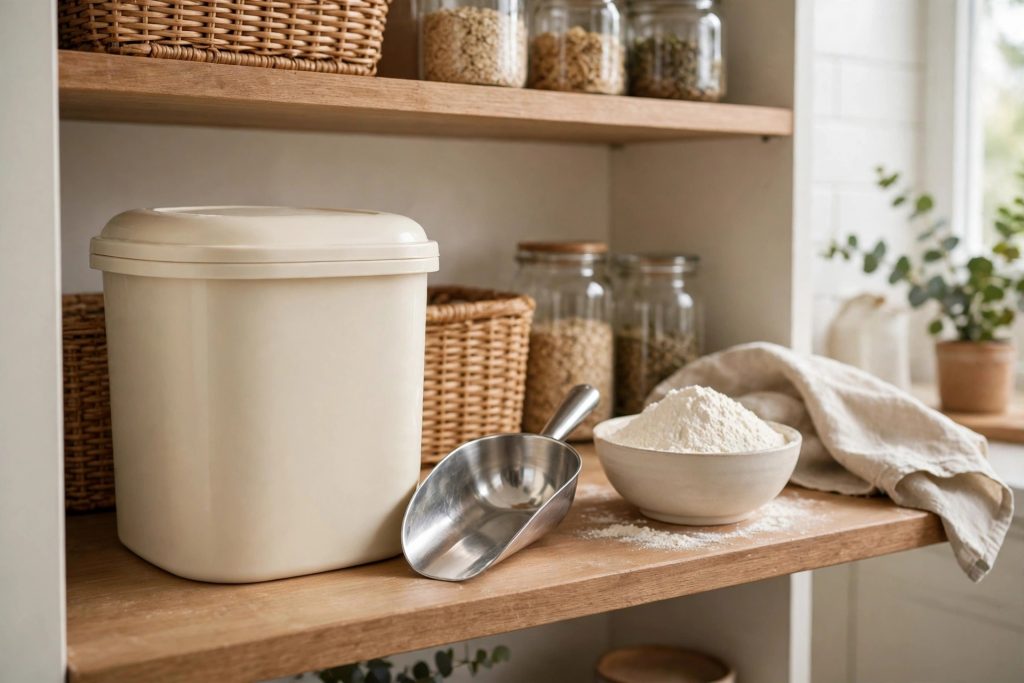
A flour bin for fresh storage helps home cooks with storing plain flour, bread flour, and baking flour in a tidy pantry, and it does the task neatly without fuss or waste. Many kitchens struggle with torn paper sacks that spill, flour that picks up damp and smells, and scoops that go missing in a deep bag, and those small troubles slow the cook down at the very moment when a meal should come together. A flour bin is a sturdy lidded bin that keeps flour dry, clean, and easy to scoop in the pantry, so the task feels calm and steady rather than fiddly and rushed. This guide explains why fresh storage matters, how a flour bin works, what to look for when you buy one, how to use it well, and how to keep it clean and ready for the next meal.
Why Fresh Storage Matters
Fresh Storage matters because a small daily task shapes how a meal feels, and a tool that works well turns a chore into a calm moment in the kitchen. When slices come out even, food looks cared for on the plate, and everyone at the table can see that the cook took time over the meal. Uneven pieces cook at different speeds, tear apart when they are served, and leave crumbs and waste on the board, while neat pieces stack well, toast evenly, and keep well for later. A home that cooks often will notice the difference every day, since the same task repeats at breakfast, lunch, and dinner, and a small gain in ease adds up across the week.
A tidy kitchen also starts with tools that earn their place, and a flour bin earns its place by doing one task well every time it is picked up. A tool that feels right in the hand makes the whole task feel lighter, and a lighter task is one the cook will enjoy repeating.
How a Flour Bin for Fresh Storage Works
A flour bin for fresh storage is a sturdy lidded bin that keeps flour dry, clean, and easy to scoop in the pantry, and it works by matching its shape to the task it must do. The lid seals the bin against damp and dust, the wide mouth lets a scoop or a cup reach the flour easily, and the flat base sits steady on a shelf so the bin does not tip when it is nearly empty. The shape of the tool guides the hand, so the cook does not need to force it or guess at the right angle, and the task feels natural after only a few uses. A well made flour bin balances in the hand, so the weight sits where it should and the hand does not tire during a long session.
Once you understand how the tool works, you can use it with less effort and more care, since you know what each part is for and how it should feel in use. Keep the tool within easy reach, since a tool that is easy to reach is a tool that gets used often and with pleasure.
Choosing the Right Flour Bin for Your Kitchen
Choosing a flour bin starts with the task you do most often, since the best choice is the one that fits your kitchen, your hands, and your daily routine. Look for a lid that closes with a firm seal, a mouth wide enough for a scoop, and a size that holds a full sack with a little room to spare. Think about where the tool will live when it is not in use, since a tool that fits its shelf or drawer will be reached for often, while a tool that is awkward to store will stay out of sight and out of mind. A heavier tool may feel solid and steady, while a lighter tool may feel quicker in the hand, so try the weight in your mind and pick the one that suits how you cook. For home cooks looking for everyday kitchen items, Skyrocs offers a helpful starting point, and the pet supplies range covers daily items for homes that share their life with a cat or a dog.
Take time to compare a few options before you buy, and look closely at the joints, the edges, and the finish, since those are the places where good making shows. A calm pace and a steady hand will always give a neater result than rushing through a task that deserves a little care.
Using Your Flour Bin for Fresh Storage
Using a flour bin well starts before the task begins, since a little preparation makes the work smoother and safer. Pour the flour in slowly, level the top with the back of a spoon, and close the lid firmly after every use so damp air stays out. Keep your attention on the task while you work, and move at a steady pace rather than rushing, since a calm pace gives a neater result and keeps your hands safe. If the tool feels awkward, stop and adjust your grip or your stance, since a small change in how you hold it can make a large difference to how it feels.
After a few uses you will find a rhythm that suits you, and the task will take less thought and less time. Look at how the tool is made, since honest making shows in the finish and in the way the parts fit together.
Cleaning and Storing Your Flour Bin for Fresh Storage
A flour bin earns its place when it is easy to clean, since a tool that is hard to clean will soon be left dirty and will not last. Empty the bin, wipe the inside with a dry cloth, and wash the lid with warm water and mild soap, then dry both parts fully before you fill the bin again. Dry the tool fully before you store it, since damp left in a drawer or a cupboard can leave a stale smell and can dull an edge or stain a surface over time. Check the tool while you clean it, and look for any wear at the joints, the edges, or the seams, since catching a small problem early keeps it from becoming a larger one.
Make cleaning part of the routine rather than a chore to put off, since a quick wipe after each use takes only a moment and saves a longer scrub later. A kitchen that is tidy and well stocked makes cooking feel easier, and a good tool is part of that tidy feeling.
Frequently Asked Questions
Is a flour bin for fresh storage needed in every kitchen?
It is not needed in every kitchen, yet it makes a daily task easier and neater, so homes that cook often will reach for it again and again. If you do the task it serves more than once a week, a flour bin is a sensible addition to your kitchen.
How does a flour bin for fresh storage work?
It works by matching its shape to the task, so the cook can work with light pressure and a steady motion. The lid seals the bin against damp and dust, the wide mouth lets a scoop or a cup reach the flour easily, and the flat base sits steady on a shelf so the bin does not tip when it is nearly empty. Once you have used it a few times, the motion feels natural and the result stays neat.
Can a flour bin for fresh storage handle everyday use?
It can, when you pick one that suits your kitchen and use it with care. Look for solid making, smooth edges, and parts that feel firm, and follow the cleaning and storing advice in this guide so it stays in good shape.
How do I clean a flour bin for fresh storage after use?
Empty the bin, wipe the inside with a dry cloth, and wash the lid with warm water and mild soap, then dry both parts fully before you fill the bin again. Dry it fully before you store it, and check the joints and edges while you clean so you can catch any wear early and keep the tool safe to use.
What should I look for when buying a flour bin for fresh storage?
Look for a size that fits your kitchen, a shape that feels right in your hand, and making that feels solid at the joints and smooth at the edges. Pick the one that suits how you cook, and it will serve you well for a long time.