
Wholesale flour bins suppliers help shops stock flour bins that home cooks trust for storing plain flour, bread flour, and baking flour in a tidy pantry. Many kitchens struggle with torn paper sacks that spill, flour that picks up damp and smells, and scoops that go missing in a deep bag, and shoppers look for a tool that solves that trouble cleanly and lasts through daily use. A good flour bin is a sturdy lidded bin that keeps flour dry, clean, and easy to scoop in the pantry, so a shop that stocks it gives shoppers a reason to return. This guide explains why wholesale flour bins sell well, what a good range covers, how to choose a supplier you can trust, how to price and order for your shop, and how to display the range to sell more.
Why Wholesale Flour Bins Sell Well
Wholesale flour bins sell well because they solve a task that almost every kitchen faces, and shoppers look for a tool they can trust to do that task day after day. Flour bins sell steadily because every home that bakes needs a dry tidy place for flour, and a bin that seals well is easy to show and easy to trust. A shop that stocks a reliable flour bins gives shoppers a reason to return, since a tool that works well at home is remembered and recommended to friends and family. Demand for everyday kitchen tools stays steady through the seasons, since cooking is a daily need rather than a passing trend, and a shop that keeps the basics in stock will see steady sales. A good range also helps a shop stand out, since shoppers compare how a tool feels in the hand and how well it is made, and they choose the shop that offers honest quality at a fair value.
A shop that understands its shoppers will stock flour bins that suit real kitchens, not only tools that look good on a shelf. A shop that listens to its shoppers will always stock what sells, since real needs are the best guide to a good range.
What a Good Wholesale Range Covers
A good wholesale range covers a spread of bin sizes, lid styles, and colours, so a shop can serve small kitchens and keen bakers as well as homes that buy flour in larger sacks. The range should include the sizes that most kitchens need, with a few larger or smaller options for shoppers with particular needs, so no shopper leaves empty handed. It should also cover a spread of finishes and colours, since shoppers like to match a new tool to the kitchen they already have, and a range that offers choice will suit more homes. Quality should stay steady across the whole range, since a shopper who buys a simple tool and finds it well made will trust the shop when they return for a larger item. A range that is easy to reorder, with clear sizes and steady supply, helps a shop keep its shelves full without tying up too much space or stock.
When you look at a range, check that each item feels solid, works as it should, and suits the shoppers you serve. Keep the shelves tidy and full, since a full shelf invites shoppers to look closer and to buy with confidence.
Choosing a Supplier You Can Trust
Choosing a supplier starts with trust, since a shop needs stock that arrives on time, matches its description, and holds up in daily use. Look for a supplier who answers clearly, packs goods with care, and stands behind what they send, since those habits show in every order you place. Check samples before you commit to a large order, and look closely at the joints, the edges, and the finish, since those are the places where good making shows. A supplier who is honest about what a tool can and cannot do will help you serve your shoppers better than one who promises more than the goods can deliver. For shops looking for everyday kitchen stock, Skyrocs offers a helpful starting point, and the wholesale range covers the wider range for shops that want to browse and compare.
Build the relationship slowly, starting with a modest order and growing it as trust grows, since a supplier who earns your trust order by order is worth more than a low offer from a stranger. A fair value and honest quality will bring shoppers back, and returning shoppers are the heart of a good shop.
Pricing and Ordering for Your Shop
Pricing flour bins for your shop starts with knowing your costs and your shoppers, since a fair value keeps sales steady and keeps shoppers coming back. Set a value that covers your costs and leaves room for the shop to grow, yet stays within reach of the shoppers you serve, since a tool that feels fairly valued will sell faster than one that feels dear. Order in amounts that match how fast the stock sells, so shelves stay full without tying up too much money in slow lines, and reorder the sizes and styles that sell first. Keep a simple record of what you order, what you sell, and what shoppers ask for, since those notes will guide your next order and help you avoid stock that sits unsold. A shop that orders with care will keep its shelves fresh and its shoppers happy.
Watch the seasons and the habits of your shoppers, since demand for kitchen tools can rise when people cook more at home or when a new season brings fresh cooking. Talk to your staff about the range, since staff who know the tools can help shoppers choose with confidence.
Displaying Wholesale Flour Bins to Sell More
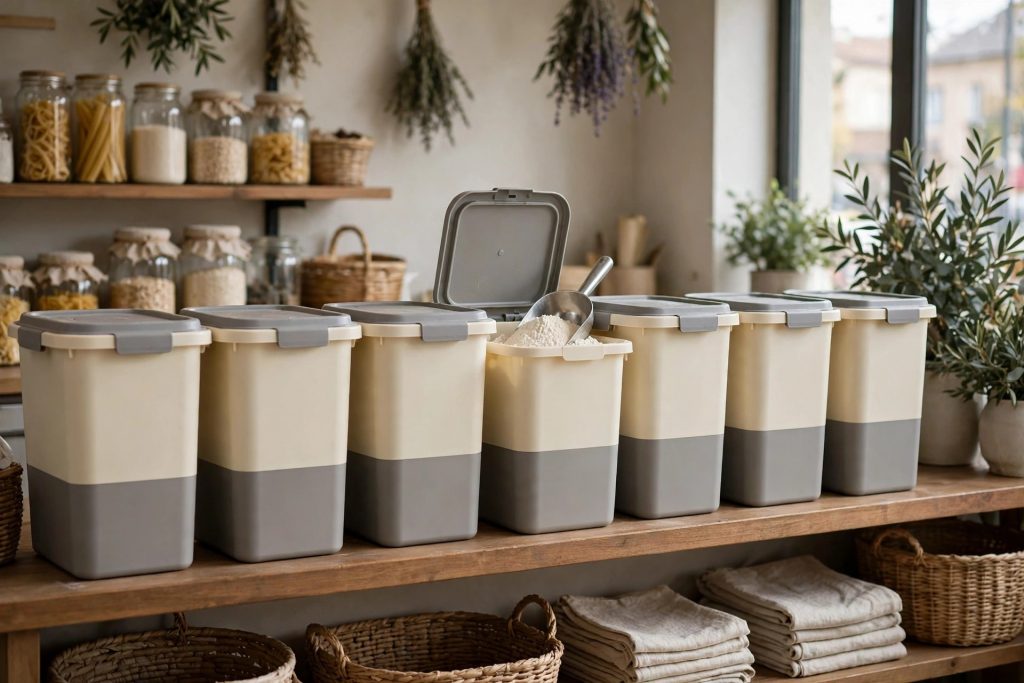
Displaying flour bins well helps shoppers see how the tool works and why it is worth buying, since a tool that is shown in use sells better than one left in a box. Set flour bins in a row on a shelf with a scoop in the open one, and place a bowl of flour beside them so shoppers can see the bin in use. Keep the display tidy and easy to reach, so shoppers can pick the tool up, feel its weight, and try its grip without asking for help. Group the range by size or by use, with clear signs that name each size, so shoppers can find what they need without confusion. A small display that shows the tool at work, with the food or the kitchen item it serves beside it, will catch the eye and start a conversation that leads to a sale.
Change the display from time to time, so regular shoppers notice something new and new shoppers see the range at its best. A small display that shows the tool at work will catch the eye of shoppers who might otherwise walk past.
Frequently Asked Questions
How do wholesale flour bins suppliers help a shop?
They help a shop by supplying a steady range of flour bins that shoppers trust, so the shop can keep its shelves full with tools that sell through. A good supplier also answers clearly and packs goods with care, which saves the shop time and trouble.
What should wholesale flour bins suppliers offer in a range?
They should offer a spread of bin sizes, lid styles, and colours, so a shop can serve small kitchens and keen bakers as well as homes that buy flour in larger sacks. The range should cover the sizes most kitchens need, with steady quality across every item, so a shop can serve many shoppers from one range.
How do I choose among wholesale flour bins suppliers?
Start by checking samples, looking closely at the joints, the edges, and the finish, and noting how clearly the supplier answers your questions. Build the relationship with a modest order, and grow it as trust grows.
What should a shop order first from wholesale flour bins suppliers?
A shop should order the sizes and styles that its shoppers ask for most, in amounts that match how fast they sell. Keep the best sellers in stock first, then add a few extras once the basics are selling well.
Where should a shop display stock from wholesale flour bins suppliers?
A shop should display the stock where shoppers can reach it, feel its weight, and see how it works. Set flour bins in a row on a shelf with a scoop in the open one, and place a bowl of flour beside them so shoppers can see the bin in use. Keep the display tidy and grouped by size or by use, so shoppers can find what they need.