
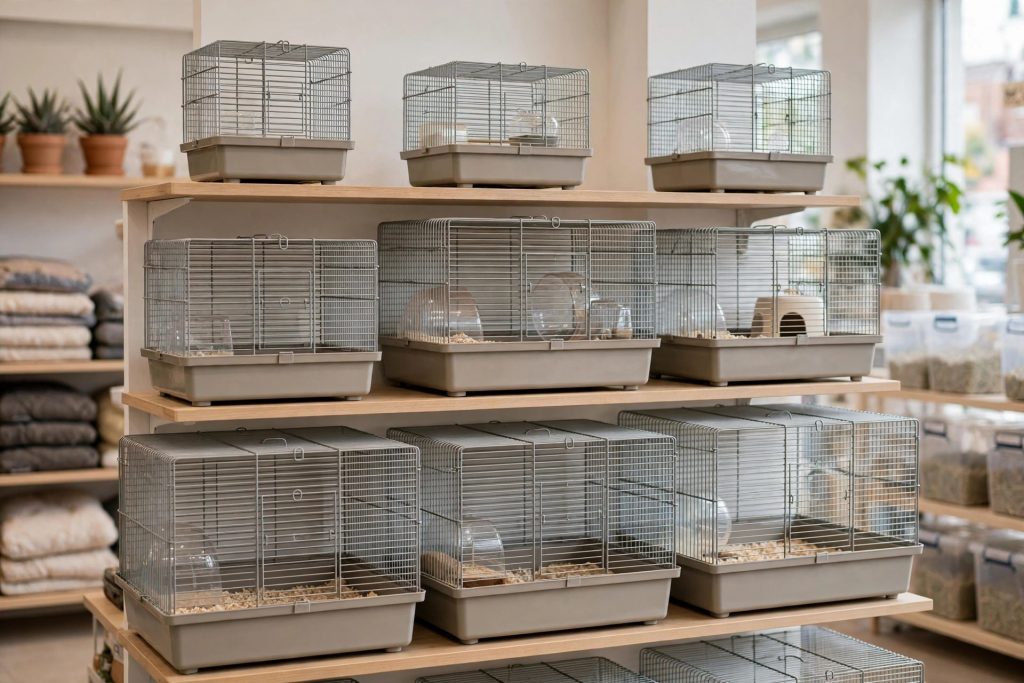
Shops use wholesale hamster cages suppliers to stock sturdy hamster cages that pet owners trust, and a shop that carries the right cages will see hamster owners return again and again. Hamsters are a popular first pet, and every new owner needs a cage, bedding, food, and a wheel, so the cage sale often starts a longer relationship with the shop. A supplier that delivers steady stock, fair terms, and sizes that suit real homes helps the shop serve those owners well. This guide explains why hamster cages sell well, what a good wholesale range covers, how to choose a supplier you can trust, how to price and order for your shop, and how to display cages so they sell more. A shop that stocks well will turn a first cage sale into a loyal customer.
Why Wholesale Hamster Cages Sell Well
The pet trade grows on trust, and a shop that sells a hamster cage that lasts will see the same owners return for the next pet they bring home. Seasonal demand helps too, since many owners refresh pet housing in spring and autumn, and a shop with stock ready can meet that rush. A range of hamster cages suits both new owners setting up a first home and keepers who know exactly what they want, so the same shelf serves two kinds of buyer.
A steady seller like a hamster cage also steadies the shop, since it brings in regular sales that sit beside faster moving food and treats. Pet care is a daily habit, not a passing trend, so hamster cages sell in quiet weeks as well as busy ones, which keeps the shelf turning. Pet owners replace housing and care items as pets grow, as seasons change, and as old items wear out, so demand for hamster cages stays steady through the year.
A shop that carries hamster cages in more than one size can serve small homes and large homes alike, and that breadth turns browsers into buyers. A shop that stocks hamster cages gives owners a reason to visit, since a pet owner who comes in for one item often leaves with food, bedding, or treats as well. Owners talk to each other about what worked, and a hamster cage that earns praise in one home soon brings new shoppers through the door.
What a Good Wholesale Range Covers
The range should cover more than one material, since some owners want sturdy wire and a solid base while others want a lighter model that is easy to move. Packaging matters too, since a box that shows the hamster cage clearly and lists its size helps a buyer choose without opening every carton. The range should also cover the extras that go with a hamster cage, since an owner who buys the main item often adds bedding, food, or a small accessory.
Colour choice matters on the shelf, since a tidy row of hamster cages in calm colours draws the eye and makes the range look cared for. A good wholesale range covers the sizes most owners ask for, from compact models for small homes to roomy models for larger pets. A range that arrives in steady supply lets the shop plan displays and orders, and a gap on the shelf is a sale lost to another shop.
The best ranges are built around what owners actually ask for, not around what looks good in a catalogue, so listen to the questions at the counter. A good range leaves room for a premium model beside a value model, so the shop can serve a buyer with a tight budget and a buyer who wants the best. A range that covers spare parts as well as full units keeps owners loyal, since a small repair beats a full replacement in the eyes of a buyer.
Choosing a Supplier You Can Trust
For shops looking for a steady source, Skyrocs offers a helpful starting point, and the wholesale range covers stock for shops of many kinds. Delivery times matter as much as price, since a shop that runs out of hamster cages in a busy week loses sales that will not come back. Trust grows over orders, so start small, check the goods, and grow the order as the supplier proves steady.
Choosing a supplier starts with proof that the hamster cage is made well, so ask for a sample and test it as an owner would before you order. A supplier with a steady catalogue is easier to build a range around than one that changes its line every season. A supplier you can trust answers plainly about materials, sizes, and spare parts, and sends stock that matches the sample every time.
Payment terms should be clear from the start, with no hidden fees, so the shop can plan orders without surprises at the invoice. Check how the supplier packs the goods, since hamster cages that arrive damaged cost the shop time, money, and goodwill with buyers.
Pricing and Ordering for Your Shop
A shop that prices too low will sell fast and earn little, while a shop that prices too high will watch the shelf gather dust, so aim for a fair margin that keeps the range moving. A fair price, a full shelf, and a friendly word at the counter will sell more hamster cages than any discount alone. A first order should cover the core sizes and one premium model, since that mix shows the range at its best without tying up too much cash.
Keep a simple record of what sells each week, since a short note at the till beats a guess when the next order is due. Reorder when the popular size starts to run low, not when it runs out, since a gap on the shelf sends buyers to another shop. Pricing a hamster cage starts with knowing the full landed cost, so count the unit cost, the freight, and the shelf time before you set the ticket.
Order in line with what the shelf sells, and keep a small buffer of the most popular size so a busy weekend never leaves the shelf empty. Plan orders around the seasons, since pet housing sells briskly when owners refresh homes in spring and autumn. Watch which sizes sell fastest and let that guide the next order, since the counter tells the truth about what owners want.
Displaying Wholesale Hamster Cages to Sell More
Set one model up on display so buyers can open it, test the latch, and picture it at home, since a model that can be touched sells faster. Keep the range in size order, from the smallest model to the largest, so a buyer can compare at a glance and find the right fit. Put the premium model where the light falls best, since a well lit display makes the quality easy to see.
Place bedding and food nearby, since a buyer who has chosen a hamster cage often adds the daily needs in the same visit. Rotate the display when a new model arrives, so regular visitors see something fresh and stop to look again. A short sign that lists the size and the key feature helps a buyer choose without waiting for staff, and a clear sign builds trust.
A display near the counter catches buyers who came in for food, and a hamster cage at the till can turn a quick visit into a larger sale. A shop that displays hamster cages with care tells buyers that pet care matters here, and that message brings owners back.
Frequently Asked Questions
How do wholesale hamster cages suppliers help a pet shop?
They help a shop by supplying steady stock of hamster cages that owners trust, so the shelf stays full and buyers return for the next pet they bring home.
What should wholesale hamster cages suppliers offer in a range?
A good range covers the core sizes, more than one material, spare parts, and the extras that go with a hamster cage, so the shop can serve many kinds of buyer.
How do I choose among wholesale hamster cages suppliers?
Choose by testing a sample, checking the packing, asking about delivery times, and seeing how the supplier handles a faulty batch.
What should a shop order first from wholesale hamster cages suppliers?
Order the core sizes first, add one premium model, and keep a small buffer of the most popular size so a busy weekend never leaves the shelf empty.
Where should a shop display stock from wholesale hamster cages suppliers?
Display stock at eye level in size order, with one model set up for buyers to touch, and place bedding and food nearby for the same visit.