
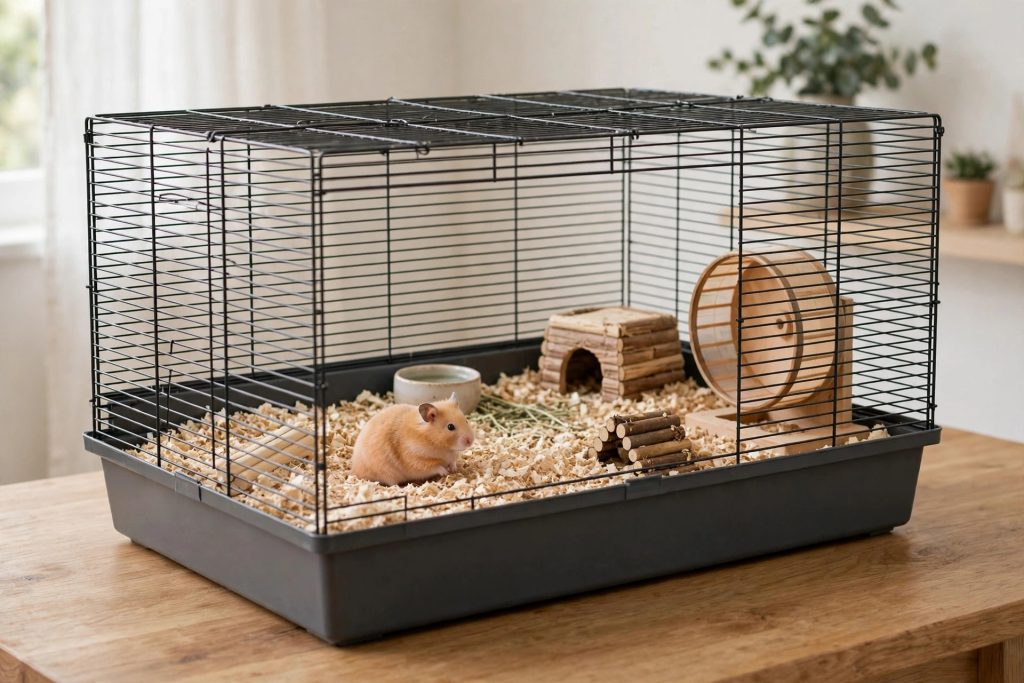
A hamster cage for happy hamsters gives a small pet a safe home with room to nest, climb, and rest, so daily life feels calm and settled. Hamsters are busy little animals that burrow, run, and explore, and a cage that suits those habits will keep a pet bright and active. Many owners start with a cage that looks tidy yet proves too small, and the hamster soon shows it by chewing the bars or pacing the same corner. A good cage avoids that trouble, since it gives the pet room to move and places to hide, and the owner can see the pet clearly through the day. This guide explains why a happy hamster needs a good home, how a cage works, what to look for when you buy one, how to use it well, and how to keep it clean and ready. A hamster that feels at home will eat well, sleep soundly, and greet the morning with energy, and that is the reward for choosing well.
Why Happy Hamsters Need a Good Home
The right home protects a hamster from drafts, sudden noise, and curious paws, and that protection matters most at night when the house is quiet. Owners often notice the change at once, since a hamster in a well chosen home plays more, hides less, and greets the morning with energy. A home that suits the hamster also suits the owner, since feeding, cleaning, and checking on the pet all take less time when the layout is clear.
Small pets feel stress in ways that are easy to miss, so a calm home with steady warmth and soft bedding helps a hamster stay relaxed day after day. When a hamster has room to move, a quiet corner to rest, and a clean place to eat, daily care becomes easier and the pet settles faster into a routine. Housing that is easy to reach into makes health checks simple, since you can see the hamster clearly and notice small changes before they grow.
Good housing is not a luxury for a small pet, since a hamster spends most of its day inside, and the space around it sets the tone for health and mood. A hamster that feels safe at home shows it in calm behaviour, steady eating, and a willingness to explore, and the home you choose shapes all of that.
How a Hamster Cage for Happy Hamsters Works
Most models are built from sturdy wire and a solid base, and the parts fit together so the home stays firm even when the hamster climbs, digs, or pushes at the sides. A good hamster cage opens in more than one place, so you can lift the hamster out gently and set food down without disturbing the bedding. The base holds bedding in place, and a deep tray keeps the bedding from spilling onto the floor when the hamster digs or burrows.
A hamster cage works by giving the hamster a defined space where food, water, rest, and play each have a place, so the pet can follow a natural daily rhythm. The design keeps the hamster inside and safe while letting air flow through, and the solid parts give the pet a firm footing for nesting and burrowing. The hamster cage also gives the hamster a sense of territory, and a pet that knows its own space will mark it, rest in it, and return to it after play.
Once the hamster has settled in, the home becomes a familiar place, and a familiar place lowers stress when visitors arrive or the house grows noisy. A well made hamster cage lasts through many seasons of use, since the joints stay firm and the surfaces wipe clean without holding smells.
Choosing the Right Hamster Cage for Your Pet
For homes that share their rooms with a cat or a dog, Skyrocs offers a helpful starting point, and the pet supplies range covers daily items for pets of many kinds. A calm colour and a simple shape suit most rooms, and a home that looks tidy is more likely to stay in a good spot near the family. Ask how spare parts are sold, since a home with parts you can replace will serve your hamster far longer than one you must throw away.
Check that the hamster cage leaves room for a wheel, a hideout, and a water bottle, since a home without room for daily needs will need replacing sooner than you expect. Measure the space where the home will stand, and pick a hamster cage that fits with room to spare for cleaning around it. Weight matters when you move the home for cleaning, so pick a hamster cage that you can lift and carry without strain.
Look for smooth edges and firm latches, since a hamster will test every corner, and a latch that holds keeps the pet safe overnight. A hamster cage that comes apart in sections is easier to clean, and clean housing is the simplest way to keep a hamster healthy.
Using Your Hamster Cage for Happy Hamsters
Keep food and water in the same place each day, since a hamster learns where to find them and settles into a steady routine. Give the hamster time out of the home each day where that suits the kind of pet, since fresh air and gentle handling keep a pet tame and friendly. Watch how the hamster uses the space in the first days, and move the rest area or the feeding spot if the pet keeps avoiding one corner.
Set the bedding down first, then add food and water, and let the hamster explore the new home at its own pace without rushing it. Using a hamster cage well starts with placing it in a quiet spot away from drafts, direct sun, and the busiest path through the room. A steady routine helps most of all, since feeding and cleaning at the same time each day lets the hamster know what comes next.
Check the water daily and refresh it, since a hamster drinks little at a time and stale water can put a pet off drinking. Note small changes in eating or movement, since a hamster that changes its habits may need a vet visit sooner rather than later.
Cleaning and Storing Your Hamster Cage for Happy Hamsters
Store spare bedding in a dry place nearby, so a full clean takes only a short time and the hamster is back home quickly. Replace worn bedding often, and keep a spare set of parts on hand, since a small repair now saves a full replacement later. Clear the bedding each week and wipe the base with warm water, and use a soft cloth so the surfaces stay smooth and free of scratches.
A dry hamster cage stores best in a cool room away from damp, since damp can warp wood and dull metal over time. A hamster cage earns its place when it is easy to clean, since old bedding and spilled food will spoil the home fast if left in place. Avoid harsh cleaners near a hamster, since strong smells linger and can upset a small pet for days after cleaning.
With steady cleaning and a little care, a good hamster cage will serve your hamster well for many seasons. A clean home also keeps the room fresh, and a fresh room makes daily care a pleasure rather than a chore.
Frequently Asked Questions
Is a hamster cage for happy hamsters needed for a first hamster?
Yes, it suits most homes, since it gives the hamster a safe place of its own and makes daily feeding and cleaning simpler for the owner.
How does a hamster cage for happy hamsters keep a pet safe?
It works by giving the hamster a defined space with room for food, water, rest, and play, so the pet can follow a natural daily rhythm at home.
What should I look for when buying a hamster cage for happy hamsters?
Look for a size that suits your hamster, sturdy wire and a solid base, smooth edges, firm latches, and room for a wheel, a hideout, and a water bottle.
How do I clean a hamster cage for happy hamsters after use?
Clean it each week with warm water and a soft cloth, dry it fully, and replace the bedding often so the home stays fresh for the hamster.
Can a hamster cage for happy hamsters suit a small home?
Yes, it suits a first time owner, since the layout is simple to set up and the daily routine is easy to learn and keep.