
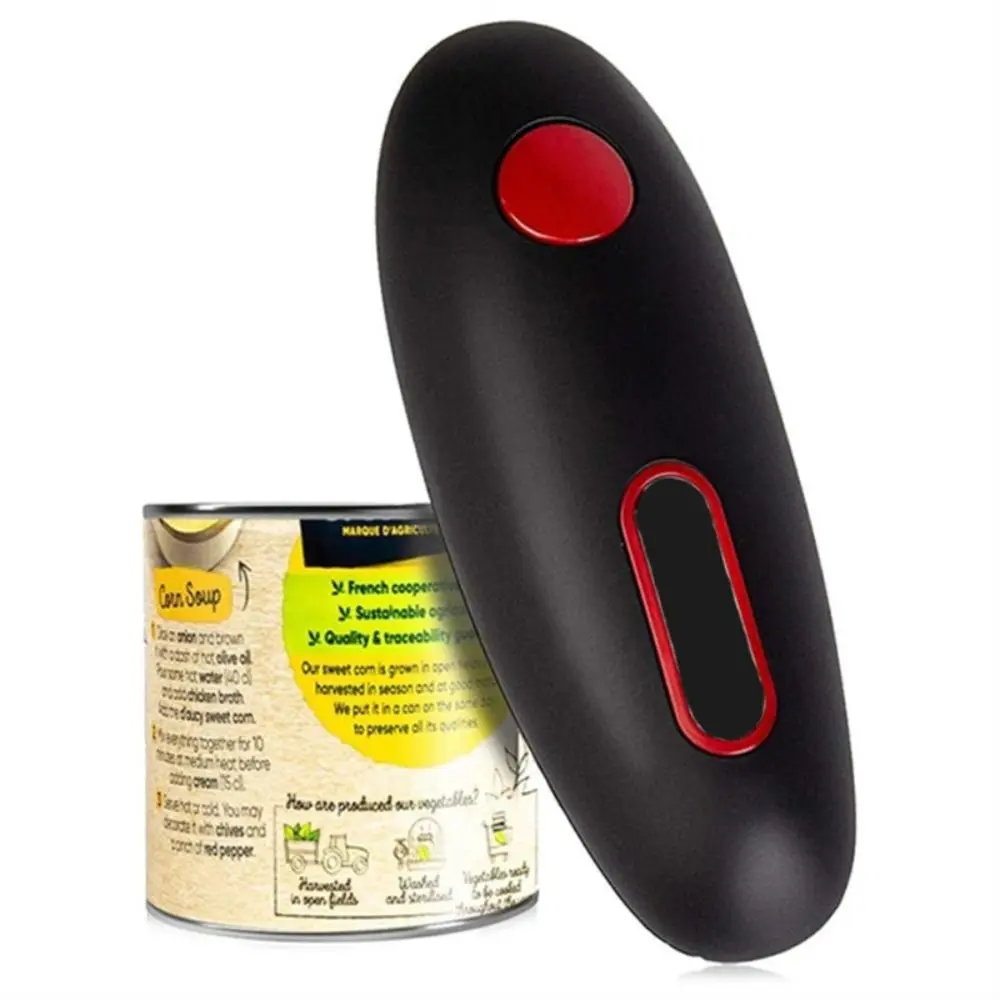
Opening a can should be the easiest part of cooking. Yet for millions of people, the humble can opener is a daily source of frustration: stiff manual handles that hurt arthritic hands, jagged lids that demand careful handling, and the awkward twisting that leaves your wrist sore. A one-touch electric can opener solves all of that with a single button press.
This guide explains how these hands-free openers work, who benefits most from one, and what to check before you buy, so you can pick the right model the first time.
What Is a One-Touch Electric Can Opener?
A one-touch electric can opener is a compact, battery-powered device that attaches to the top of a can and cuts the lid off automatically. You place it on the can, press one button, and it walks itself around the rim while you do something else. Press the button again to stop, lift the opener, and the lid comes away cleanly.
Unlike bulky countertop electric openers that hog counter space, the one-touch style is small enough to live in a drawer. And unlike manual openers, it asks nothing of your hands beyond a single press.
How Does It Work?
The mechanism is straightforward:
- Set the opener on top of the can. A small magnet holds it in position.
- Press the button once. The cutting wheel engages under the rim and the device rotates around the lid.
- The opener cuts along the side of the rim rather than through the top, leaving a smooth, safe edge with no sharp points.
- Press the button again to stop. The magnet lifts the lid away so your fingers never touch a cut edge.
Most models run on standard AA batteries and handle common can sizes, from small tuna cans to large 28-ounce tomato cans.
Why Switch From a Manual Opener?
No hand strain. Manual openers require grip strength, wrist twisting, and sustained squeezing. If you have arthritis, carpal tunnel, or simply weaker hands, an electric opener removes the effort entirely. Our dedicated guide on electric can openers for seniors with arthritis goes deeper into why this matters for older cooks.
Smooth, safe edges. Side-cutting designs leave no sharp lid edges. That means no more worrying about cuts when you rinse and recycle cans, and it is safer in households with kids who help in the kitchen.
Truly hands-free. Once the opener starts, you can stir the pot, chop vegetables, or answer the door. The opener does the job on its own.
Compact storage. One-touch models are roughly the size of a large hockey puck. They fit in a utensil drawer, unlike countertop units that claim permanent counter real estate.
One-Touch Electric vs. Other Can Openers
| Opener type | Effort required | Lid edge | Counter space | Best for |
|---|---|---|---|---|
| One-touch electric (automatic) | One button press | Smooth | None (drawer storage) | Arthritis, weak grip, convenience |
| Countertop electric | Minimal | Varies | Permanent spot | Heavy daily can use |
| Manual side-cut | Moderate turning | Smooth | Drawer | Safe edges on a budget |
| Classic manual (top-cut) | High grip and twist | Sharp | Drawer | Occasional use, low cost |
The one-touch electric model wins on the combination of zero effort, safe edges, and no counter footprint, which is why it has become the default recommendation for anyone with hand or wrist issues.
What to Look for When Buying
- Cutting style: prefer a side-cutting mechanism that leaves smooth edges over older top-cutting designs that leave sharp rims.
- One-button operation: the whole point is simplicity. Avoid models that need you to hold the button down or clamp anything manually.
- Can size compatibility: check that it handles the sizes you actually buy, including small cans and tall large cans. Most good models cover the full range.
- Battery type and life: AA-powered models are the most practical since replacements are cheap and available everywhere. Good battery efficiency means dozens of cans per set.
- Magnetic lid lifter: a built-in magnet that grabs the cut lid keeps your fingers away from any edge and makes disposal tidy.
- Easy to clean: look for a cutting wheel you can wipe down easily. Food-safe materials and a design that rinses clean matter for daily use.
Who Benefits the Most?
Seniors and people with arthritis. This is the number one use case. When gripping and twisting hurt, cooking becomes a chore you avoid. An automatic opener restores independence in the kitchen.
Anyone with wrist or hand injuries. Recovering from carpal tunnel surgery or a sprain? A one-touch opener lets you cook without aggravating the injury.
Small kitchens. If counter space is precious, a drawer-sized opener beats a countertop appliance every time.
Busy home cooks. Even with perfectly healthy hands, hands-free opening is a genuine convenience when you are mid-recipe and both hands are busy.
Gift buyers. Practical kitchen gadgets make excellent gifts for parents and grandparents. Pair it with another handy tool like the 3-in-1 avocado slicer for a thoughtful kitchen bundle.
How to Use and Maintain Your Electric Can Opener
Using it is simple: place, press, wait, press again to stop, and lift the lid off with the magnet. For maintenance, wipe the cutting wheel with a damp cloth after use, especially after opening sticky or acidic foods like tomato sauce. Let it dry fully before storing. Replace batteries when the opener starts to slow down or stall mid-cut, which is the usual sign they are running low. With basic care, a quality one-touch opener lasts for years of daily use.
Is a One-Touch Electric Can Opener Worth It?
For most households, absolutely. It costs little more than a decent manual opener, removes a genuine daily annoyance, and lasts for years. For anyone with arthritis, weak grip, or wrist pain, it is less a convenience and more a necessity that keeps the kitchen accessible.
If you are ready to stop fighting with cans, the one-touch electric can opener is a practical upgrade. Explore more time-saving tools in the kitchen gadgets collection.
Frequently Asked Questions
Does a one-touch electric can opener work on all can sizes?
Most models handle the standard range, from small 5-ounce cans up to large 28-ounce cans. Very unusually shaped cans, like some oval sardine tins, may not fit. Check the product specifications if you regularly buy non-standard cans.
Are the cut edges really safe to touch?
Yes, with side-cutting models. They cut below the rim rather than through the lid, leaving a smooth edge on both the can and the lid. You can handle and recycle them without worrying about cuts.
What kind of batteries does it use?
Most one-touch electric can openers run on two AA batteries. A fresh set typically opens dozens of cans, and replacements are inexpensive and widely available.
Is it good for people with arthritis?
It is one of the best kitchen tools for arthritis sufferers. There is no gripping, twisting, or squeezing involved, just a single button press. Many occupational therapists recommend automatic openers for patients with hand pain.
How do I clean an electric can opener?
Wipe the cutting wheel and underside with a damp cloth after use, then dry thoroughly. Do not submerge the device in water since it contains the motor and battery compartment.
Can children use it safely?
With adult supervision, yes. The smooth-edge cutting and single-button operation make it far safer than a manual opener for kids learning to help in the kitchen. Still, keep it stored out of reach of very young children.