
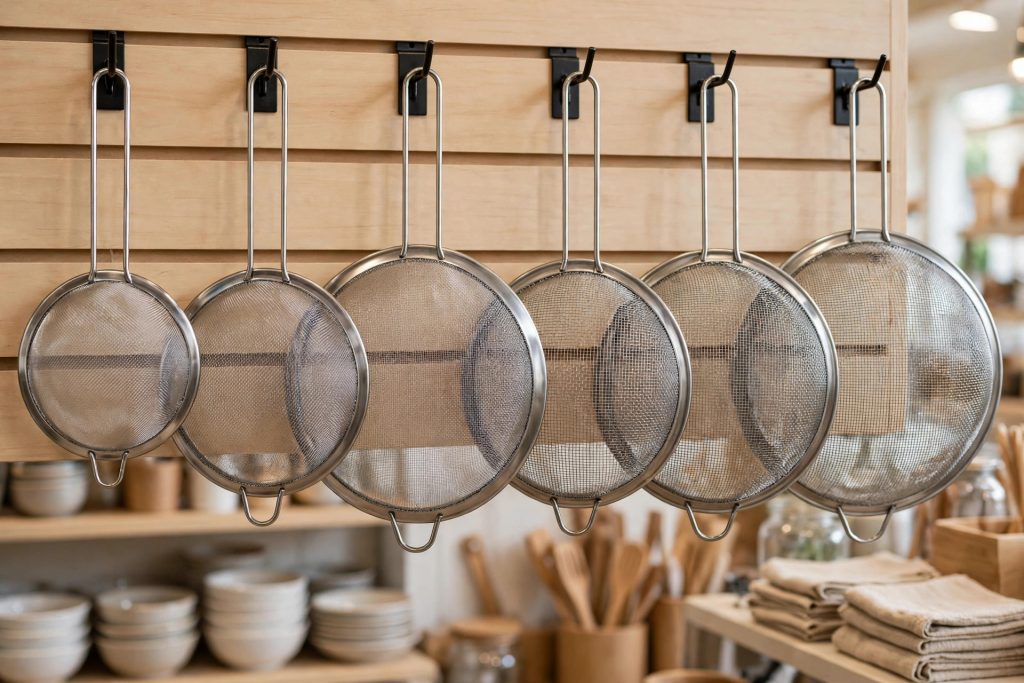
Wholesale mesh strainers suppliers help a kitchen shop stock mesh strainers that home cooks trust, so shelves stay full of tools that sell steadily through the year. Strainers are small, useful and cheap, which makes them easy buys for cooks and steady sellers for shops. This guide explains why mesh strainers sell well, what a good range covers, how to choose a supplier, how to price and order, and how to display stock so it moves. A shop that stocks the right strainers in the right sizes will see steady sales, and a little care in choosing a supplier keeps the range fresh.
Why Wholesale Mesh Strainers Sell Well
Wholesale mesh strainers sell well because every kitchen needs one, and many kitchens need more than one. A cook uses a strainer for sauces, stocks, rice, pasta and tea, so the tool earns daily use and wears out in time. Buyers replace strainers when mesh tears or frames bend, which keeps demand steady year after year. A tool that every kitchen owns and every kitchen replaces is a reliable seller.
The price is low, so buyers add a strainer to a basket without much thought, and the use is clear at a glance. A shop can sell strainers beside pots, bowls and baking tools, since each of those buyers may need one. Low price plus clear use makes for easy sales.
Strainers also sell as add on buys, since a buyer who came for a pot or a pan often adds a strainer at the till. A small display near the counter catches these buyers, and a strainer hung where it can be seen invites a quick decision. Shops that place strainers well sell more of them without any extra effort. A small tool with a visible place sells itself.
What a Good Wholesale Range Covers
A good wholesale range covers several mesh sizes, since fine mesh and medium mesh serve different jobs. Fine mesh suits sauces and stocks where silkiness matters, while medium mesh suits rinsing grains and draining pasta. Stocking both lets the shop serve sauce makers and everyday cooks from the same shelf. A range that covers fine and medium sells more than one mesh alone.
A mid size covers most everyday jobs, and a shop that stocks small, mid and large gives buyers a real choice. Size detail on the shelf helps buyers pick without asking staff for every piece. Choice of size turns a glance into a sale.
Handles and rims vary across a good range, since some buyers want a long handle and others want side handles that rest across a bowl. A range that offers both lets the shop serve different kitchens and habits. Stainless steel suits most buyers, while a light option suits buyers who want easy handling. Variety in handles and materials broadens the shelf without confusing it.
Choosing a Supplier You Can Trust
Choosing a supplier you can trust starts with the quality of the mesh, so inspect samples before you place a large order. A supplier that sends honest samples and welcomes checks is one worth keeping. Mesh quality that you have seen with your own eyes is easier to sell than a promise on a page.
Reliable delivery matters as much as quality, since a shop cannot sell stock that has not arrived. Ask how long orders take, how bent or torn pieces are handled, and what happens if a delivery arrives damaged. A supplier with clear packing, steady lead times and a fair damage policy protects the shop from empty shelves and lost sales. Skyrocs is one place where a shop can start looking at a steady wholesale offer, and the range there gives a useful point of comparison when weighing suppliers.
Clear terms build trust, so read the order minimums, payment terms and return rules before you commit. A supplier that states terms plainly and answers questions quickly is easier to work with than one that hides detail. Check whether small top up orders are allowed, since strainers sell steadily and a shop needs to restock without ordering a full case each time. Fair terms keep the relationship smooth when sales rise or dip.
Pricing and Ordering for Your Shop
Pricing mesh strainers starts with knowing the full landed cost, so add freight and handling to the unit price before setting a shelf price. Strainers are light, yet packing and freight still add up across a case, so count them honestly. Work out the margin on each mesh size and frame type, since fine mesh pieces may cost more to make than coarse ones. A clear cost picture keeps prices fair to buyers and healthy for the shop.
Set prices that reflect the piece, since a fine mesh strainer with a heavy frame is not the same buy as a light coarse one. Price the range in clear steps, so buyers can see the move from everyday to sturdier quality without confusion. Avoid pricing so low that the shop cannot cover damage, and avoid pricing so high that buyers walk past. A tidy price ladder helps staff guide buyers and helps the shop hold margin.
Order in line with demand, starting with the mesh sizes that sell fastest and adding slower lines in smaller numbers. Keep a close eye on which sizes move, since sauce makers and pasta cooks do not buy the same pieces. Order ahead of busy cooking seasons, when new kitchens are set up and gift buying rises. A shop that orders early avoids empty shelves at the moment buyers want strainers most. The wholesale range can serve as a reference when planning the next order.
Displaying Wholesale Mesh Strainers to Sell More
Displaying mesh strainers to sell more starts with hanging them where buyers can see the mesh and lift the piece. A hook display lets buyers feel the weight, check the frame and see the weave up close. Hang fine and medium mesh side by side, so buyers can compare at a glance. A display that invites touch sells better than a shelf that only invites a glance.
Group strainers with bowls, pots and baking tools, so buyers see the jobs each strainer serves. A small dressed shelf with a strainer over a bowl shows the buyer how straining works at home. Buyers who came for a pot may add a strainer when they see it beside the pot they need. Grouped displays turn one buy into two.
Use simple signs that state mesh size and use in plain words, so buyers can compare without asking staff for every detail. A sign that says fine mesh suits sauces while medium mesh suits pasta helps buyers picture the job at home. Keep signs short and honest, and let the strainer itself do most of the talking. Clear signs speed up choice and free staff to help buyers who need guidance.
Frequently Asked Questions
How do wholesale mesh strainers suppliers help a kitchen shop?
Wholesale mesh strainers suppliers help a kitchen shop by offering a range of mesh sizes, frame styles and prices in one place, so the shop can stock a full shelf without chasing many makers. They also give steady supply, clear terms and samples to check, which keeps shelves full and quality steady.
What should wholesale mesh strainers suppliers offer in a range?
Wholesale mesh strainers suppliers should offer fine and medium mesh, several sizes, a choice of handles and a spread of prices. A good range also includes sturdy frames that hold mesh taut, so buyers get smooth straining and long life.
How do I choose among wholesale mesh strainers suppliers?
To choose among wholesale mesh strainers suppliers, inspect samples for taut even mesh, a firm frame and a steady rim, then check delivery times, damage cover and order terms. A supplier with clear terms, honest detail and quick answers is easier to work with.
What should a shop order first from wholesale mesh strainers suppliers?
A shop should order first the mesh sizes that sell fastest, usually a medium mesh in a mid size with a few fine mesh pieces for sauces. Add a small and a large size to cover tea and stock pots, and keep the first order modest until sales show which lines move.
Where should a shop display stock from wholesale mesh strainers suppliers?
A shop should display stock from wholesale mesh strainers suppliers hung on hooks where buyers can see the mesh and lift the piece, grouped with bowls and pots so buyers see the job. Put best sellers at eye level, use short honest signs, and rotate fresh sizes to the front.