
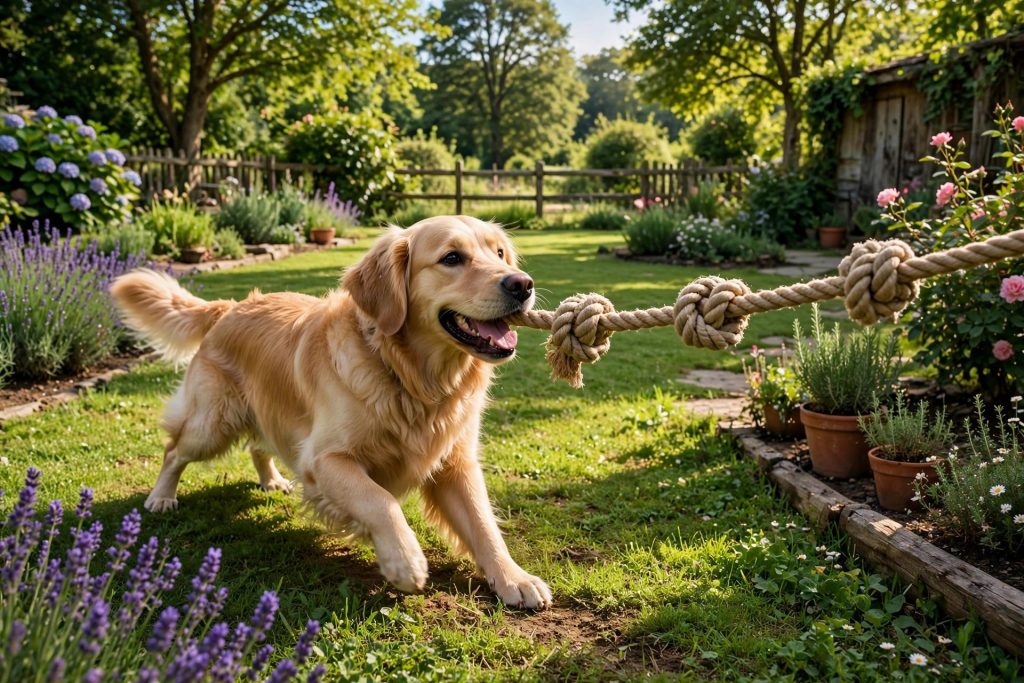
A dog rope toy for active dogs turns tugging, chewing, and fetching into healthy play that burns energy and keeps a dog happy. Dogs that spend long hours indoors often grow restless, and a sturdy rope toy gives them a safe outlet for that energy, whether they tug against you, chew on their own, or chase it across the garden. This guide explains why rope toys suit active dogs, how a rope toy works, what to look for when you buy one, how to use it well, and how to keep it clean so it lasts through many rough games.
Rope toys are made from woven cotton or blended fibres twisted into a thick cord, then knotted into shapes a dog can grip with its teeth and paws. The woven texture gives a dog something to bite into without breaking apart at once, and the knots give you a handle for a game of tug. Unlike a hard plastic toy, a rope toy bends and flexes with the bite, which makes it kinder on teeth and gums while still standing up to strong jaws. For an active dog, that mix of give and strength is what makes a rope toy a daily favourite.
Why Active Dogs Need a Rope Toy
Active dogs need a rope toy because play is how they burn off energy, build muscle, and stay calm when the day is done. A dog that never gets to tug, chew, and chase will find its own outlets, and those often mean chewed shoes, torn cushions, or endless barking at the window. A rope toy channels that drive into a game you can share, and a short session of tugging can tire a dog out as well as a long walk. The toy becomes a tool for training too, since a dog that learns to tug and release on command is learning self control in the middle of excitement.
The shared game matters most of all, because tugging together builds trust between you and your dog, and a dog that plays with you is a dog that listens to you.
How a Dog Rope Toy Works
A dog rope toy works by giving a dog a flexible grip that can take pulling, twisting, and chewing without snapping. The fibres are twisted and knotted so the rope holds together under strain, and the knots at each end stop the weave from unravelling too fast. When your dog bites down, the fibres spread slightly and cushion the bite, and when you pull the other end, the rope stretches a little and then holds firm.
Most rope toys come in a simple shape, such as a single rope with a knot at each end, a loop for fetching, or a rope with a ball or a ring attached. A knotted rope suits a game of tug, while a loop suits a game of fetch, and a rope with a ball gives a dog two kinds of play in one toy. Some ropes are made from plain cotton, while others blend cotton with tougher fibres for dogs that chew hard. The right shape depends on how your dog plays, and a toy that matches the game lasts longer than one that fights it.
Choosing the Right Dog Rope Toy
Choosing a dog rope toy starts with the size and strength that suit your dog, since a rope that is too thin will shred under a large dog, and a rope that is too thick is hard for a small dog to carry. Look for a rope about as thick as your dog can grip comfortably, with tight knots and a dense weave that does not fray at a glance. Check the ends of the rope, since loose strands at the ends are the first thing a strong chewer will pull free. A toy with no metal parts, no hard plastic core, and no glued on pieces is safest, because anything that comes loose can be swallowed.
Think about how hard your dog chews before you buy, since a gentle chewer does well with a soft cotton rope, while a power chewer needs a thicker blend with tight knots. If your dog is a puppy, choose a softer rope that is kind to new teeth, and move up to a tougher rope as the adult teeth come in. A rope toy that matches your dog’s jaw strength gets played with for months, while one that is too weak ends up in pieces on the floor after a single afternoon.
Using a Dog Rope Toy Step by Step
Using a dog rope toy well is mostly about setting rules, since a game of tug without rules teaches a dog that pulling hard always wins. Start the game by offering the rope and letting your dog grip it, then tug gently side to side rather than straight up, which is kinder on the neck and the teeth. Teach a release word, and pause the game when your dog lets go, so the dog learns that dropping the rope brings the game back, not an end to the fun. Keep sessions short and lively, and stop while your dog still wants more, so the toy stays exciting. For dog owners looking for everyday play and care items, Skyrocs offers a helpful starting point, and the pet supplies range covers daily items for dogs of every size and age.
When the game is over, put the rope toy away in a cupboard or a toy box, so your dog does not chew it unsupervised. A rope toy left out all day will be shredded by a bored dog, and loose strands can be swallowed, so storage between sessions is a safety habit, not a chore. Watch the rope for wear after every game, and retire it when the weave opens up or long strands hang free, since a worn rope can tangle or be eaten. A fresh rope toy is cheap insurance against a vet visit, so replace it early rather than late.
Cleaning and Storing Your Dog Rope Toy
A dog rope toy earns its place when it is easy to keep clean, since a toy that has been chewed, drooled on, and dragged across the garden picks up dirt quickly. Wash the rope by hand with mild soap and warm water, or run it through a gentle wash, then let it dry fully in fresh air before the next game. A rope that is still damp will smell musty and may grow mould, so patience at drying time pays off in a toy that stays fresh. Brush off loose dirt after outdoor play, and check the knots for trapped grit that could wear the fibres from inside.
Store the rope toy in a dry place away from direct sun, since heat and light weaken cotton fibres over time. Keep it on a high shelf or inside a closed box when playtime is over, so your dog cannot reach it while you are away. A clean rope with tight knots and no loose strands is ready the moment your dog wants to play, and keeping the routine simple means the toy gets used instead of sitting forgotten at the back of a cupboard.
Frequently Asked Questions
Is a dog rope toy for active dogs safe for daily play?
Yes, a dog rope toy for active dogs is safe for most dogs in supervised play, though you should watch the game, check the rope for wear, and put the toy away when play ends, so your dog does not chew it unsupervised.
How does a dog rope toy for active dogs work?
A dog rope toy for active dogs is made from woven fibres twisted into a cord with knots at each end, so your dog can grip it, tug against you, and chew it, while the weave flexes with the bite instead of snapping.
Can a dog rope toy for active dogs suit puppies and older dogs?
Yes, a dog rope toy for active dogs can suit dogs of many ages, though puppies need a softer rope that is kind to new teeth, and older dogs may prefer a gentler game, so match the rope and the rules to your dog.
How often can I use a dog rope toy for active dogs?
Most dogs enjoy a dog rope toy for active dogs in short daily sessions, and keeping the games brief and lively stops your dog from tiring out or losing interest in the toy.
What should I look for when buying a dog rope toy for active dogs?
Look for a thick tight weave, strong knots, a size your dog can grip easily, and no metal or hard plastic parts, and choose a tougher blend if your dog chews hard.