
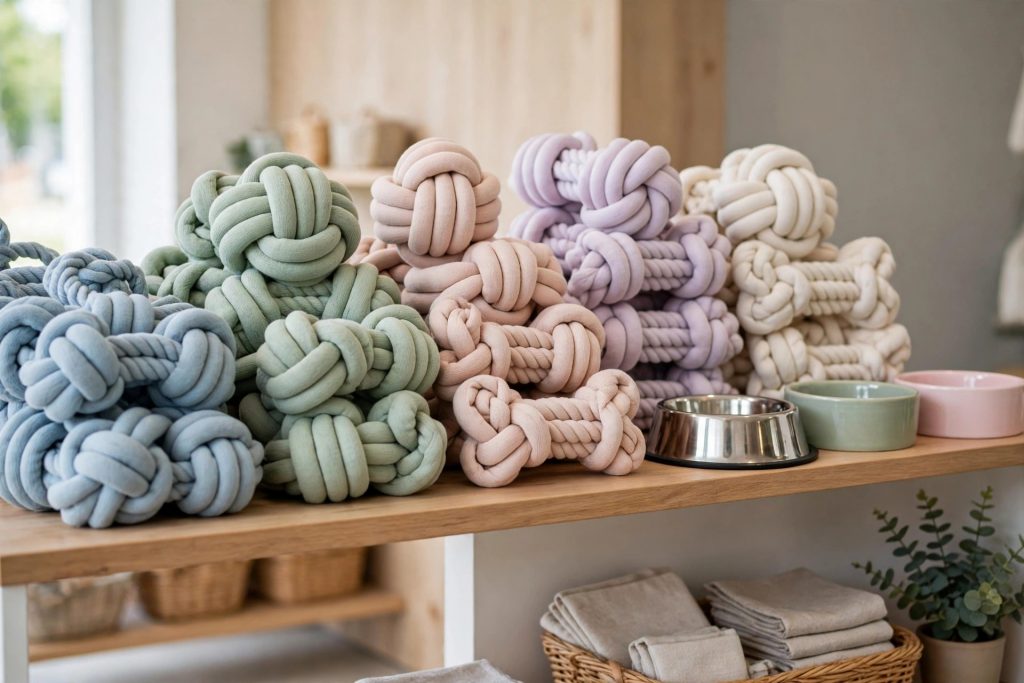
Wholesale dog rope toys suppliers help pet shops stock toys that dogs genuinely love, and a good supplier makes the difference between a shelf that sells and a shelf that gathers dust. Dog owners buy rope toys often, since a well loved rope wears out, frays, and needs replacing, and a puppy that is teething will go through several in its first year. For a shop owner, that steady demand means a rope toy range can bring customers back again and again. This guide explains why rope toys sell well, what a good wholesale range covers, how to choose a supplier you can trust, how to price and order for your shop, and how to display the toys so they sell more.
The pet toy market rewards shops that understand how dogs actually play, and rope toys sit near the top of that list. A dog that loves to tug will wear a rope out with joy, and the owner will come back for another before the old one is gone. A supplier that offers steady quality, fair terms, and a range that covers many sizes and shapes lets a small shop compete with larger stores. Getting the supply side right is the quiet work behind a busy toy shelf.
Why Dog Rope Toys Sell Well
Dog rope toys sell well because they solve a problem every dog owner knows, which is a restless dog with energy to burn. Dogs need to tug, chew, and chase to stay healthy, and a rope toy gives them a safe outlet for that drive, whether they play alone or tug against their owner. Owners see a tired, happy dog after a game and come back for more, often buying a second rope before the first one wears out. That repeat buying pattern makes rope toys one of the most reliable lines a pet shop can stock, since demand does not depend on a season or a trend.
The toys also sell well because they suit many budgets, and a shop can carry a light rope for a small dog alongside a thick rope for a strong chewer. Rope toys make easy add-on sales at the till, since a customer buying food or treats will often pick up a rope on impulse. A shop that keeps the toy shelf fresh, with new shapes and sizes arriving often, gives customers a reason to browse every visit, and browsing leads to buying.
What a Good Wholesale Range Covers
A good wholesale range covers the sizes and shapes that suit many kinds of dogs, so every customer finds a rope that fits. Thin ropes suit small dogs and puppies, thick ropes suit large dogs and strong chewers, and loop shapes suit dogs that love to fetch. A range that offers several thicknesses in a few lengths covers small breeds, large breeds, and everything between, and it lets a shop serve a wide customer base without stocking dozens of lines. Variety in thickness matters more than variety in colour, since dogs care about how a rope feels in the mouth, not how it looks on the shelf.
The range should also cover rope toys with a ball or a ring attached, since owners who want two kinds of play in one toy will pay more for it. A supplier that offers plain knotted ropes alongside rope and ball combos gives a shop a useful range at many price points. Look for a range that uses tight weaves, strong knots, and no metal parts or hard plastic cores, since safety is the first thing a careful owner checks. A range that is safe, varied, and easy to restock is a range that sells itself.
Choosing a Supplier You Can Trust
Choosing a supplier you can trust starts with the quality of the ropes, since a rope that shreds in a single session will cost you customers. Ask for samples before you place a large order, and test the weave, the knots, and the strength yourself by pulling hard on each end. A supplier that sends samples gladly is a supplier that stands behind its goods, while one that refuses samples is a warning sign. Check how the supplier packs the ropes, since ropes that arrive damp or tangled will look poor on your shelf and may smell musty before they sell.
Look past the price and check the terms, since a low price means little if the minimum order is too large or the delivery takes too long. Ask about the minimum order, the delivery time, and what happens if goods arrive damaged, and get the answers in writing before you commit. A supplier that answers clearly and quickly is easier to work with than one that leaves you guessing, and clear terms protect a small shop when something goes wrong. For shop owners looking for a reliable trade partner, Skyrocs offers a helpful starting point, and the wholesale page covers trade terms for retailers of every size.
Pricing and Ordering for Your Shop
Pricing a rope toy range starts with knowing your costs, since a price that looks good on the shelf means little if it leaves no margin after delivery and handling. Work out the landed cost of each rope, including the unit price, the delivery charge, and any packing cost, then set a retail price that leaves room for a discount or a bundle offer. A small rope at the till can carry a modest margin and still sell fast, while a thick rope for a large dog can carry a higher price, since the owner sees the value in a toy that lasts. Keep the price simple and easy to read, so customers can decide at a glance.
Ordering well means keeping the shelf full without tying up cash in stock that sits unsold. Start with a modest order across several sizes, watch which ones sell fastest, and reorder the winners more often. A supplier that allows smaller repeat orders is worth more than one that only sells in large cases, since small orders keep your cash moving and your shelf fresh. Track what sells each week, and let the sales tell you what to order next, rather than guessing from a catalogue.
Displaying Dog Rope Toys to Sell More
Displaying rope toys well starts with putting them where customers can see and touch them, since a rope hidden on a high shelf will not sell. Place the rope range near the dog food or the dog care aisle, where dog owners already browse, and keep the best sellers at eye level. A small basket of colourful ropes near the till catches impulse buyers, and a tidy display with a clear price tag makes the choice easy. Let customers pick a rope up and feel the weave, since touch is part of how an owner judges quality.
A display that tells a story sells more than a bare shelf, so group the ropes by the size of dog they suit, with small ropes in one group and thick ropes in another. A simple sign that explains the sizes helps a new owner choose without asking, and a rope and ball combo shown beside a plain rope shows the value at a glance. Keep the display full and fresh, and move slow sellers to a lower shelf, so the range always looks loved and lively.
Frequently Asked Questions
Why should a pet shop stock wholesale dog rope toys suppliers?
A pet shop should stock wholesale dog rope toys suppliers because rope toys are repeat purchases, since a well loved rope wears out and frays, so customers return often and the shelf keeps selling.
How do wholesale dog rope toys suppliers help a small shop?
Wholesale dog rope toys suppliers help a small shop by offering a varied range in manageable order sizes, so the shop can serve many kinds of dogs without tying up cash in stock that sits unsold.
What should a shop look for in wholesale dog rope toys suppliers?
A shop should look for wholesale dog rope toys suppliers that send samples gladly, pack goods well, answer clearly about minimum orders and delivery, and put the terms in writing before the first order.
How should a shop price wholesale dog rope toys suppliers stock?
A shop should price wholesale dog rope toys suppliers stock by working out the landed cost of each rope, then setting a retail price that leaves room for a discount or a bundle offer while staying easy for customers to read.
How can a shop display wholesale dog rope toys suppliers stock to sell more?
A shop can display wholesale dog rope toys suppliers stock near the dog food aisle and the till, grouped by the size of dog they suit, with clear prices and a rope and ball combo shown beside a plain rope.