
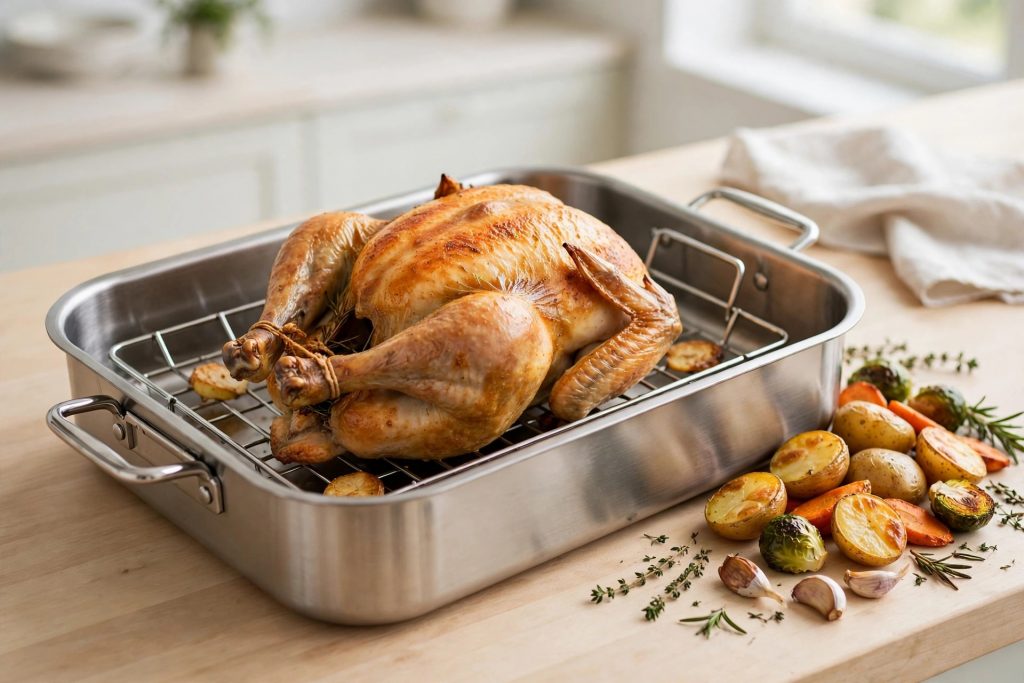
A roasting pan for juicy roasts is the quiet hero of a good Sunday lunch, since it holds the meat steady, catches every drop of juice, and spreads heat evenly so the roast cooks through without drying out. Many home cooks blame the oven or the cut of meat when a roast turns dry, yet the pan often makes the difference, since a thin pan lets heat spike and fall, while a sturdy pan keeps the heat calm and even. A good roasting pan also gives the juices somewhere to gather, so you can baste the meat as it cooks and spoon those juices over the slices at the table. The rack inside lifts the meat above the juices, so hot air moves around it and the skin crisps while the meat below stays moist. This guide explains why juicy roasts matter, how a roasting pan works, what to look for when you buy one, how to use it well, and how to keep it clean and ready for the next roast.
Why Juicy Roasts Matter
A juicy roast matters because a roast is often the centre of a family meal, and dry meat can spoil a gathering that took hours to prepare. When the meat stays moist, every slice tastes rich and tender, and the meal feels generous even when the cut is modest. Juicy meat also slices cleanly, since dry meat crumbles and tears at the knife, while moist meat holds its shape on the plate. A roast that stays juicy also makes better leftovers, since slices that are moist on the day stay pleasant in sandwiches and salads the next day, while dry slices go tough in the fridge. The juices themselves matter too, since they form the base of a rich gravy, and a pan that catches them well gives you more to work with at the table. A family that enjoys its roast is more likely to cook one again, and a simple pan that keeps the meat moist earns its place in the kitchen.
How a Roasting Pan for Juicy Roasts Works
A roasting pan works by spreading heat evenly across its base and walls, so the meat cooks at the same pace on every side. The pan is usually made from heavy metal that holds heat well, and the thick base stops hot spots from forming, which is what dries out one side of a roast while the other side stays pale. Many pans come with a rack that sits inside, and the rack lifts the meat above the juices, so hot air can move around the meat and the skin can crisp while the juices gather below. The high sides of the pan matter too, since they catch splashes and keep the oven clean, and they also hold the juices in a shallow pool that you can spoon over the meat as it cooks. The handles let you lift a heavy roast safely, and a pan that fits your oven well leaves room for air to move around it.
Choosing the Right Roasting Pan for Your Kitchen
Choosing a roasting pan starts with the size of the roasts you cook most, since the pan must fit the meat with a little room to spare and still fit your oven. Measure the inside of your oven and the roasts you usually buy, and pick a pan that holds the largest roast you cook without crowding the sides. The material matters too, since heavy stainless steel holds heat well and cleans easily, while enamelled steel offers a smooth surface that resists stains. Look for a pan with sturdy handles that you can grip with oven gloves, since a full roast is heavy and a flimsy handle is a risk. A rack that lifts out easily is worth having, since it makes carving and cleaning simpler, and a rack with a flat top holds the meat steady. For cooks looking for everyday kitchen tools, Skyrocs offers a helpful starting point, and the pet supplies range covers daily items for homes that share their kitchen with a cat or a dog.
Using Your Roasting Pan for Juicy Roasts
Using a roasting pan well starts with heating the oven fully before the meat goes in, since a hot oven seals the surface fast and locks the juices inside. Place the rack in the pan and set the meat on the rack, and leave a little space around it so hot air can move freely. Add a splash of water or stock to the pan if the roast is lean, since the steam helps keep the meat moist while it cooks. Baste the roast now and then with the juices from the pan, since spooning the juices over the meat keeps the surface moist and adds flavour. Turn the pan halfway through cooking if your oven heats unevenly, so every side of the roast browns at the same pace. Let the roast rest in the pan for a short while after it comes out, since resting lets the juices settle back into the meat instead of running out onto the board.
Cleaning and Storing Your Roasting Pan for Juicy Roasts
A roasting pan earns its place when it is easy to clean, since burnt on juices left in the pan will spoil the next roast. Soak the pan in warm water with a little mild soap as soon as it cools, and the stuck on juices will loosen without hard scrubbing. Use a soft cloth or a non scratch sponge to clear the base and the sides, and pay attention to the corners where juices gather and harden. A little baking soda helps with stubborn marks, and the rack should soak with the pan so its bars come clean too. Dry the pan at once with a clean towel, since water left in the pan can dull the finish over time, and a dry pan stores better than a damp one. Avoid harsh scourers on a non stick surface, since scratches catch food and make the next roast stick.
Store the pan where it is easy to reach, since a pan buried under heavy trays will be hard to lift out and easy to damage. Keep the rack inside the pan so the pair stays together, and slip a soft cloth between the pan and any pan stacked on top of it to guard the surface. A cool cupboard away from heat suits the pan best, since heat can warp thin metal over time. Check the handles now and then to make sure they stay firm, since a loose handle on a heavy pan is a risk when the roast is hot. A pan that is cleaned and stored well will last for many years, and it will be ready whenever a roast is on the menu. Good care is simple, and it keeps the pan working as well as the day you bought it.
Frequently Asked Questions
Is a roasting pan for juicy roasts needed for home cooking?
It is not needed, yet it makes a clear difference, since a sturdy pan holds heat evenly, catches the juices for basting and gravy, and lifts the meat on a rack so it cooks evenly. Cooks who roast often will find it worth the cupboard space, while cooks who roast rarely can manage with a deep tray.
How does a roasting pan for juicy roasts keep meat moist?
The heavy base spreads heat evenly so no side dries out, the rack lifts the meat above the juices so hot air moves around it, and the juices gathered in the pan let you baste the meat as it cooks, which keeps the surface moist.
What size roasting pan for juicy roasts should I buy?
Buy a pan that fits the largest roast you cook with a little room to spare, and check that it fits your oven with room for air to move around it. A pan that is too large lets juices spread thin and burn, while a snug pan keeps them deep enough to baste.
How do I clean a roasting pan for juicy roasts after use?
Soak it in warm water with a little mild soap as soon as it cools, clear the base and corners with a soft cloth, use a little baking soda for stubborn marks, and dry it fully before you store it.
What should I look for when buying a roasting pan for juicy roasts?
Look for a heavy base that holds heat, sturdy handles you can grip with oven gloves, a rack that lifts out easily, sides deep enough to catch the juices, and a size that fits both your usual roast and your oven.