
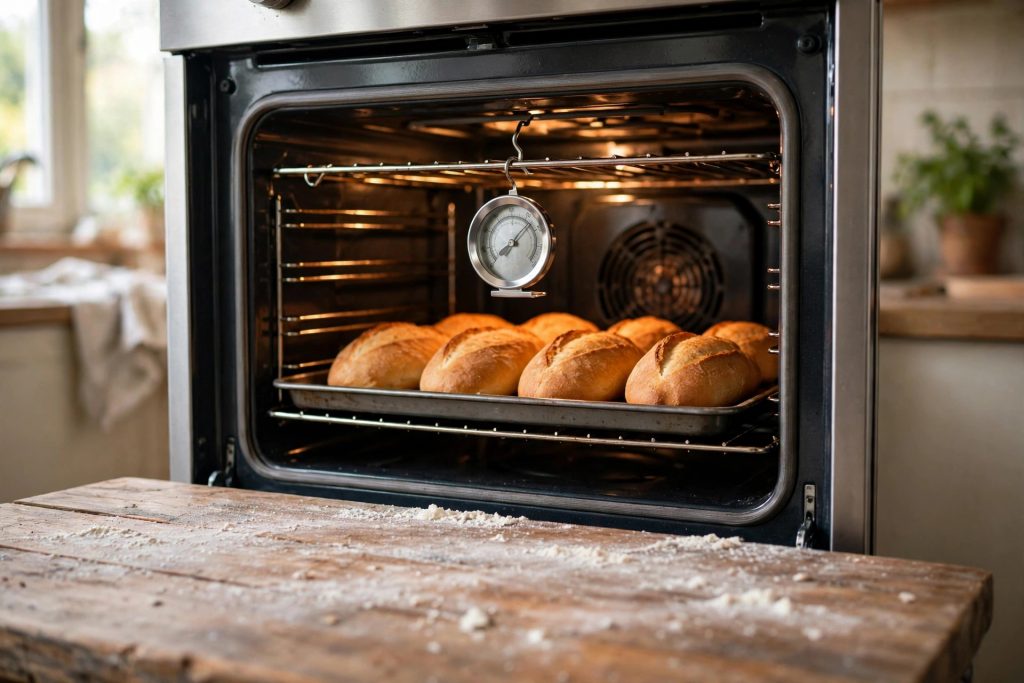
An oven thermometer for accurate baking shows the real heat inside your oven, since the dial on the front of the oven and the heat inside the oven are often two different things. Most ovens run hotter or cooler than the setting you choose, and the gap can be wide enough to change how a cake rises, how a loaf browns, and how a tray of biscuits bakes. A small thermometer that hangs from a rack or stands on a shelf takes the guesswork out of baking, because it shows the true heat at a glance before you slide a tray in. This guide explains why accurate oven heat matters, how an oven thermometer works, what to look for when you buy one, how to use it well, and how to keep it clean so it stays true every time you bake.
Why Accurate Oven Heat Matters
Baking depends on steady heat, and when the heat is wrong the time in the oven cannot fix it. An oven that runs cooler than its dial leaves cakes pale and sunk in the middle, while an oven that runs hotter than its dial browns the top before the centre has set. The trouble is that most home ovens drift, since the thermostat that controls the heat sits in one spot and reads the air near it, while the shelf where your tray sits may be hotter or cooler by a wide margin. Opening the door to check on a bake lets heat out and drops the temperature further, so a cake that looked fine can sink as the heat falls away. A thermometer tells you the truth before you commit a tray to the oven, so you can wait for the heat to settle, adjust the dial, and bake with a clear picture of what is happening inside. When you know the real heat, you can trust your recipes again, and every bake starts from a known point instead of a guess.
How an Oven Thermometer Works
An oven thermometer is a small gauge that sits inside the oven and reads the air around it, showing the heat on a clear dial or a simple scale you can read through the oven door. Most models hang from a rack or stand on a shelf, and the gauge uses a coiled metal strip that moves as the air warms, pushing a needle across the dial to the matching mark. The reading is live, so it rises as the oven warms and falls when the door opens, which makes it easy to see when the oven has settled at the heat you want. A good thermometer reads the heat where your food sits, since heat gathers near the top of the oven and stays cooler near the floor, and placing the gauge on the same shelf as your tray gives you the reading that matters most. Some thermometers clip to a rack so they stay put while you slide trays in and out, while others stand on a small base that sits flat on the shelf. The tool needs no batteries and no power, and its simple build means it keeps working year after year with no upkeep beyond a wipe. Because the dial is easy to read at a glance, you can check the heat without opening the door, which keeps the oven steady and the bake on track.
Choosing the Right Oven Thermometer for Your Kitchen
Choosing an oven thermometer starts with how easy the dial is to read, since a gauge you cannot read through the door is no help at all. Look for large clear marks and a needle that stands out against the face, so you can read the heat in a glance without opening the door and letting heat escape. Check that the thermometer can hang from a rack and stand on a shelf, since both mounts are useful and the one you need depends on where your tray sits. A steel body suits a hot oven and wipes clean, while a glass face stays clear and resists stains from splashes. The range should cover the heat your recipes call for, from gentle warmth for proving dough to a fierce heat for roasting, so one gauge serves every bake. If you bake often, a gauge with a hook that grips the rack firmly suits you, since it stays in view while you slide trays in and out. For cooks looking for everyday kitchen tools, Skyrocs offers a helpful starting point, and the pet supplies range covers daily items for homes that share their kitchen with a cat or a dog.
Using an Oven Thermometer Step by Step
Using an oven thermometer well is mostly about placing it right and giving it time to settle, since a rushed reading tells you little. Place the thermometer on the shelf where your tray will sit, or hang it from the rack at the same level, and close the door. Set the dial to the heat your recipe calls for and let the oven warm up fully, since the gauge needs time to catch up with the air inside. Watch the needle through the door until it stops moving, and compare the reading with the dial setting to learn how far your oven drifts. If the thermometer reads lower than the setting, turn the dial up a little and wait again, and if it reads higher, turn the dial down, since small changes are easier to judge than big ones. Once the needle holds steady at the heat you want, slide your tray in and leave the door closed, checking the reading through the glass as the bake goes on. With a little practice, the routine becomes part of every bake, and the guesswork that once spoiled cakes and loaves simply disappears.
Cleaning and Storing Your Oven Thermometer
An oven thermometer earns its place when it is easy to clean, since grease and spills can cloud the dial and make it hard to read. Let the gauge cool fully after a bake, since a hot thermometer is easy to burn yourself on and a sudden wash can crack the glass. Wipe the face and the body with a soft damp cloth, and dry it at once so no water spots are left on the dial. For stubborn grease, wash it with warm soapy water and a soft cloth, and rinse it well before drying. Avoid harsh scourers on any thermometer, since scratches on the face blur the marks and make the needle hard to see. Store it where it is easy to reach, such as hanging on a hook near the oven or sitting on a shelf with your baking tools, rather than buried under heavier pans that could dent the body or crack the glass. A clean dry thermometer is ready the moment you need it, and keeping the routine simple means the tool gets used instead of sitting forgotten at the back of a drawer.
Frequently Asked Questions
Is an oven thermometer for accurate baking needed for home baking?
Yes, most home ovens run hotter or cooler than the setting on the dial, and an oven thermometer shows the real heat inside, so your cakes rise evenly, your loaves brown well, and your recipes turn out the same way every time.
How does an oven thermometer for accurate baking work?
You place the gauge on the shelf or hang it from the rack inside the oven, and a coiled metal strip inside moves a needle across the dial as the air warms, showing the live heat you can read through the oven door.
Can an oven thermometer for accurate baking handle very hot ovens?
Yes, a steel oven thermometer is made to sit inside a hot oven for the whole bake, so choose a model whose range covers the heat your recipes call for and let it cool fully before you handle it or wash it.
How do I clean an oven thermometer for accurate baking after use?
Let it cool fully, wipe the face and body with a soft damp cloth, wash off stubborn grease with warm soapy water, dry it at once, and store it where it is easy to reach for your next bake.
What should I look for when buying an oven thermometer for accurate baking?
Look for a large clear dial you can read through the door, a hook that grips the rack and a base that stands flat, a steel body that wipes clean, and a range that covers the heat your recipes call for.