
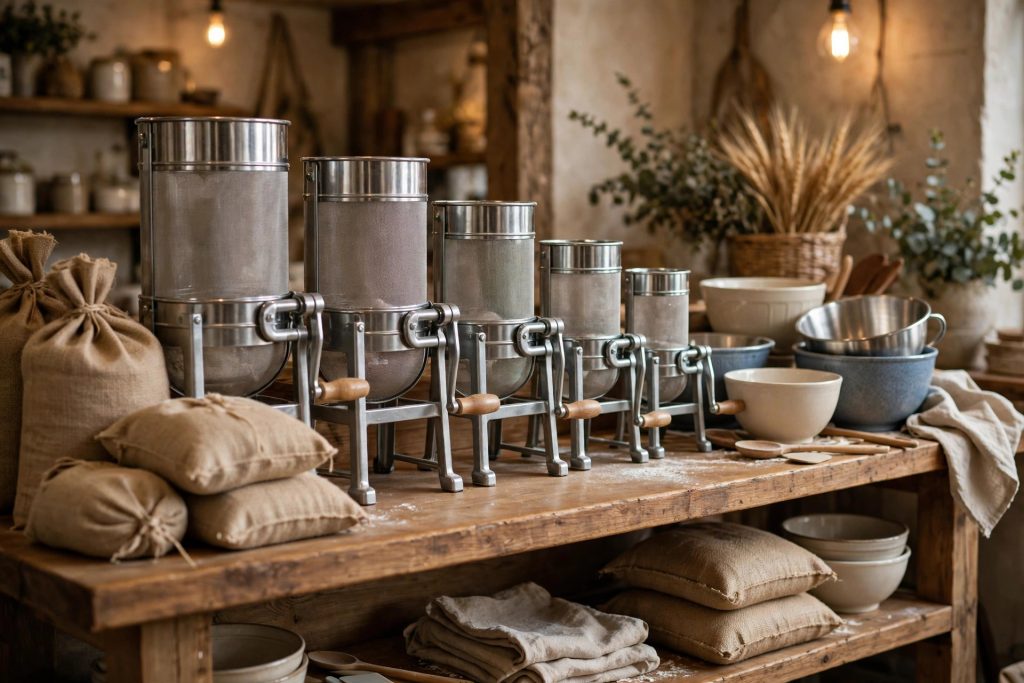
Wholesale flour sifters suppliers help kitchen shops stock a small tool that turns lumpy flour into a light even powder, since flour packs down in the bag and every home baker who has found a hard lump in a cake batter knows the value of a good sift. A sifter is cheap to make, easy to ship, and simple to explain on a shelf, which makes it a steady seller for shops that serve keen home cooks. Bakers buy one, feel the difference in a lighter sponge, and come back for a second one as a gift or for a friend who bakes, so the line keeps moving without heavy promotion. This guide explains why flour sifters sell well, what a good wholesale range covers, how to choose a supplier you can trust, how to price and order for your shop, and how to display the range so it sells even better.
Why Flour Sifters Sell Well
Flour sifters sell well because they solve a problem that almost every home baker has felt, since a lump of flour in a cake can spoil a bake that took an afternoon to make, and a sifter is the simple fix that shoppers understand at once. The tool is small and easy to explain, so a shopper can pick it up, turn the crank, and see how the mesh breaks lumps apart without a long talk from staff. The price point suits an impulse buy, since a sifter costs little next to a stand mixer or a set of pans, and shoppers add it to the basket while they browse the baking aisle. It also suits a gift, since a keen baker will welcome a tool that makes every sponge lighter, and gift buyers reach for tools that look useful rather than decorative. For a shop, the range is easy to hold, since sifters take little shelf space, need no power, and carry no risk of going out of date. A supplier who keeps the line in steady stock gives your shop a reliable seller that turns over again and again.
What a Good Wholesale Range Covers
A good wholesale range covers the models your shoppers ask for, so the shelf holds a choice without turning into clutter. Start with a crank sifter in a medium size, since it is the classic model most bakers know and the one they ask for by sight. Add a squeeze handle model, since some shoppers prefer a light touch and a simple stir, and a larger cup for shoppers who bake in big batches for a family gathering. Offer a small cup for a single cake and a fine mesh for delicate sponges, since both sizes have their fans and the mesh is what shoppers check first. The range should cover steel bodies that wash well and light plastic bodies that are easy to lift, since durability and weight are what shoppers weigh up when they hold the tool in their hand. Keep the packaging simple and clear, since shoppers buy on sight and a plain box that shows the sifter beats a busy pack that hides it. A supplier who offers the range in a few clear models, rather than a long list of near copies, makes ordering simple and keeps your shelf easy to shop.
Choosing a Supplier You Can Trust
Choosing a supplier starts with the quality of the mesh, since a sifter with a torn or uneven mesh lets lumps through and a bad batch will cost you returns and trust. Ask the supplier how each sifter is checked before it ships, and look for a supplier who tests the mesh and the crank so the tool you sell turns smoothly from the first day. Check the build, since a steel body that washes well and a crank that turns without stiffness are signs of a sifter made to last, while a loose handle and a wobbly rim are signs of trouble. A good supplier answers questions quickly and shares clear details on materials, sizes, and packing, since silence at the start is a warning of slow help later. Look for steady stock, since a supplier who runs out mid-season leaves your shelf empty when shoppers are buying, and ask how fast a reorder ships. Fair terms matter too, since clear payment terms and a simple returns path protect your shop when a batch arrives with a fault. For shops looking for a wholesale partner, Skyrocs offers a helpful starting point, and the wholesale page sets out how the wholesale range works for kitchen shops.
Pricing and Ordering for Your Shop
Pricing a sifter range starts with knowing your costs, since the cup, the mesh, the packing, and the freight all count before you set a shelf price. Work out the landed cost of each model, then set a price that leaves room for a fair margin while staying close to what shoppers expect to pay for a small baking tool. Keep the entry model at a friendly price, since a low-priced sifter brings shoppers to the shelf, and let the larger cup carry a higher price for those who bake in big batches. Order in small batches at first, since a modest first order lets you learn which models move fastest without tying up cash in slow stock. Watch the shelf for a few weeks, note which models sell and which sit still, and let the next order follow what shoppers actually buy. Reorder before the shelf runs dry, since an empty hook loses sales that a full shelf would have caught, and a supplier with fast shipping makes this easy. A steady rhythm of small orders keeps the range fresh, the cash flowing, and the shelf full of the models your shoppers want most.
Displaying Flour Sifters to Sell More
Display sells a sifter before a shopper reads a word, since the tool is one people buy by sight and by touch. Hang the crank models on hooks at eye level near the baking aisle, so shoppers see the cup and the crank as they walk past and can lift one down to hold it. Place the squeeze handle models on a shelf beside the flour and baking powder, since shoppers buying flour are the same shoppers who need to sift it lump free. Keep the shelf tidy, with each model in its own spot and the mesh facing out, since a jumbled pile hides the tool and a clear row invites a closer look. Put a simple sign beside the range that explains the benefit in plain words, since shoppers who learn that sifted flour makes a lighter sponge will reach for a sifter at once. Group the sifters with measuring cups and mixing bowls in a small baking corner, since a shopper gathering bakeware will spot the sifter while the need is fresh in mind. Leave one sifter out of its pack so shoppers can turn the crank and feel how smoothly it runs, since a tool that feels solid in the hand sells itself. A tidy display, a clear sign, and a sifter shoppers can touch will move more stock than a shelf that hides the range behind taller boxes.
Frequently Asked Questions
Why should a kitchen shop stock wholesale flour sifters suppliers?
A kitchen shop should stock them because almost every home baker needs a sifter to break up flour lumps, the tool is small and easy to sell, and the line moves all year with little shelf space and no risk of going out of date.
How do wholesale flour sifters suppliers help a small shop?
They help a small shop by offering a few clear models in steady stock, so the shop can order small batches, learn which models sell fastest, and keep the shelf full without tying up cash in slow stock.
What should a shop look for in wholesale flour sifters suppliers?
A shop should look for a fine even mesh, a crank or handle that turns smoothly, clear details on materials and packing, fast answers to questions, steady stock, and fair payment and returns terms.
How should a shop price wholesale flour sifters suppliers stock?
A shop should work out the landed cost of each model, keep the entry model at a friendly price, let the larger cup carry a higher price, and stay close to what shoppers expect to pay for a small baking tool.
How can a shop display wholesale flour sifters suppliers stock to sell more?
A shop can hang crank models at eye level near the baking aisle, place squeeze handle models beside flour and baking powder, keep the mesh facing out, add a simple sign in plain words, and leave one sifter out of its pack for shoppers to try.