
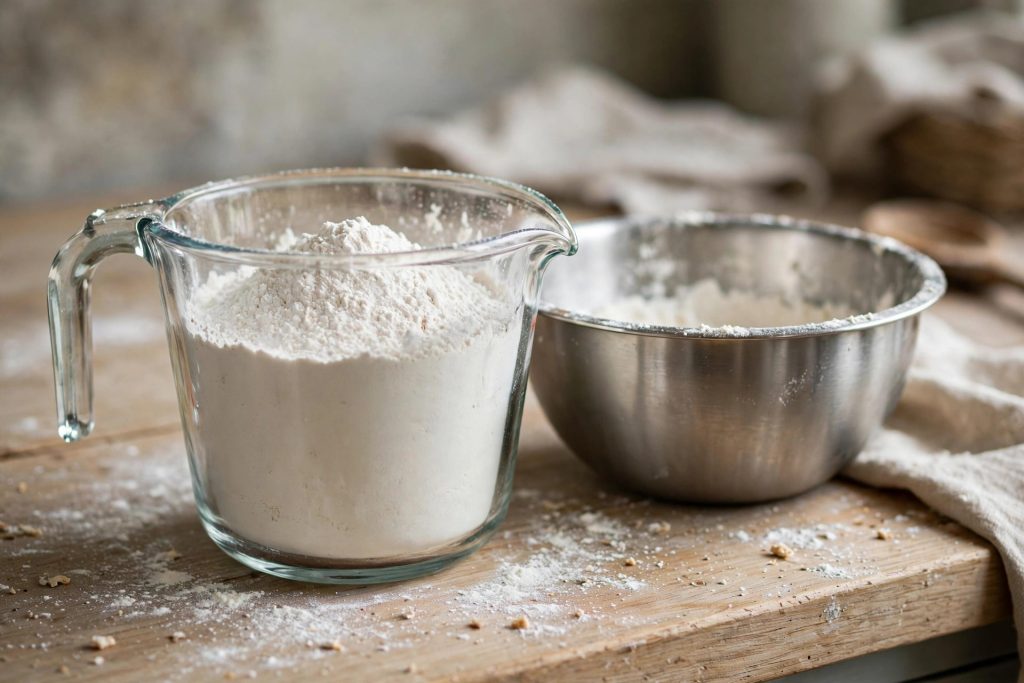
A measuring cup for accurate ingredients helps you measure flour, sugar, and liquids the same way every time, since baking depends on the balance of each ingredient, and a small error in one measure can change the whole result. When you scoop flour with a mug or guess at a pour, the amount changes from one bake to the next, and a cake that rose well last week can sink this week for no clear reason. A good measuring cup gives you clear marks you can read at a glance, a shape that pours cleanly, and a size that suits the recipes you make most. This guide explains why accurate measuring matters, how a measuring cup works, what to look for when you buy one, how to use it well, and how to keep it clean so it is ready every time you bake.
Why Accurate Measuring Matters
Accurate measuring matters because baking is a careful balance of flour, sugar, fat, and liquid, and a small drift in any one measure can turn a good recipe into a poor result. When you add too much flour, a cake turns dry and heavy, and the crumb feels tight and dull instead of light and tender. When you add too little flour, the batter turns wet and the cake sinks in the middle, since there is not enough structure to hold the rise. Too much sugar can make a cake brown too fast and turn sticky, while too little sugar leaves the crumb pale and flat in flavour. Liquids matter just as much, since too much milk or water thins the batter and too little leaves it stiff and hard to mix. Accurate measuring also matters for repeat baking, since a recipe you can repeat with the same measures gives you the same result every time, and you can learn what works and what needs a small change. For cooks who bake often, the difference shows up in every batch, since a reliable cup means fewer failed cakes, fewer wasted ingredients, and more consistent results from the same recipe, week after week.
How a Measuring Cup Works
A measuring cup is a simple tool with one clear job, and its design makes that job easy to follow. Most measuring cups are a clear jug with a spout, a handle, and marks up the side that show the level of flour, sugar, or liquid inside. You pour or spoon the ingredient into the cup until it reaches the mark you need, and the clear wall lets you check the level at eye level without guessing. Some cups are made for liquids, with a wide mouth and a spout that pours cleanly, while others are made for dry goods, with a flat top that you can level off with a knife for a precise measure. The best cups have marks that are easy to read, with large numbers and lines that stand out against the clear wall, and a handle that feels steady in the hand when the cup is full. A good cup also pours cleanly, with a spout that guides the liquid in a smooth stream instead of letting it drip down the side. The tool needs no power and no moving parts beyond a simple pour, and its simplicity is the point, since fewer parts mean fewer things to go wrong on a busy morning in the kitchen.
Choosing the Right Measuring Cup for Your Kitchen
Choosing a measuring cup starts with the recipes you make most, since it decides whether you need a cup for liquids, a cup for dry goods, or a set that covers both. A clear jug with a spout suits liquids such as milk, water, and oil, since you can read the level at eye level and pour cleanly into the bowl. A set of nested cups suits dry goods such as flour and sugar, since you can fill each cup to the top and level it off with a knife for a precise measure. Check that the marks are clear and easy to read, with lines that will not rub off after many washes, since faded marks make the cup useless. The cup should feel sturdy in the hand, with a handle that sits comfortably and a base that sits flat on the bench without tipping over. Look for a material that suits your kitchen, since glass stays clear and washes well, while sturdy plastic is light and will not break if it slips from your hand. For cooks looking for everyday kitchen tools, Skyrocs offers a helpful starting point, and the pet supplies range covers daily items for homes that share their kitchen with a cat or a dog.
Using a Measuring Cup
Using a measuring cup well is mostly about reading the level at eye level and levelling dry goods with care, since a reading taken from above or a heaped cup can mislead you. For liquids, set the cup on a flat bench and bend down so your eyes are level with the mark, since looking down from above makes the level look higher than it really is. Pour slowly and stop at the mark, and check the level again before you tip the liquid into the bowl. For dry goods, spoon the flour into the cup a little at a time, rather than scooping with the cup itself, since scooping packs the flour down and adds more than the recipe needs. Fill the cup to the top and level it off with the back of a knife, sweeping the extra flour back into the bag, so the measure is the same every time. When you measure sticky goods such as honey or syrup, lightly oil the cup first so the sticky food slides out cleanly and none is left behind. With a little practice, the routine takes only a few minutes and becomes part of the rhythm of baking, and your cakes will turn out more consistent for the extra care.
Cleaning and Storing Your Measuring Cup
A measuring cup earns its place when it is easy to clean, since dried flour and sticky sugar can cloud the marks and make the next measure hard to read. Rinse the cup straight after use, before flour or syrup has a chance to dry on the walls, and wash it with warm soapy water and a soft cloth. For a glass cup, dry it with a clean towel so the clear wall stays bright and the marks stay easy to read, since water spots can dull the surface over time. For a plastic cup, avoid harsh scourers that can scratch the wall and hide the marks, and let it dry fully before putting it away. Check the handle now and then to make sure it still feels firm, since a loose handle can make a full cup hard to hold and easy to spill. Store the cup in a cupboard or hang it on a hook where it is easy to reach, rather than buried under heavier pans that could crack the glass or dent the plastic.
Frequently Asked Questions
Is a measuring cup for accurate ingredients needed for baking?
Yes, baking needs the same balance of flour, sugar, fat, and liquid every time, and a measuring cup gives you clear marks you can read at a glance, so a cake that rose well last week rises just as well this week.
How does a measuring cup for accurate ingredients work?
You pour or spoon the ingredient into the cup until it reaches the mark you need, and the clear wall lets you check the level at eye level, so you can measure flour, sugar, and liquids the same way every time without guessing.
Can a measuring cup for accurate ingredients measure both dry goods and liquids?
Yes, a clear jug with a spout suits liquids, while a set of nested cups suits dry goods, so choose the style that matches the recipes you make most, or keep a set that covers both for everyday baking.
How do I use a measuring cup for accurate ingredients for flour?
Spoon the flour into the cup a little at a time, fill it to the top, and level it off with the back of a knife, since scooping with the cup packs the flour down and adds more than the recipe needs.
What should I look for when buying a measuring cup for accurate ingredients?
Look for clear marks that will not rub off, a sturdy handle, a base that sits flat, a spout that pours cleanly, and a material that washes well, such as glass for clarity or sturdy plastic for a light unbreakable cup.