
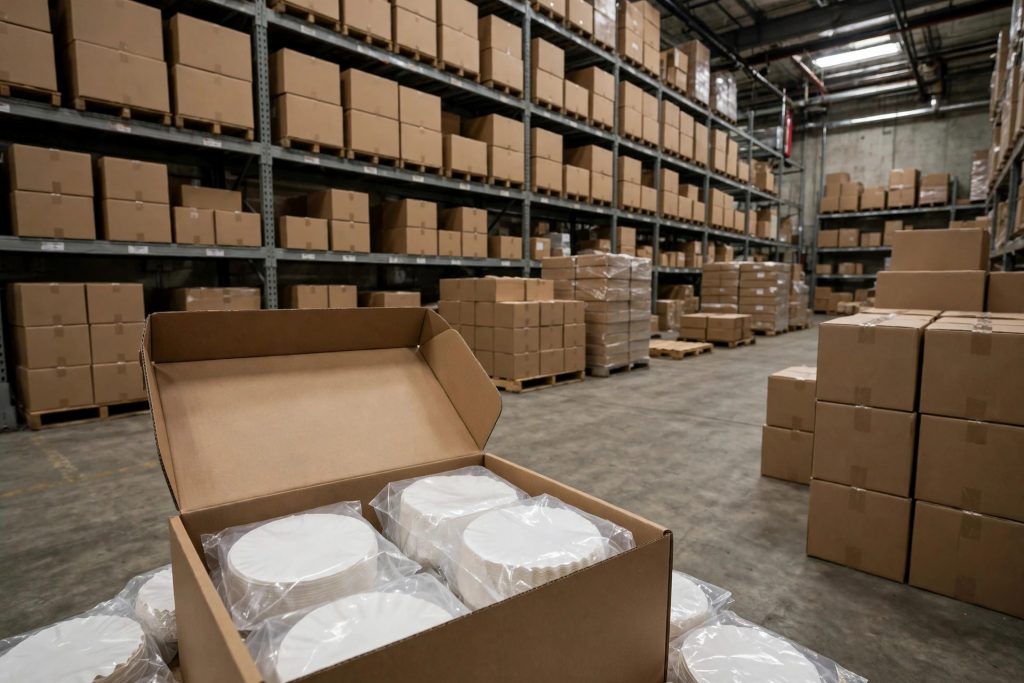
Wholesale coffee filters suppliers help kitchen shops stock a small item that home brewers buy again and again, so a shelf of filters brings steady sales with very little risk. Every home that brews coffee needs fresh filters, and a filter that tears or leaves grounds in the cup sends the buyer back to the shop for a better one. A shop that stocks filters in the sizes its customers use gives brewers an easy reason to return, and a filter that brews a clean cup earns the trust that brings buyers back for beans, brewers, and more kitchen goods. This guide explains why coffee filters sell well, what a good wholesale range covers, how to choose a supplier you can trust, how to price and order for your shop, and how to display filters so they sell more.
Filters sell well because they are a daily need with a low price, so buyers add them to the basket without a long think. Shops that stock a few sizes and a few materials give every brewer a fit, and a filter that sits beside the beans and brewers on the shelf lifts the whole coffee section. A shop that gets filters right earns a reputation for stocking the small things well, and that reputation brings buyers back for larger items too.
Why Coffee Filters Sell Well for Shops
Coffee filters sell well because they answer a need that never goes away, since every brew uses a fresh filter and every brewer runs out in time. A home brewer who buys beans each week will also buy filters, and a shop that stocks the right sizes becomes the easy stop for both. Filters also suit shops of every size, since a small shelf holds many packs and the stock turns over fast without tying up much cash. A filter pack is light and small, so it ships cheaply and stores neatly, and a shop can carry several sizes without needing a large display.
Filters also pair well with other kitchen goods, so a shelf that holds filters beside beans, brewers, and mugs lifts the whole coffee section. A buyer who comes in for filters often leaves with beans or a new brewer, and a buyer who buys a brewer will need filters to use it. That link between items makes filters a smart anchor product, since they bring buyers in often and open the door to larger sales.
What to Look for in a Wholesale Coffee Filter Range
A good wholesale coffee filter range starts with size coverage, since brewers use cones and baskets in many sizes. Stock the common cone sizes and the common basket sizes, and check that each size fits the brewers your customers own. A range that misses a popular size will send buyers elsewhere, while a range that covers the main sizes keeps every brewer buying from your shelf. Add both paper and reusable mesh filters, since paper suits brewers who want no cleanup and a bright cup, while mesh suits brewers who want to cut waste and keep a richer brew.
The material matters just as much as the size, since it decides how the filter brews and how long it lasts. Paper should be thick enough to hold its shape when wet, with a pressed seam that does not split under a slow pour. Mesh should be fine enough to catch dust yet open enough to let the brew flow freely, and the rim should sit snugly in the brewer with no gaps. For shops building a reliable coffee section, Skyrocs offers a helpful starting point, and the wholesale page sets out the terms for stocking kitchen goods in bulk.
How to Vet Wholesale Coffee Filters Suppliers
Vetting a wholesale coffee filters supplier starts with a sample, since a sample shows the truth about quality far better than any catalogue. Order a small batch of each size you plan to stock, brew with them in your own kitchen, and check that the paper holds its shape, the seam stays shut, and the cup comes out clean with no grounds and no paper taste. A supplier whose samples brew well is worth a longer talk, while a supplier whose samples tear or leak should be dropped at once, no matter how low the price looks on paper.
The next step is to check how the supplier handles stock and delivery, since a filter range that runs out loses buyers fast. Ask how much stock the supplier holds, how fast a repeat order ships, and what happens if a size runs short. A good supplier answers plainly, ships on time, and warns you early if a size will be short. Check the packing too, since filters that arrive crushed or damp are hard to sell.
Pricing, Minimum Orders, and Terms That Protect Margin
Pricing a coffee filter range starts with the landed cost, since the price on the invoice is only part of what each pack truly costs your shop. Add freight, packing, and any fees to the unit price before you set the shelf price, so the margin you see is the margin you truly keep. Filters are a low price item, so a small rise in freight can eat the margin fast, and a supplier that ships cheaply or folds freight into the unit price is often the better deal even when the headline price looks higher.
Minimum orders shape the range you can afford, since a high minimum on each size ties up cash in slow sizes. Ask for a low minimum on the first order, and agree a smaller repeat minimum once the range proves itself. Agree payment terms in writing before you pay, and ask what happens if a batch arrives damaged or short. A supplier that offers a clear returns route and a fair credit for damaged stock is one you can build on, while a supplier that hides behind vague terms will cost you money sooner or later.
Common Sourcing Mistakes and How to Avoid Them
The most common mistake is ordering one size only, which leaves half your brewers without a fit and sends them to another shop. Fix this by stocking the main cone and basket sizes from the start, even if each size starts with a small quantity. Another common mistake is choosing the cheapest paper without testing it, which leads to torn filters, cloudy cups, and buyers who never come back. Test every paper before you order in bulk, and pick the filter that brews clean even if it costs a little more.
A third mistake is skipping the sample stage to save time, which lets a poor batch reach the shelf before anyone notices. Always brew with samples first, and check the seam, the fit, and the cup before you commit.
Frequently Asked Questions
What is a sensible first order size for coffee filters?
A first order that covers the main cone and basket sizes in small quantities suits most shops, since it tests which sizes sell fastest without tying up much cash. Reorder the fast sizes in larger quantities once the sales pattern is clear.
Should I stock paper and reusable coffee filters?
Yes, stocking both gives every brewer a fit, since paper suits brewers who want no cleanup and a bright cup, while mesh suits brewers who want to cut waste and keep a richer brew. A shelf with both kinds serves more buyers than a shelf with one kind alone.
How do I test a coffee filter sample before ordering?
Brew with the sample in your own kitchen, check that the paper holds its shape, the seam stays shut, and the cup comes out clean with no grounds and no paper taste. A sample that brews well is the clearest sign that the batch will sell well.
What terms should I agree with a supplier before I pay?
Agree the unit price, the freight, the minimum order, the delivery time, and the returns route in writing before you pay. A clear written agreement protects your margin and gives you a fair route if a batch arrives damaged or short.
How can I tell a good wholesale supplier from a risky one?
A good supplier sends samples that brew well, answers plainly about stock and delivery, packs filters flat and dry, and offers clear terms in writing. A risky supplier dodges questions, ships late, or hides behind vague terms, and those signs usually show up before the first order is paid.