
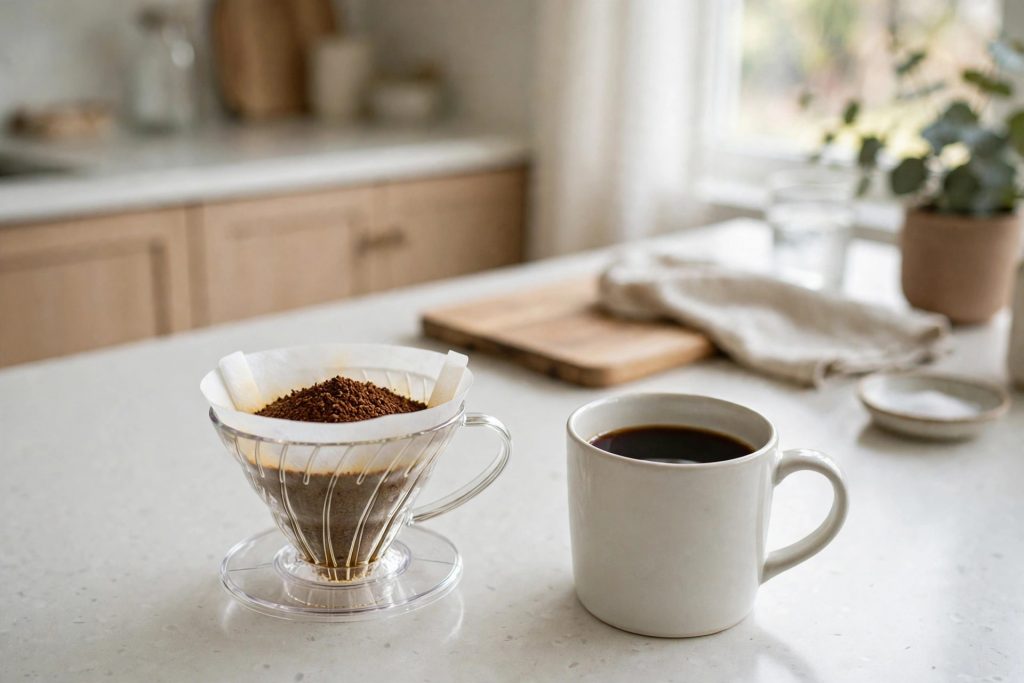
A coffee filter for everyday brewing turns plain ground coffee and hot water into a clean cup with no grit and no fuss, because it holds the grounds back while the brewed coffee flows through into the pot below. Home brewers who pour without a filter know the trouble well, since fine grounds slip into the cup, settle at the bottom, and leave a bitter last sip that spoils an otherwise good brew. A filter fixes that trouble with a fine mesh or a sheet of paper that traps the grounds and lets only clear coffee pass through, so each morning cup tastes smooth and clean.
A filter earns its place on the bench because it suits the way people really brew, with quick cups through the week and slower, careful brews at the weekend. A brewer can make a single cup before work without washing a pile of parts, and can brew a full pot for guests without grounds in any cup.
What a Coffee Filter Does in a Home Kitchen
A coffee filter gives the brewer control over clarity, so the brewed coffee comes out clean while the grounds stay behind in the filter. Ground coffee holds a lot of fine dust, and that dust will cloud the cup and add a harsh note if it slips through, while a good filter catches the dust and lets the clear brew pass. That control matters most with fresh beans, since they are bought for flavour and cost more than plain ground coffee, so every spoonful should land in the cup as flavour and not as grit. The filter also keeps the brewer clean, since the grounds stay in one place and the pot rinses clean with a quick swirl of water.
The filter also shapes the flavour of the cup, since the material decides how much oil passes through with the brew. A paper filter holds back most of the oils and the fine dust, so the cup tastes bright and clean, while a metal mesh filter lets more oil through, so the cup tastes richer and heavier. For brewers building a collection of everyday kitchen tools, Skyrocs offers a helpful starting point, and the kitchen gadgets range covers daily tools for home cooks of every level.
How to Choose the Right Coffee Filter
Choosing a coffee filter starts with the material, since it decides how the filter feels, how long it lasts, and how the coffee tastes. Paper is the classic choice, because it is cheap, needs no washing, and gives the cleanest cup, and a fresh sheet goes in for every brew. A paper filter suits brewers who want no cleanup and a bright cup, and it comes in sizes that fit most cones and drip machines. Metal mesh is sturdy and lasts for years, so it suits brewers who want to cut waste and who like a richer cup with more body.
The shape matters just as much as the material, since it sets how the filter sits in the brewer. A cone filter fits pour over cones and gives a deep bed of grounds that brews evenly, while a flat basket filter fits drip machines and spreads the grounds in a wide, shallow bed. A filter that matches the brewer sits snugly with no gaps at the rim, and a filter that is too small will fold and slip, while a filter that is too large will bunch up and block the flow. Size is the next thing to weigh, since a filter should hold enough grounds for a full brew without overflowing. A small filter suits a single cup brewer, while a larger one suits a family pot that brews several cups at once.
How to Use a Coffee Filter Step by Step
Using a coffee filter well starts with fitting it, since a careful fit keeps the brew clean and the flow steady. Open the paper filter along the pressed seam, fold the edge flat, and set it into the cone or basket so it sits evenly all round. Rinse a paper filter with hot water before the grounds go in, since the rinse washes away any paper taste and warms the brewer at the same time. Let the rinse water drain away, then spoon the ground coffee into the filter and tap the brewer gently so the grounds settle in a level bed.
To brew, pour hot water in a slow spiral over the grounds, starting from the centre and moving out to the rim, then let the coffee drip through at its own pace. When the drip slows to a stop, lift the filter out with the grounds inside and drop it straight into the bin, so the pot stays clean and the bench stays dry.
Care and Cleaning That Keep a Filter in Good Shape
A coffee filter earns its place when it is easy to keep clean, since old grounds can turn stale and leave a bitter film that spoils the next brew. A paper filter needs no washing at all, since it goes in the bin with the grounds after each brew, and a fresh sheet starts every cup clean. A metal mesh filter needs a rinse after each use, since grounds cling to the mesh and dry into a crust that blocks the flow. Rinse the mesh under hot running water, tap it gently to shake the grounds loose, and let it dry fully before it goes back in the drawer.
A cloth filter needs a little more care, since cloth holds oils and stains if it sits damp for too long. Rinse the cloth well after each brew, wash it with hot water and a little mild soap once a week, and hang it where air can reach it so it dries fast. Replace a cloth filter when the cloth thins or stains will not wash out, and replace a metal filter when the mesh bends or tears.
Common Mistakes and How to Avoid Them
The most common mistake is using the wrong size of filter, which leaves gaps at the rim where grounds slip past into the pot. Fix this by matching the filter size to the brewer and checking that the filter sits evenly with no folds or gaps before the grounds go in. Another common mistake is skipping the rinse for a paper filter, which leaves a faint paper taste in the first cup of the day. Rinse each paper filter with hot water before brewing, and the cup will taste clean from the first sip.
A third mistake is pouring the water too fast, which floods the filter and pushes water through before the grounds have given up their flavour. Pour slowly in a spiral and let the drip set the pace, so the brew stays rich and even. A fourth mistake is leaving used grounds in a reusable filter until the next morning, which lets stale oils dry onto the mesh or cloth and spoil the next brew. Empty and rinse a reusable filter right after brewing, and every cup will start fresh.
Frequently Asked Questions
Can I use a coffee filter more than once?
A paper filter is made for a single brew, and a fresh sheet gives the cleanest cup, while a metal mesh filter and a cloth filter are made to wash and reuse for many brews.
What size coffee filter suits a home brewer best?
A filter that matches the brewer suits most homes, since it sits snugly with no gaps and holds enough grounds for a full brew. Smaller filters suit single cup brewers, while larger ones suit family pots that brew several cups at once.
Does a paper coffee filter change the taste of coffee?
A paper filter gives a bright, clean cup because it holds back oils and fine dust that can make coffee taste heavy or bitter. Rinsing the filter with hot water before brewing washes away any paper taste, so the cup tastes only of the coffee itself.
How do I stop a coffee filter from tearing when I brew?
Tears come from a filter that is too small for the brewer or from water poured too hard onto one spot, so match the size to the brewer and pour in a slow spiral. A folded seam also helps, since a flat fold keeps the paper strong at the edge.
How often should I replace a reusable coffee filter?
Replace a cloth filter when the cloth thins or stains will not wash out, and replace a metal mesh filter when the mesh bends, tears, or stays clogged after a good wash. With steady care, a metal filter can last for years of daily brewing.