
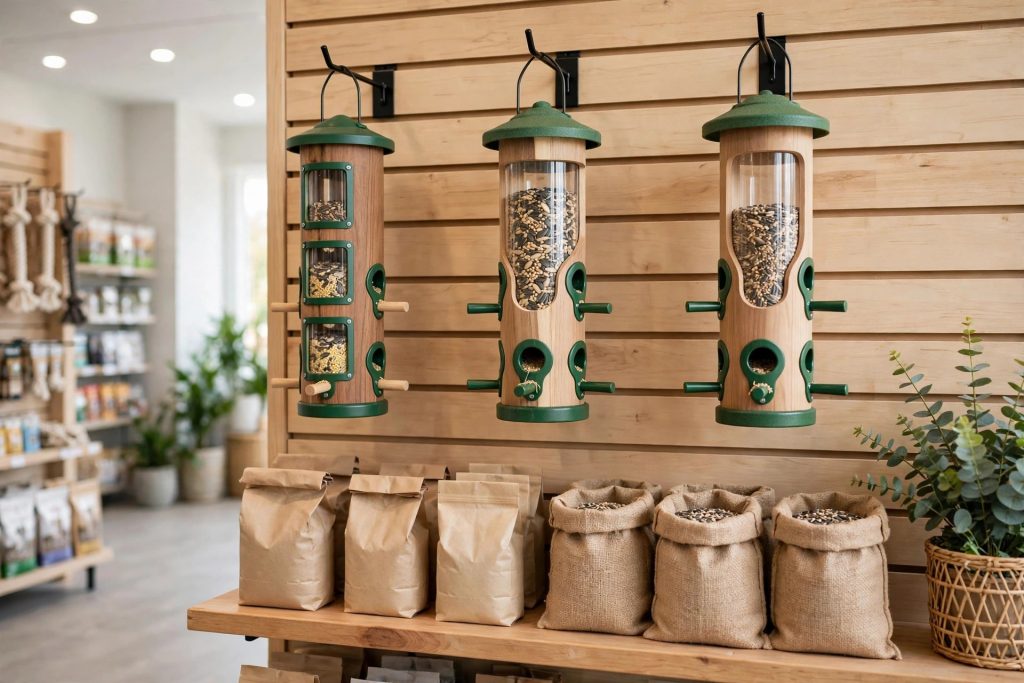
Wholesale bird feeders suppliers help pet shops stock feeders that garden bird lovers treasure, so shelves stay full of garden joy that sells through the year. Bird lovers look for a feeder that brings wild birds close to the window, and a shop that stocks a good range meets that need with ease. A supplier that offers many styles, sizes, and colours lets a shop serve every buyer, from a first-time bird watcher to a seasoned gardener that wants a feeder for each corner of the garden. This guide explains why bird feeders sell well, what a good wholesale range covers, how to choose a supplier, how to price and order, and how to display stock so it sells.
Why Wholesale Bird Feeders Sell Well
Bird feeders sell well because every garden lover knows the joy of a bird at the window, and a feeder that brings that joy is an easy purchase. A feeder is a kind gift for a new home, a steady treat for a gardener, and a fine extra for a buyer already shopping for seed and pet food, so the same shelf serves many buyers at once. Feeders are bought through the year, and a shop that stocks them in every season catches buyers in spring, summer, autumn, and winter alike. A feeder that is tough, dry, and easy to fill earns trust, and a buyer that trusts one feeder tells friends about it.
Feeders also sell as gifts, since a feeder is a thoughtful present for a bird lover, and a shop that keeps a gift-ready shelf near the till catches those sales without extra effort. A feeder that is easy to hang and easy to fill suits a first-time buyer, while a fancy feeder suits a buyer that wants a garden feature, and a shop that offers both serves every buyer. A shop that keeps the feeder shelf fresh with new styles and colours gives regular buyers a reason to look again on each visit, and that habit builds steady sales through the year.
What a Good Wholesale Range Covers
A good wholesale range covers many styles, since a tube feeder suits small birds, while a tray feeder suits many birds at once, and a hopper feeder suits a buyer that wants the seed to last for days. The range should offer many sizes, from small feeders for a balcony to large feeders for a wide garden. Colours matter too, since a bright feeder catches the eye in the shop, while a natural colour suits a quiet garden. Some feeders come with a roof that keeps the seed dry, while others offer a tray that catches the seed that falls, and a good range offers both.
The range should also cover different materials, since a tough feeder stands up to rain, wind, and frost, while a light feeder suits a small hook. A good range offers feeders that come apart for easy cleaning, since a feeder that is easy to clean is used longer and the buyer will thank the shop for it. Seasonal styles help too, since a festive feeder near a holiday gives the shop a fresh story to tell. A range that covers tube, tray, and hopper feeders, in many sizes and colours, lets a shop serve every bird lover that walks through the door.
Choosing a Supplier You Can Trust
Choosing a supplier starts with the quality of the feeders, since a shop that sells a feeder that cracks in the frost will hear about it from the buyer. Ask for a sample before a large order, and hang it outside, fill it with seed, and check that the roof keeps the seed dry and the ports stay clear. A supplier that welcomes a sample order is a supplier that trusts its own stock, and a shop should test a small order first before it commits to a large one. Look at how the supplier packs the feeders too, since clean packing keeps the feeders fresh on arrival and ready for the shelf.
For shops building a reliable pet range, Skyrocs offers a helpful starting point, and the wholesale range covers stock for shops that serve pet owners every day. A good supplier answers messages quickly, ships on time, and keeps the same quality from one order to the next, so the shop can reorder with trust. Ask how the supplier handles a faulty batch, since a supplier that replaces faulty stock without fuss protects the shop and its buyers. A supplier that stays steady on quality, packing, and delivery is a supplier worth keeping for the long term.
Pricing and Ordering for Your Shop
Pricing a bird feeder starts with the cost of the stock and the costs of running the shop, and a fair price leaves room for a sound margin while staying kind to the buyer. A feeder that is priced too high will sit on the shelf, while a feeder that is priced too low leaves no room for the shop to grow, so a fair middle price suits most shops. Small feeders can carry a lower price and sell in larger numbers, while large feeders can carry a higher price as a gift item, and a shop that offers both price levels serves every buyer. Watch which feeders sell fastest, and keep those in stock, since a fast seller that runs out is a lost sale.
Ordering works best in small and steady batches, so the shop can test new styles without filling the store room with slow stock. Place a first order that covers the main styles and sizes, then reorder the best sellers as they sell through. Keep a note of which styles and colours move fastest, and let those guide the next order. A supplier that allows a modest first order helps a new shop start well, and a shop that reorders often keeps the shelf fresh. A steady rhythm of small orders beats a rare large order, since fresh stock keeps buyers looking.
Displaying Wholesale Bird Feeders to Sell More
Displaying bird feeders well starts with putting them where buyers can see them, since a feeder in a bright colour catches the eye at once. A shelf at eye level shows off the best styles and colours, and a feeder hung on display outside the shop shows the buyer how it looks in use. Group the feeders by style, with tube feeders in front and tray feeders behind, so the display looks full and easy to browse. Put a feeder beside the bird seed on display, so the buyer can see how the feeder and the seed go together, and the feeder and the seed may sell together.
Keep the display tidy and full, since a half-empty shelf looks tired and a full shelf looks loved. Rotate new styles to the front each week, so regular buyers see something fresh on each visit. Place a few feeders near the till as well, since a small feeder is an easy last-minute pick for a buyer already holding seed and pet food. A clear sign that says the feeder suits garden birds helps the buyer choose with trust. A shop that displays feeders with care turns a quiet shelf into a steady seller.
Frequently Asked Questions
How do wholesale bird feeders suppliers help a pet shop?
They help a shop stock many styles, sizes, and colours of bird feeders at fair terms, so the shop can serve every bird lover, from first-time buyers to seasoned gardeners, all year round.
What should wholesale bird feeders suppliers offer in a range?
They should offer tube, tray, and hopper feeders, many sizes and colours, roofs that keep the seed dry, trays that catch fallen seed, and feeders that come apart for easy cleaning.
How do I choose among wholesale bird feeders suppliers?
Ask for a sample first, hang it outside, fill it with seed, check that the roof keeps the seed dry, look at the packing, and pick a supplier that answers quickly and ships on time.
What should a shop order first from wholesale bird feeders suppliers?
Order a modest first batch that covers the main styles and sizes, with a mix of small and large feeders, then reorder the best sellers as they sell through.
Where should a shop display stock from wholesale bird feeders suppliers?
Display feeders on a shelf at eye level, with one hung on display outside the shop, a few near the till, and a few beside the bird seed.