
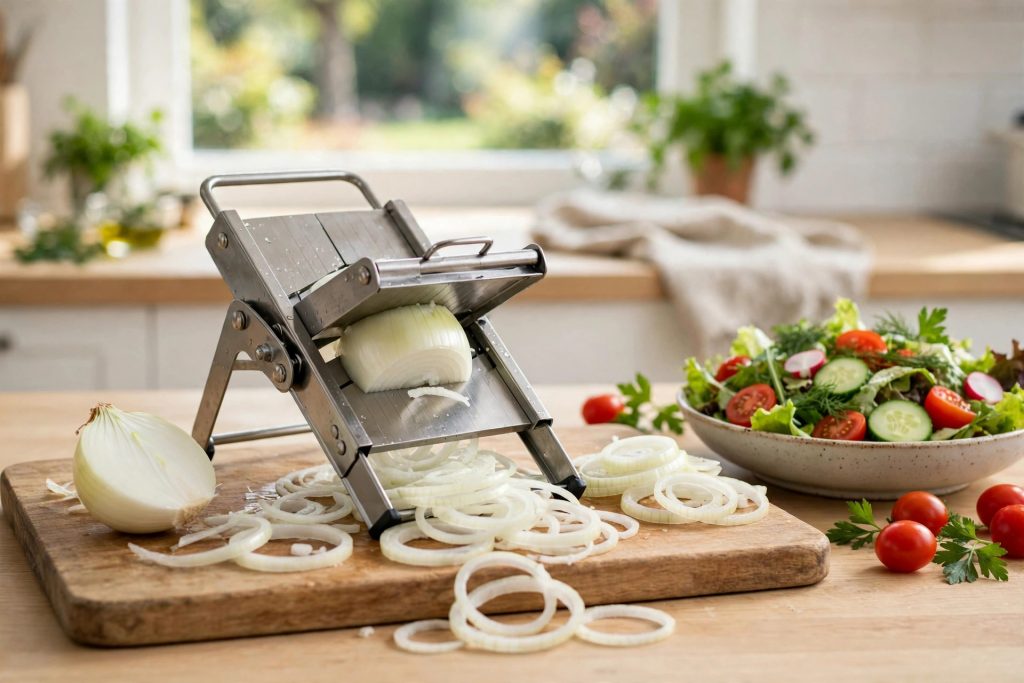
An onion slicer for thin slices makes everyday cooking easier, and it earns its place in a busy kitchen by turning simple ingredients into neat results with little fuss. Many home cooks reach for an onion slicer when they want salads, burgers, and cooked dishes to look and feel well prepared, and a good one saves time without adding clutter to the bench. An onion slicer made from stainless steel feels solid in the hand, and its sharp blade and a safe holder work together to handle fresh onions and sweet onions with steady control. This guide explains why thin slices matter in a home kitchen, how an onion slicer works, what to look for when you buy one, how to use it well, and how to keep it clean and ready for the next meal. Whether you cook for family meals or for a quiet supper at home, an onion slicer helps you prepare garden salad and grilled burger with care and confidence.
Why Thin Slices Matter
Thin slices matter because neat preparation changes how a dish looks and tastes, and an onion slicer helps you reach that result without long effort. When fresh onions come out uneven, the dish can feel rough and unfinished, while even results from an onion slicer give the meal a calm and tidy finish. An onion slicer also saves time, since you can prepare fresh onions in moments and move on to the next part of the meal without stopping to fix rough edges. Home cooks who prepare food often will notice the difference most, because a reliable onion slicer turns a repeated chore into a quick and simple step. A well made onion slicer also brings a sense of order to the kitchen, since each piece of sweet onions comes out in a shape that suits the dish and the plate. For families who cook at home most days, an onion slicer is a small tool with a steady job, and it earns its keep by making salads, burgers, and cooked dishes easier to prepare. The best reason to own an onion slicer is simple, since it helps you cook with less waste and more care, and it lets the ingredients speak for themselves.
How an Onion Slicer Works
An onion slicer works by guiding food through a sharp blade and a safe holder, so each piece comes out in a neat and even form with steady pressure from your hand. Place fresh onions in position, hold the onion slicer steady on the bench or over a bowl, and move the working part with a smooth and even motion. The stainless steel parts meet the food cleanly, so sweet onions do not tear or crush, and the result keeps its shape for serving. Many onion slicers are made in a size that suits a home kitchen, with a handle or frame that keeps your fingers away from the working edge. A good onion slicer needs little force, since a sharp edge and a steady guide do most of the work, and you only need to keep the food in place. Once you learn the motion, the work feels natural, and you can prepare a full batch of fresh onions in a short time without tiring your hand. Some onion slicers come apart for cleaning, while others fold or rest flat in a drawer, and both styles suit a kitchen where bench space is limited.
Choosing the Right Onion Slicer for Your Kitchen
Choosing an onion slicer starts with size, since the tool should suit the food you prepare most often and the space you have for storage. Look for an onion slicer made from stainless steel or a sturdy food safe material, with parts that feel solid and joints that hold firm when you press down. The handle should feel comfortable in your hand, and the working edge should meet the food cleanly without slipping or catching. Check that the onion slicer is easy to take apart and clean, since a tool that traps food in small gaps will be hard to keep fresh. Think about the meals you cook most, since an onion slicer for garden salad may need a different shape from one made mainly for grilled burger. An onion slicer with a simple shape is often the best choice, since it has fewer parts to wash and fewer places for food to hide. Hold the onion slicer in your hand before you buy it when you can, and check that it feels balanced and steady rather than light and flimsy. For home cooks looking for everyday kitchen items, Skyrocs offers a helpful starting point, and the pet supplies range covers daily items for homes that share their kitchen with a cat or a dog. An onion slicer that suits your hand, your food, and your storage will serve you well for a long time, so take a moment to compare a few options before you settle on one.
Using an Onion Slicer at Home
Using an onion slicer well starts with preparation, so wash fresh onions and trim away any tough ends before you place them in the tool. Work on a steady bench with a bowl or board close by, and keep your fingers clear of the working edge while you guide the food through. Move with a smooth and even motion, and let the onion slicer do the work rather than forcing the food through with heavy pressure. Prepare food in small batches when you can, since a full load can slip or jam, while a steady pace gives neat and even results. For garden salad, place the food so the cut or press lands where you want it, and check the first few pieces before you carry on with the rest. For grilled burger, the same care pays off, since even pieces cook and serve more evenly than a mix of thick and thin pieces. Keep the onion slicer clean as you work, and wipe away crumbs or juice before they dry, so the next batch comes out just as neatly as the first.
Cleaning and Storing an Onion Slicer
An onion slicer earns its place when it is easy to clean, since food that dries on the working parts can be hard to lift away later. Rinse the onion slicer under warm water soon after use, and wash it with a little mild soap and a soft cloth or brush. Pay attention to the sharp blade and a safe holder, since food can gather in small gaps, and a gentle brush will lift it away without scratching the surface. Rinse again with clean water, and dry the onion slicer fully with a soft cloth before you store it, since a damp tool left in a drawer can smell stale. Store the onion slicer in a dry drawer or on a shelf where it will not be pressed against sharp objects that could dull the edge. Check the handle and joints now and then, and tighten or replace any loose part before it becomes a problem in use. An onion slicer that is cleaned and dried after each use will stay in good shape, and it will be ready the next time you need it. Keep the onion slicer away from strong heat when you store it, and keep it out of long sun, since heat and sun can wear the materials over time.
Frequently Asked Questions
Is an onion slicer for thin slices needed in a home kitchen?
It is not needed for every meal, yet it makes salads, burgers, and cooked dishes easier to prepare, so cooks who prepare food often will find it useful and will reach for it again and again.
How does an onion slicer for thin slices work?
It guides fresh onions through a sharp blade and a safe holder, so each piece comes out neat and even, and a smooth motion with steady pressure gives the best result.
Can an onion slicer for thin slices handle fresh onions?
It handles fresh onions well when they are at the right stage, so trim away tough ends, work in small batches, and let the tool do the work.
How do I clean an onion slicer for thin slices after use?
Rinse it under warm water soon after use, wash it with a little mild soap and a soft cloth, rinse it again, and dry it fully before you store it.
What should I look for when buying an onion slicer for thin slices?
Look for a solid build in stainless steel or a sturdy food safe material, a comfortable handle, a clean working edge, and a shape that suits your kitchen and your meals.