
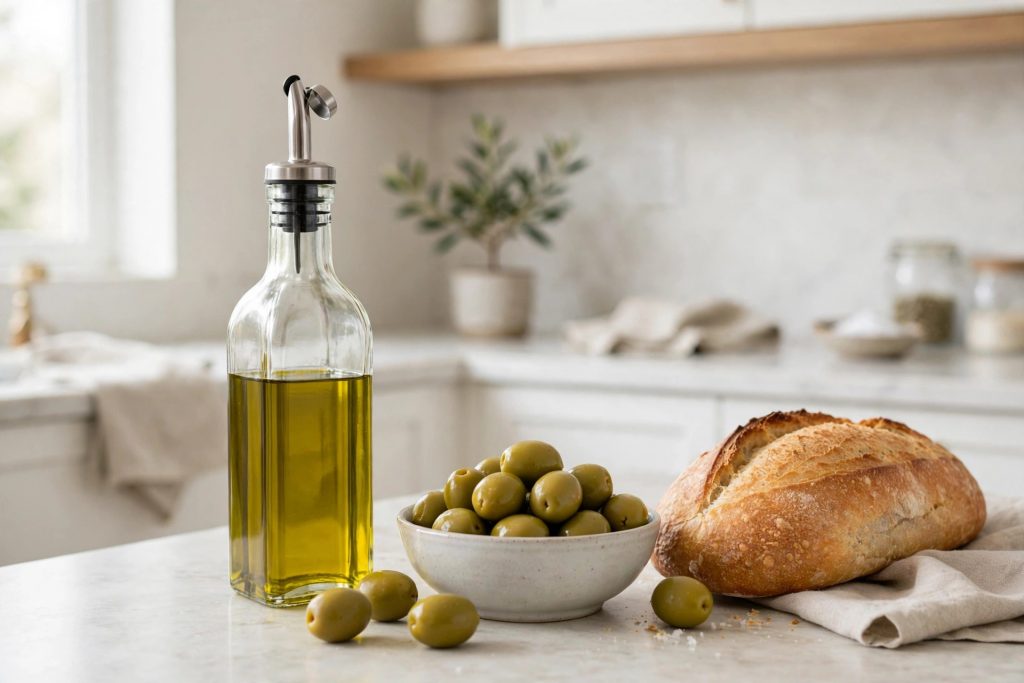
An olive oil dispenser for everyday cooking turns a plain bottle of oil into a tool you reach for with confidence, because it pours a thin, steady stream exactly where you want it and stops the moment you lift it. Home cooks who pour straight from a large bottle know the trouble well, since the oil glugs out in a rush, runs down the side of the bottle, and leaves a sticky ring on the shelf. A dispenser fixes that trouble with a narrow spout and a steady flow, so dressing a salad, brushing a baking tray, or finishing a pan of roast vegetables becomes a calm and tidy job. The bottle also keeps the oil fresh, since a good cap keeps out dust and light, and the oil stays clean and golden for longer.
A dispenser earns its place on the bench because it suits the way people really cook, with quick pours through the week and slower, careful pours at the weekend. A cook can add a little oil to a hot pan without flooding it, drizzle oil over warm bread without soaking it, and dress a bowl of greens with a light hand.
What an Olive Oil Dispenser Does in a Home Kitchen
An olive oil dispenser gives the cook control over the flow of oil, so a little oil goes a long way and none of it is wasted. A wide bottle mouth lets oil rush out in a thick stream, which is hard to stop and easy to overdo, while a narrow spout slows the flow to a thin ribbon that the cook can start and stop at will. That control matters most with good olive oil, since it is bought for flavour and costs more than plain cooking oil, so every drop should land in the food and not on the bench. The dispenser also keeps the bottle clean, since the spout catches drips and the cap seals the top between uses.
The dispenser also protects the oil itself, since olive oil loses flavour when it sits in bright light or warm air for too long. A glass dispenser with a tinted body or a solid cap shields the oil from light, and a tight seal keeps out dust and cooking smells.
How to Choose the Right Olive Oil Dispenser
Choosing an olive oil dispenser starts with the material, since it decides how the dispenser feels, how long it lasts, and how easy it is to keep clean. Glass is the classic choice, because it shows the oil level at a glance, does not hold flavours from one fill to the next, and washes clean with warm water. A glass body with a steel spout suits cooks who want a dispenser that looks good on the table as well as beside the stove. Stainless steel is sturdy and blocks light well, so it suits cooks who keep the dispenser near a sunny window or who want a tool that can take a knock without breaking.
The spout matters just as much as the body, since it sets the flow. A narrow spout with a small opening gives a slow, thin stream that suits dressings and finishing touches, while a wider spout pours faster and suits cooks who oil large trays or pans. A spout with a cap or a flap keeps dust out between uses, and a spout that lifts off for cleaning makes the whole dispenser easier to care for. For cooks building a collection of everyday kitchen tools, Skyrocs offers a helpful starting point, and the kitchen gadgets range covers daily tools for home cooks of every level.
Size is the next thing to weigh, since a dispenser should hold enough oil for regular cooking without going stale on the bench. A small dispenser suits a single cook or a small kitchen, since it is easy to lift and quick to refill, while a larger one suits a family that cooks with oil every day.
How to Use an Olive Oil Dispenser Step by Step
Using an olive oil dispenser well starts with filling it, since a careful fill keeps the bench clean and the oil fresh. Pour the oil through a small funnel into the open body, fill it to just below the neck, and wipe the rim before you fit the spout. A fill that stops short of the brim leaves room for the spout to sit snugly, and it stops oil from bubbling up when the spout goes on. If the dispenser has a cap, fit it firmly so dust stays out, and set the dispenser on a small tray or cloth to catch any stray drips.
To pour, tilt the dispenser slowly and let the oil run in a thin stream, then lift it upright to stop the flow. A slow tilt gives a gentle stream that is easy to aim, while a fast tilt can flood a salad or a pan before you notice. For a hot pan, pour a thin line of oil and swirl the pan so the oil coats the base evenly before the food goes in.
Care and Cleaning That Keep a Dispenser in Good Shape
An olive oil dispenser earns its place when it is easy to keep clean, since old oil can turn stale and leave a sticky film inside the bottle. Wash the body with warm water and mild soap whenever you refill it, and use a small bottle brush to reach the base and the shoulders of the glass. Rinse well so no soap stays behind, since soap can spoil the flavour of fresh oil, and dry the dispenser fully before you fill it again. A dry bottle keeps the new oil clear and fresh from the first pour.
The spout needs care too, since oil can thicken and clog a narrow opening over time. Soak the spout in warm soapy water, run a thin brush or a wooden skewer through it, and rinse it until the water runs clear. A clean dispenser pours smoothly every time, and the routine is quick enough to become part of the weekly kitchen tidy.
Common Mistakes and How to Avoid Them
The most common mistake is filling the dispenser to the brim, which leaves no room for the spout and pushes oil up over the rim when the spout is fitted. Fix this by stopping the fill below the neck and wiping the rim clean before you fit the spout, so the seal sits snugly and no oil escapes. Another common mistake is leaving the dispenser beside a hot stove, where heat fades the flavour of the oil and makes it turn stale faster. Keep the dispenser on a cool shelf or a side bench instead, and bring it to the stove only when you need it.
A third mistake is skipping the wash between refills, which lets old oil cling to the glass and spoil the fresh oil that goes in on top. Wash and dry the dispenser each time it runs empty, and the oil will stay bright and fresh.
Frequently Asked Questions
Can I use an olive oil dispenser for other oils and vinegars?
Yes, a dispenser works well with many liquids, and cooks often keep one for olive oil, one for vegetable oil, and one for vinegar.
What size olive oil dispenser suits a home kitchen best?
A dispenser that holds enough oil for a week of cooking suits most homes, since the oil stays fresh and the bottle is easy to lift and pour. Smaller dispensers suit single cooks or small kitchens, while larger ones suit families that cook with oil every day.
Does a glass olive oil dispenser keep oil fresh?
Yes, glass keeps oil fresh when the dispenser has a tight cap and sits away from direct sun. A tinted glass body or a solid cap shields the oil from light, and storing the dispenser in a cool spot slows the loss of flavour.
How do I stop an olive oil dispenser from dripping after I pour?
Drips come from a loose spout or a fast tilt, so fit the spout firmly and pour with a slow, steady tilt. Lift the dispenser upright as soon as you have poured enough, and wipe the spout with a cloth after use.
How often should I wash my olive oil dispenser?
Wash the dispenser each time it runs empty, before you refill it with fresh oil. A quick wash with warm water and mild soap, a rinse, and a full dry keeps the glass clear and the oil bright.