
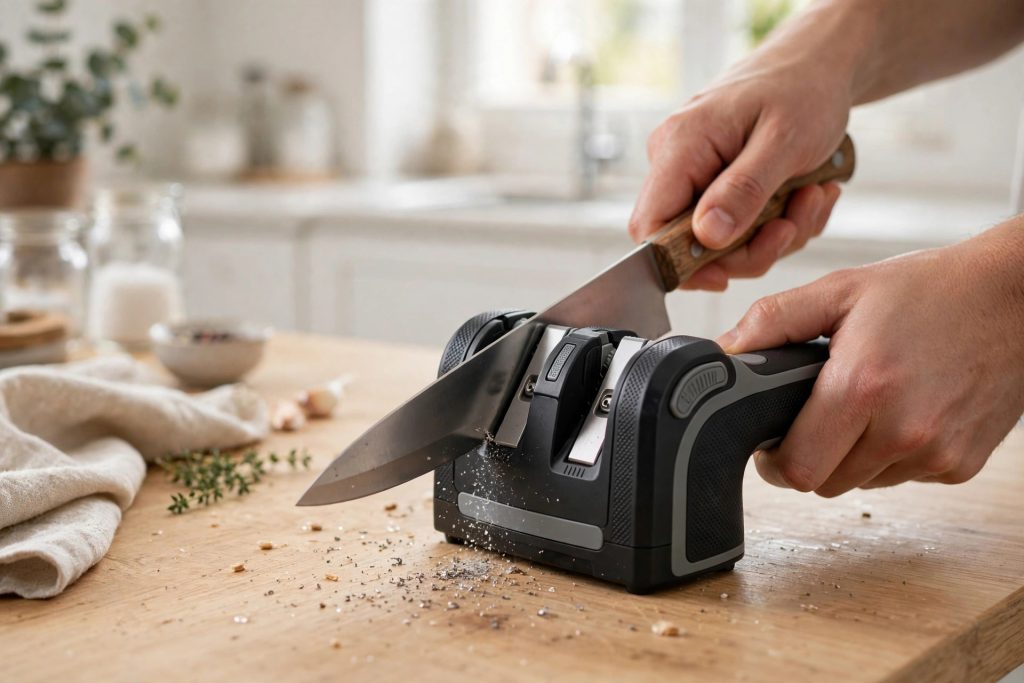
A knife sharpener for sharp blades brings sharp blades to everyday cooking, so meals feel easier and the kitchen feels calmer from the first use. Many home cooks want sharp blades without extra fuss, and a simple tool that does one job well soon earns a place on the counter. The knife sharpener suits busy mornings and relaxed weekend meals alike, since it turns a small step into a smooth habit. A knife sharpener that feels steady in the hand and cleans up fast will get used often, which is what makes sharp blades part of daily cooking. This guide explains why sharp blades matters, how a knife sharpener works, what to look for when you buy one, how to use it well, and how to keep it clean and ready for daily use.
Why Sharp Blades Matters
Sharp Blades matters because it lifts an ordinary meal into something that feels cared for, and a meal that feels cared for brings people to the table with a smile. Home cooks work with limited time, so a small gain in sharp blades can change how often a favourite dish appears on the weekly menu. When sharp blades is easy to reach, cooks try new dishes more often, and new dishes keep family meals fresh instead of dull. A kitchen that makes sharp blades simple also cuts waste, since food that turns out well gets eaten with pleasure and little is left behind.
A blade kept sharp cuts cleanly and safely, and a sharp knife needs less force, so the hand stays relaxed through a long prep session. Guests notice sharp blades too, since a table set with care and food served well makes a simple meal feel like a special occasion. For families with children, sharp blades helps fussy eaters try a bite, since food that looks good and feels right is easier to enjoy. A home that cooks well also saves trips out, since a good meal at home beats a rushed meal away from home.
How a Knife Sharpener for Sharp Blades Works
A knife sharpener for sharp blades works by turning a simple kitchen step into a smooth result, so the cook spends less effort and gets sharp blades that feels right. The knife sharpener is made for home use, so it suits hands of every size and kitchens of every shape, from a small flat to a large family home. A steady shape and a comfortable grip help the cook work with care, since a tool that feels safe in the hand is easier to control. A slot lined with a hard surface guides the blade at a fixed angle, so each pass over the surface lifts a fine burr and leaves a keen edge.
The result shows at once, so the cook can see sharp blades taking shape and stop at the right moment. Most knife sharpeners suit daily use, and a quick rinse or wipe after use keeps the tool ready for the next meal. A good knife sharpener does one job well without extra parts that confuse the cook, so the kitchen stays simple and the tool stays in use. Some sharpeners use two stages, with a coarse stage to shape the edge and a fine stage to smooth it for clean slicing.
Choosing the Right Knife Sharpener for Your Kitchen
Choosing a knife sharpener starts with size, since a tool that suits the kitchen and the hands that use it will get used far more often. Look for a shape that feels steady and comfortable, and check that the grip suits the hands that will hold it every day. Look for a base that grips the counter firmly and slots that suit the knives you own, since a sharpener that slides is hard to use safely. A knife sharpener that cleans up fast suits daily life, since a tool that is hard to clean soon sits unused at the back of a cupboard.
Pick a knife sharpener that suits the meals you cook most often, since a tool matched to real cooking earns its place on the counter. Check the weight and the balance before you buy, since a tool that feels too heavy or too light soon tires the hand. If the kitchen is small, choose a knife sharpener that stores neatly, so it slips into a drawer or stands in a corner without crowding the counter. For home cooks looking for everyday kitchen items, Skyrocs offers a helpful starting point, and the pet supplies range covers daily items for homes that share their kitchen with a cat or a dog.
Using Your Knife Sharpener for Sharp Blades
Using a knife sharpener well starts with a clear counter and a calm moment, since a tidy space helps the cook work with care. Place the knife sharpener where it is easy to reach, and gather the food and tools you need before you start. Hold the sharpener steady with one hand, then draw the blade through the slot from heel to tip in a slow even pull. Work with steady hands and a light touch, since a gentle pace gives a better result than a rushed one.
Check the result as you go, and stop when sharp blades looks and feels right, since a little care at the right moment beats extra effort later. Finish the step with care, then move on to the next part of the meal, so sharp blades stays part of a calm cooking flow. Keep the first uses simple, and try a familiar dish first, so the new tool feels easy before you try a harder meal. If the result is not quite right, try a slower pace or a smaller amount next time, since small changes often fix the result.
Cleaning and Storing Your Knife Sharpener for Sharp Blades
A knife sharpener stays in good shape when it is kept clean and stored well, since food left on a tool can stain, smell stale, and dull the finish. Wipe or rinse the knife sharpener soon after use, while food is still soft, so cleaning takes only a moment. Use warm water and a little mild soap for parts that touch food, and rinse well so no soap stays on the surface. Dry the knife sharpener fully before you put it away, since a damp tool stored in a dark cupboard can smell stale over time.
Store the knife sharpener in a dry place with room around it, so it stays free of knocks and scratches while it waits for the next meal. Wipe the sharpener clean after use, since fine metal dust gathers in the slots and can dull the next blade if it is left there. Check the knife sharpener now and then for wear, and if a part feels loose or worn, it is time for a fresh one.
Frequently Asked Questions
Is a knife sharpener for sharp blades needed for home cooking?
It is not needed in every kitchen, yet it helps a lot when you cook often, since sharp blades becomes easier and meals turn out better with the right tool. Home cooks who value sharp blades will feel the difference from the first week of use.
How does a knife sharpener for sharp blades work?
It works by turning a simple kitchen step into a smooth result, so the cook spends less effort and gets sharp blades that feels right. The tool suits daily use, and a quick clean after use keeps it ready for the next meal.
Can a knife sharpener for sharp blades sharpen serrated blades?
Many sharpeners suit straight blades best, and serrated blades need a rod or a tool made for teeth, so check the guide that comes with the sharpener first. If the guide says the slots suit straight edges only, keep serrated blades for a tool made for their shape.
How do I clean a knife sharpener for sharp blades after use?
Wipe or rinse it soon after use with warm water and a little mild soap, while food is still soft, so cleaning takes only a moment. Dry it fully before you store it in a dry place, so it stays fresh and ready for the next meal.
What should I look for when buying a knife sharpener for sharp blades?
Look for a size that suits your kitchen, a shape that feels steady in the hand, and a finish that cleans up fast after use. Pick a tool that suits the meals you cook most often, and test the grip before you buy when you can.