
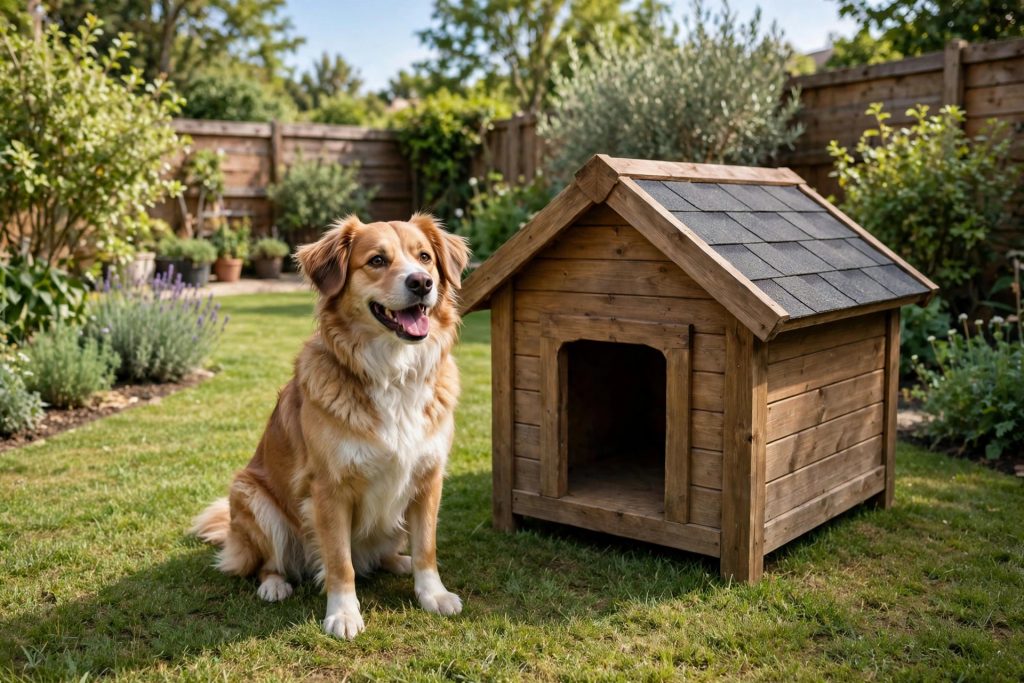
A dog house for outdoor dogs gives your pet a dry, draught-free shelter of its own, and it turns a bare yard into a place where a dog can rest in comfort through every season. Dogs that spend time outside need a spot to escape the rain, the wind, and the midday sun, and a good house gives them that shelter without shutting them away from the family. A dog that has its own house settles faster after play, sleeps more soundly, and comes back inside calmer and happier. The house also protects the dog from cold nights and hot afternoons, since a raised floor keeps out damp and a solid roof keeps out rain.
A dog house suits many homes, from a farm yard to a small suburban garden, and it works for dogs of every size when the house is matched to the dog. The house should sit in a spot the dog already likes, near the family and close to shade, so the dog chooses it freely rather than avoiding it.
What a Dog House Is and When It Helps
A dog house is a small shelter built for one dog, with a roof, walls, a doorway, and a raised floor that keeps the inside dry. The doorway is sized so the dog can walk in and out with ease, while the walls block wind and rain from every side. A good house holds the warmth of the dog inside on cold nights, and it stays cool in summer when the roof shades the doorway and the walls breathe. The house gives the dog a place of its own, which matters to dogs, since they are den animals by nature and feel safe in a snug, enclosed space.
A house helps most when a dog spends long stretches outside, whether that is through the working day or across a warm afternoon. A house is not a cage and it is not a punishment, since the dog should always be free to come and go, with water and shade close by.
How to Choose the Right Dog House
Choosing a dog house starts with size, since a house that fits well keeps the dog warm and comfortable through every season. The house should be tall enough for the dog to stand and turn around, long enough for the dog to stretch out, and snug enough that the warmth of the dog fills the space. A house that is far too large stays cold inside, since the warmth of one dog cannot fill it, while a house that is too small leaves the dog cramped and stiff. Measure the dog from nose to tail and from floor to shoulder, then choose a house with a little room to spare and no more.
The material matters too, since it decides how warm the house stays and how long it lasts. Wood is the classic choice, because it insulates well, feels warm in winter and cool in summer, and looks at home in a garden. A wooden house with a pitched roof sheds rain well, and a raised floor keeps damp from rising into the bedding. Plastic is light, easy to move, and simple to hose clean, so it suits owners who want a house they can shift around the yard. For owners building a comfortable home for their pet, Skyrocs offers a helpful starting point, and the pet supplies range covers daily care for dogs of every size.
The roof and the doorway deserve a close look before you buy, since they do most of the work of keeping the weather out. A roof with a good overhang keeps rain from running down the walls and into the doorway, and a roof that lifts off makes cleaning simple.
How to Place a Dog House for Comfort and a Dry Home
Placing a dog house well starts with the spot, since the right place keeps the house dry and the dog happy. Set the house on level ground that drains well after rain, and raise it on bricks or a low platform if the yard holds water. Face the doorway away from the prevailing wind, so rain and cold air do not blow straight inside, and set the house near a wall or a fence for extra shelter. A spot close to the back door keeps the dog near the family, which dogs love, and it makes it easy for the owner to check the house each day.
Shade matters as much as shelter, since a house in full sun can grow hot inside on a warm afternoon. Place the house where a tree or a fence shades it through the hottest part of the day, and leave room around it for air to move. Add a soft bed or a thick blanket inside, and the dog will soon treat the house as its own room.
Daily Care, Cleaning, and Bedding
A dog house earns its place when it is easy to keep clean, since a clean house keeps the dog healthy and the bedding fresh. Sweep out loose fur and dirt each week, and wash the floor with warm water and mild soap whenever it looks grubby. A plastic house hoses clean in minutes and dries fast in the sun, so it suits owners who want a quick weekly routine.
Bedding needs regular care too, since it holds fur, dust, and moisture from the dog. Shake out blankets and mats often, wash them in warm water, and dry them fully before they go back inside. Replace bedding that is torn or flat, since thin bedding leaves the dog lying on a hard floor. Check the house for loose nails, sharp edges, and cracked boards each month, and fix them at once so the dog cannot catch a paw or a coat on them.
Common Mistakes and How to Avoid Them
The most common mistake is buying a house that is far too large, which leaves the dog cold on winter nights because one small body cannot warm a big space. Fix this by measuring the dog and choosing a snug house with just enough room to stand, turn, and stretch. Another common mistake is placing the house in a dip where rain pools, which leaves the floor damp and the bedding wet. Set the house on level, well drained ground and raise it on a low platform, so water runs away from the doorway.
A third mistake is putting the house far from the family, where the dog feels lonely and refuses to use it. Dogs are social animals, so place the house where the dog can see and hear the family, and the dog will use it gladly. A house that is clean, dry, and near the family soon becomes the favourite spot in the yard.
Frequently Asked Questions
How do I get my dog to use a new dog house?
Place the house where your dog already likes to rest, add a familiar blanket and a favourite toy inside, and let the dog explore it at its own pace. Offer a treat near the doorway, then just inside, so the dog links the house with good things.
What size dog house suits my dog best?
Measure your dog from nose to tail and from floor to shoulder, then choose a house a little longer and taller than those measures. The dog should stand, turn around, and lie down stretched out with ease, while the space stays snug enough to hold warmth. A house far larger than the dog stays cold, so snug is better than roomy.
Should a dog house have a flap over the doorway?
Yes, a flap keeps out wind and rain while letting the dog slip in and out freely, and most dogs learn to push through it in a day or two.
How do I keep a dog house warm in winter?
Choose a snug house with a raised floor, add thick straw or a warm blanket, and face the doorway away from the wind. A flap over the doorway holds warmth inside, and a windbreak near the house helps on cold nights.
How often should I clean my dog house?
Sweep the house out each week and wash the floor with warm water and mild soap whenever it looks grubby. Wash bedding often and dry it fully before it goes back inside. Check the roof, floor, and doorway each month for leaks, loose boards, and sharp edges, and fix them at once so the house stays safe and dry.