
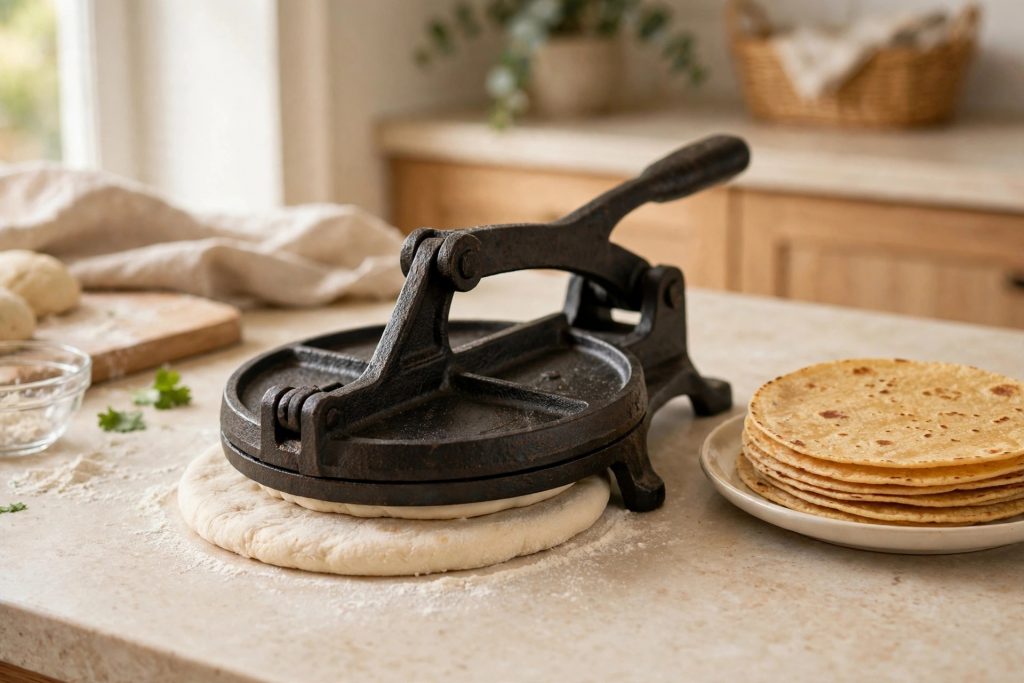
A tortilla press for fresh tortillas turns a small ball of soft dough into a thin, even round in seconds, and it does the job with a single pull of the handle. Fresh tortillas taste softer and warmer than store bought rounds, and they hold fillings without cracking at the fold. Many home cooks put off making tortillas at home because rolling each one by hand takes time and practice, and the rounds come out uneven no matter how careful the cook is. A press removes that struggle, so a weeknight taco dinner or a weekend batch of wraps becomes a simple pleasure rather than a chore. A press also keeps the kitchen tidy, since flour stays on the bench instead of drifting across the room.
What a Tortilla Press Does in a Home Kitchen
A tortilla press flattens dough with steady, even pressure, so each round comes out the same thickness from edge to edge. Rolling by hand presses harder in the middle and lighter near the edges, which leaves thin spots that dry out on the griddle and thick spots that stay doughy. A press spreads the force across the whole round at once, so the tortilla cooks evenly and puffs gently when it hits the heat. The result is a tortilla that bends without breaking and tastes fresh from edge to edge. The handle gives the cook steady control, and the plates do the hard work.
The press also saves time. A cook can flatten a round, lift it onto the griddle, and start the next one while the first cooks, so a stack of tortillas grows fast. Families that eat tortillas often find that a press turns a slow job into a quick routine, and children enjoy pulling the handle and watching the dough spread. The tool needs no power and no special skill, and it works on a bench, a table, or any flat surface in the kitchen. Fresh tortillas also freeze well, so a big batch can feed the family for days. For cooks who love fresh bread and flatbreads of every kind, a press earns its place beside the rolling pin rather than replacing it, since each tool suits a different job.
How to Choose the Right Tortilla Press
Choosing a tortilla press starts with the material, since it decides how the press feels, how long it lasts, and how easy it is to keep clean. Cast iron is the classic choice, because it is heavy, steady, and presses with its own weight, so the cook needs less force on the handle. A cast iron press lasts for years and suits cooks who press tortillas often. Aluminium is lighter and easier to lift and store, and it suits cooks who want a press they can move around the kitchen without strain. Wood looks warm and traditional, and it presses gently, though it needs more care to keep it dry and clean.
The finish matters too. A press with a smooth, sealed surface releases dough cleanly and wipes down fast, while a rough surface can grip the dough and tear the round when you lift it. Some cooks line the plates with baking paper or thin plastic to stop sticking, and that trick works with any press, so do not let a sticky surface put you off a press you otherwise like. For cooks building a collection of everyday kitchen tools, Skyrocs offers a helpful starting point, and the kitchen gadgets range covers daily tools for home cooks of every level.
How to Use a Tortilla Press Step by Step
Using a tortilla press well starts with the dough, since a press can only shape dough that is soft and rested. Mix the dough until it holds together without cracking, cover it, and let it rest so the moisture spreads evenly through the mix. Divide the dough into small balls, each about the size of a golf ball, and keep them covered with a damp cloth so they do not dry out while you work. Dry dough cracks at the edges when pressed, and wet dough sticks to the plates, so aim for a ball that feels soft and smooth in your hand.
Line both plates with baking paper or thin plastic, set a dough ball in the middle of the lower plate, and fold the liner over the top. Pull the handle down with a firm, steady motion and hold it for a breath, then lift the handle and peel back the liner. The round should be thin and even, with smooth edges and no tears. Lift the tortilla by the liner and lay it on a hot, dry griddle, then peel the liner away and let the tortilla cook until it puffs and shows light golden spots. Flip it once, cook the other side briefly, and stack it under a cloth to stay warm while you press the next one.
Care and Cleaning That Keep a Press in Good Shape
A tortilla press earns its place when it is easy to keep clean, since dough and flour cling to the plates after every use. Wipe the plates with a damp cloth while the dough is still soft, and use a soft brush to clear any crumbs caught near the hinge. A cast iron press should be dried at once, since water left on the surface can leave rust spots that mark the next batch of dough. Rub a thin coat of cooking oil over the plates after drying, and the press will stay smooth and ready for the next use.
An aluminium press washes easily with warm water and mild soap, and it should be dried fully before it goes back on the shelf. A wooden press needs gentle care, since soaking can swell the wood and loosen the hinge, so wipe it clean rather than leaving it in water. Store the press in a dry cupboard or on a shelf where the handle will not catch on other tools, and keep it away from damp corners of the kitchen. A press that is clean and dry is ready the moment you want fresh tortillas, and keeping the routine simple means the tool gets used instead of sitting forgotten at the back of a cupboard.
Common Mistakes and How to Avoid Them
The most common mistake is pressing dough that is too dry, which cracks at the edges and makes rounds that fall apart on the griddle. Fix this by adding water a little at a time and letting the dough rest, since rested dough holds moisture better and presses into a smooth round. Another common mistake is pressing too hard, which squeezes the dough so thin that it tears when you lift it. Use a firm but gentle pull, and let the weight of the press do the work rather than forcing the handle down with all your strength.
Frequently Asked Questions
Can a tortilla press handle both corn dough and wheat dough?
Yes, a good press handles both corn dough and wheat dough with ease. Corn dough presses best when it is moist and rested, while wheat dough may need a short rest after pressing so it relaxes before cooking.
What size tortilla press suits a home kitchen best?
A press with plates about the width of a dinner plate suits most homes. It makes tortillas that fit a standard pan, fold neatly around fillings, and stack well under a cloth. Smaller presses suit single cooks or small kitchens, while larger presses suit families that press big batches at once.
Do I need baking paper or plastic liners with a tortilla press?
Yes, liners stop the dough from sticking to the plates and make it easy to lift the thin round onto the griddle. Baking paper or thin plastic both work well, and a fresh liner keeps each tortilla smooth and whole.
How do I stop tortillas from cracking at the edges when pressed?
Cracking edges mean the dough is too dry or has not rested long enough. Add water a little at a time, knead it in well, and let the dough rest under a damp cloth before pressing. Soft, rested dough presses into a smooth round with clean edges.
How should I clean and store a cast iron tortilla press?
Wipe the plates clean after use, dry the press at once, and rub a thin coat of cooking oil over the surface before storing it in a dry place. Never leave a cast iron press wet overnight, and avoid harsh scouring pads that strip the seasoning. A clean, dry, lightly oiled press stays smooth and ready for the next batch.