
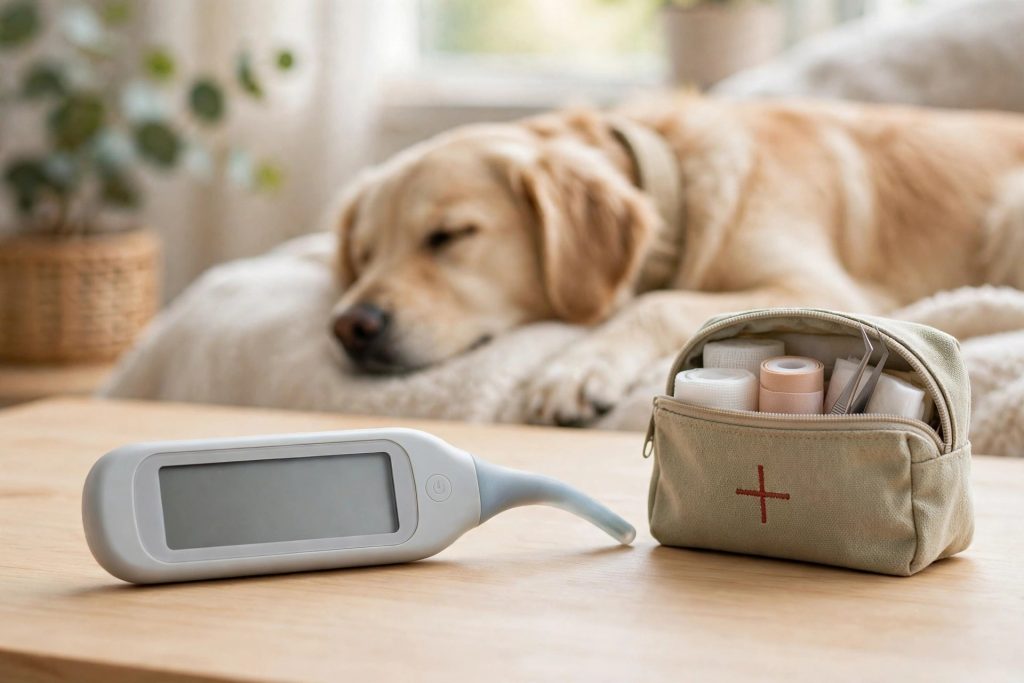
A pet thermometer for quick checks gives a pet owner a fast and simple way to learn whether a pet is running a fever, since it takes a reading in moments and shows the result on a clear display. Many pets hide discomfort well, and a cat or a dog that seems only a little quiet may already be unwell, so a quick check at home helps an owner decide whether to watch and wait or to call a vet. A thermometer made for pets is shaped for safe and gentle use, and it gives a steady reading without a long wait, which matters when a pet is restless or nervous. This guide explains why quick checks matter, how a pet thermometer works, what to look for when you buy one, how to use it well, and how to keep it clean and ready for the next check. A thermometer kept nearby means a check can happen at once, rather than after a trip to the shops.
Why Quick Checks Matter
Quick checks matter because a fever is often one of the first signs that a pet is unwell, and catching it early gives a vet more room to help. A pet that eats less, sleeps more, shivers, or seems dull may be fighting an illness, and a temperature reading turns a vague worry into a clear fact that an owner can act on. A quick check also gives peace of mind, since a normal reading after a scare lets an owner relax and keep watching the pet at home. Owners who check early can also track a change over time, since a reading taken in the morning and another taken later show whether a fever is rising or easing. A pet that has just had a vaccine or a minor procedure can be watched closely with a quick check, and the owner can report a clear reading to the vet if anything seems wrong. When a check takes only moments, owners do it more often, and a simple tool earns its place in the pet cupboard.
How a Pet Thermometer for Quick Checks Works
A pet thermometer for quick checks works by sensing body heat with a smooth probe and showing the result on a digital display, so the reading is easy to see without guesswork. You place the tip gently where the maker directs, hold it steady until the device signals that the reading is done, and then read the display in clear figures. Most pet thermometers use a soft and flexible tip, which bends a little if the pet moves, so the check stays gentle and the pet stays calm. The display is large enough to read at a glance, and many models beep when the reading is ready, so you do not have to watch the screen the whole time. A fast model gives a reading in a short time, which matters with a nervous pet that will not sit still for long. The thermometer runs on a small battery that lasts through many checks, and a low battery sign on the display tells you when it is time to change it. The probe is made to wipe clean after use, and the body is shaped to grip well even with damp hands. Once you have used it a few times, the routine becomes quick and steady, and a check that once felt awkward becomes a calm part of pet care.
Choosing the Right Pet Thermometer for Quick Checks for Your Pet
Choosing a pet thermometer starts with the size and temper of your pet, since a small cat and a large dog need a probe that suits them and a grip that feels safe in your hand. Look for a flexible tip, since a tip that bends a little is kinder if the pet shifts during the check, and a smooth finish helps the probe slide in gently. The display should be large and clear, with figures you can read in dim light, and a beep that marks the end of the reading helps you know when to lift the probe away. A fast reading matters most for nervous pets, so check how long the maker says a reading takes and pick a model that finishes quickly. A waterproof body is worth having, since it makes cleaning simple and protects the thermometer if it is rinsed under a tap. A case or cap that covers the probe keeps it clean between checks, and a model that stores neatly in a drawer is more likely to be close at hand when you need it. For pet owners looking for everyday pet care items, Skyrocs offers a helpful starting point, and the pet supplies range covers daily items for homes that share their life with a cat or a dog.
Using Your Pet Thermometer for Quick Checks
Using a pet thermometer well starts with a calm pet, so wait for a quiet moment and speak softly while you settle the pet in a comfortable spot. Lubricate the tip lightly with a water based gel or a little plain petroleum jelly, since a smooth tip slides in gently and gives a truer reading. Lift the tail gently, place the tip as the maker directs, and hold the thermometer steady until it beeps, since moving it during the reading can give a false result. Keep one hand on the pet to soothe it, and praise it softly while you wait, since a calm pet holds still and the check goes faster. Read the display at once and note the result, so you can compare it with later readings and describe it clearly if you call a vet. If the reading seems odd, wait a short while and take it again, since a second reading confirms the first and rules out a slip. Never force the thermometer if the pet resists, and stop the check if the pet shows distress, since a stressed pet needs a vet visit rather than a repeated check at home. With a little practice, each check takes only a few moments, and the pet learns that the routine is brief and gentle.
Cleaning and Storing Your Pet Thermometer for Quick Checks
A pet thermometer earns its place when it is easy to clean, since a dirty probe can carry germs from one check to the next. Wipe the probe with a soft cloth and warm soapy water as soon as you finish, and dry it fully before you put the cap back on. A little mild soap is enough, and harsh cleaners should be avoided, since they can dull the finish and leave a smell that puts a pet off the next check. Check the tip now and then for cracks or wear, since a damaged tip should be replaced rather than used again. Store the thermometer in its case in a cool dry drawer, away from heat and out of reach of chewing pups, since a chewed probe is no longer safe to use. Keep a spare battery nearby, so a flat battery never leaves you without a thermometer when a pet seems unwell. A clean thermometer stores best with its cap on and its display off, and a quick wipe before the next check keeps it ready. A thermometer that is cleaned after each use and stored with care will serve through many checks and stay a trusted part of pet care.
Frequently Asked Questions
Is a pet thermometer for quick checks needed at home?
It is not needed every day, yet it is worth having, since a fast reading turns a vague worry into a clear fact and helps you decide whether to watch your pet or call a vet.
How does a pet thermometer for quick checks work?
You place the smooth probe gently where the maker directs, hold it steady until the device beeps, and read the result on the clear digital display in moments.
Can a pet thermometer for quick checks suit both cats and dogs?
Yes, most models suit both cats and dogs, as long as you choose a probe size and a flexible tip that fits your pet and you follow the maker guide for gentle use.
How do I clean a pet thermometer for quick checks after use?
Wipe the probe with warm soapy water at once, rinse it gently, dry it fully with a soft cloth, and store it with its cap on in a clean dry place.
What should I look for when buying a pet thermometer for quick checks?
Look for a flexible tip, a large clear display, a fast reading, a waterproof body, a beep that marks the end of the reading, and a case that keeps the probe clean between checks.