
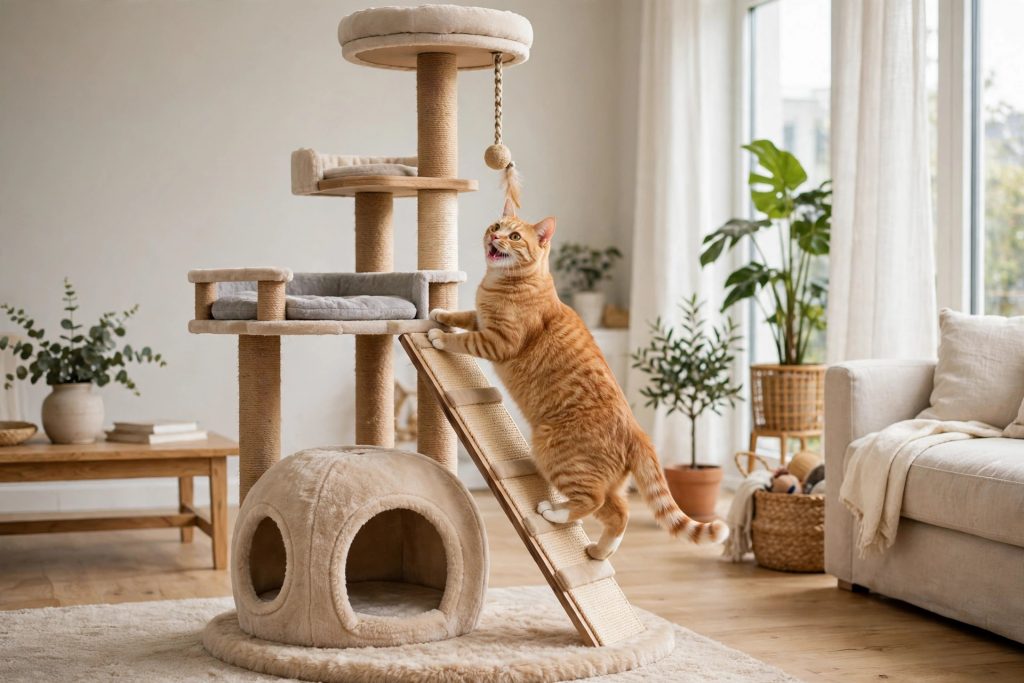
A cat tree for happy climbing makes daily life with a cat easier, and that is why so many owners now keep one at home. Cats love to climb, and a cat tree gives them a tall place to perch, watch the room, and feel safe. Many owners want to share more of life with a cat, yet the practical side can feel hard when a pet tires fast, gets nervous, or needs a safe place to rest.
Skyrocs (https://skyrocs.com/) offers a pet supplies range (https://skyrocs.com/product-category/pet-supplies/) for homes that share their life with a cat or a dog, and a cat tree is a natural part of that range. Owners who browse the range can compare styles side by side, and they can pick a cat tree that suits the size of their cat and the space in their home. A good cat tree should feel simple from the first day, with no fiddly parts and no steep learning curve. The rest of this guide walks through each choice in turn, so you can buy with confidence and use your cat tree well from the start.
Why Happy Climbing Matters
Cats love to climb, and a cat tree gives them a tall place to perch, watch the room, and feel safe. In the wild, cats climb to survey their ground and to rest out of reach, and a home cat keeps that same need. A tree with platforms at different heights lets a cat choose a sunny spot, a shaded nook, or a high lookout, and that choice keeps a cat calm and content. Climbing also keeps a cat fit, since the jump and the stretch work the legs and the back.
A cat tree also saves time, since a routine that works well takes less effort each day, and an owner who trusts the tool will use it more often. When the tool fits the pet and the home, the pet settles into the routine fast, and the owner can relax. That calm is worth a great deal, since a stressed pet can make a whole household tense, while a content pet makes the home feel warm. Owners who take time to choose well find that the tool earns its place, and it soon feels like a normal part of daily life.
How a Cat Tree for Happy Climbing Works
A cat tree works as a tall tower of platforms, posts, and hideaways, built so a cat can climb, scratch, and sleep in one place. The base is wide and heavy so the tower stays steady when a cat leaps onto the top perch. Posts wrapped in rope give the cat a place to scratch, which keeps claws healthy and saves the sofa. Platforms at different heights invite the cat to climb step by step, and a small cave or hammock offers a quiet place to rest.
The design stays simple on purpose, since a tool that is easy to use gets used every day, while a complex tool ends up in a cupboard. Each part has a clear job, and the parts work together so the owner can focus on the pet rather than on the tool. A well made cat tree feels solid in the hand, moves smoothly, and stays steady when the pet moves. That steadiness matters, since a pet that feels safe will use the tool gladly, while a pet that feels wobbly will avoid it.
Choosing the Right Cat Tree for Your Pet
Height comes first, since a tree should suit the room and the cat, with platforms a cat can reach in easy steps. A small flat needs a slim tower, while a large room can hold a tall tree with many levels. Check the base for weight and width, since a narrow base will tip when a lively cat jumps. Look for posts that are thick and wrapped tightly in rope, platforms that feel solid under your hand, and covers that lift off for washing.
Take time to compare a few styles before you buy, and think about how you will use the cat tree on a normal day. A style that suits a quiet home may not suit a busy household, and a style that suits a small pet may not suit a large one. Read the care notes that come with the tool, and check that you can clean it with ease. A cat tree that is easy to keep clean will stay fresh, and a fresh tool is one a pet will return to again and again.
Using Your Cat Tree for Happy Climbing
Place the tree where the cat already likes to sit, so it finds the new perch on its own. Sprinkle a little catnip on a platform, or place a favourite toy on a low step, to invite the cat up. Let the cat explore at its own pace, and never lift it onto the top perch before it feels ready. Watch which platform the cat favours, and move a blanket there so the spot feels like home. Keep the tree away from a doorway where a sudden bang might startle a resting cat.
Keep the routine short at first, and build up slowly as the pet grows used to the tool. A calm voice and a gentle pace help a pet learn fast, and a treat at the right moment rewards good behaviour. Watch the pet closely during the first few days, and change the routine if the pet seems uneasy. A patient owner will soon have a pet that looks forward to the daily routine, and that pleasure is the best sign that the choice was right.
Cleaning and Storing Your Cat Tree for Happy Climbing
Brush loose fur from the platforms each week, since a cat tree gathers fur fast. Lift off the covers when you can, and wash them by hand with mild soap, then dry them fully before you put them back. Vacuum the rope posts to lift dust, and wipe the base with a damp cloth. Check the rope for fraying, and replace a worn post wrap before it unravels. A tree that smells fresh and feels clean will draw the cat back day after day. Store a spare cover flat in a drawer, so a wash day never leaves the platforms bare.
A little care after each use keeps the tool in good shape, and a tool that is kept clean lasts far longer than one that is left dirty. Check the parts now and then for wear, and replace a worn part before it fails. A cat tree that is stored dry and out of strong sun keeps its colour and its strength, and it will be ready whenever you need it.
Frequently Asked Questions
Is a cat tree for happy climbing needed for daily life with a cat?
A cat tree for happy climbing is not needed by every owner, yet it makes daily life easier for many homes, since it gives a cat a safe and simple way to enjoy the day. Owners who use one often find that routines run more smoothly, and that a pet settles faster into a calm daily habit.
How does a cat tree for happy climbing work?
A cat tree for happy climbing works by giving a cat a simple and steady tool that fits the way cats live and play. The design keeps the pet safe and comfortable, while the owner stays in control of each use, and that balance is what makes it work well day after day.
Can a cat tree for happy climbing suit a small cat?
A cat tree for happy climbing can suit a small cat when the size and the style match the pet, since a snug fit keeps a small pet safe and a larger fit can feel too loose. Check the size notes before you buy, and choose a style that suits the weight and the build of your cat.
How do I clean a cat tree for happy climbing after use?
Clean a cat tree for happy climbing with mild soap and warm water, then let it dry fully in the air before you store it. Brush off loose fur first, wipe the surfaces well, and check the parts for wear while you clean, so a small problem never grows into a large one.
What should I look for when buying a cat tree for happy climbing?
Look for a cat tree for happy climbing that feels solid, suits the size of your cat, and is easy to clean and store. Check the materials, the fit, and the care notes, and choose a style that fits your home and your daily routine, so the tool earns its place from the first day.