
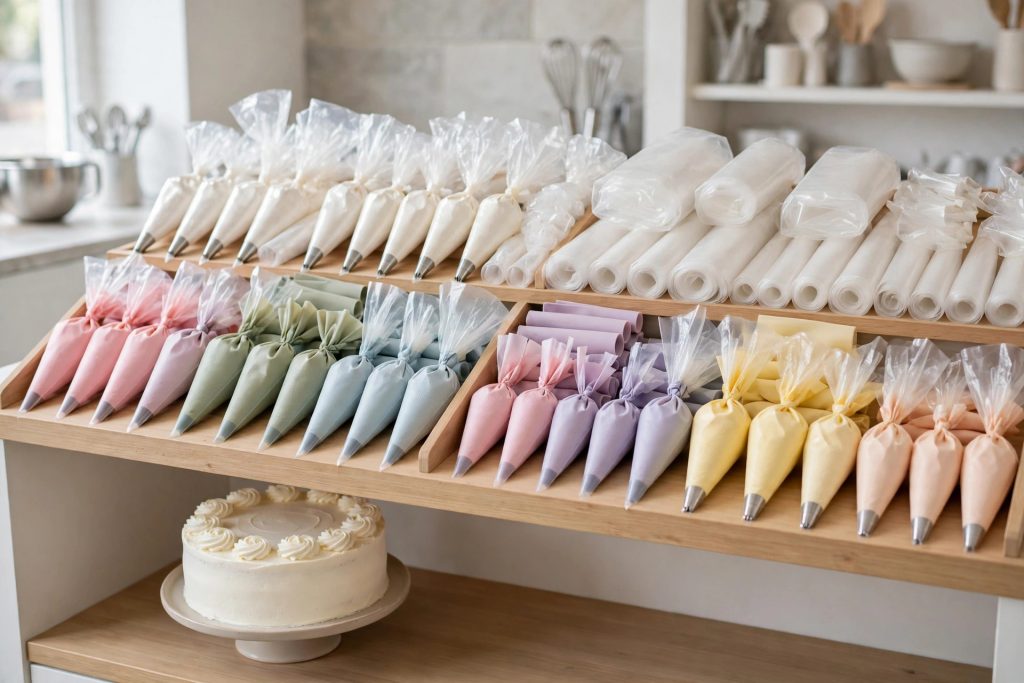
Shops use wholesale piping bags suppliers to stock piping bags that bakers trust, since a shop that carries the tools bakers reach for every week earns steady visits and repeat sales. Many bakers buy piping bags often, because the tools wear out with use, get lost in busy kitchens, and need replacing when the old one loses its edge. A shop that stocks piping bags in more than one size and style gives bakers a reason to choose it over a shop that carries only one plain option. A piping bag is a tool that bakers use for every cake, so a shop that stocks it well serves a buyer who returns often. This guide explains why piping bags sell well, what a good wholesale range covers, how to choose a supplier you can trust, how to price and order for your shop, and how to display piping bags so they sell more. With the right range and the right supplier, a shop can turn piping bags into a quiet and steady line that keeps bakers coming back.
Why Piping Bags Sell Well
piping bags sell well because they are tools that bakers use every week, and a tool that is used often is a tool that needs replacing often. A shop that stocks piping bags gives bakers a reason to visit for a small buy, and a small buy often leads to a larger basket on the same visit. piping bags also suit gifts, since a neat set makes a thoughtful present for a cook who is starting out or moving into a new home. Piping bags also suit cake decorating classes, since a class that needs a bag for every student will buy in bulk. A good piping bag is easy to show on a shelf, since the shape is clear and the use is plain to see, and a buyer can judge it at a glance. piping bags sell in every season, since baking and grilling go on all year and a worn tool needs replacing whenever it fails. A shop that carries more than one size reaches more buyers, since a buyer with a small kitchen wants a small tool and a buyer with a large family wants a larger one.
What a Good Wholesale Range Covers
A good wholesale range of piping bags covers more than one size, so a shop can serve a buyer with a small kitchen and a buyer who cooks for a crowd. The range should cover more than one material too, since some buyers want a sturdy steel tool and others want a light plastic one that wipes clean. A range with sets as well as single tools suits more buyers, since a set makes a gift and a single tool suits a buyer who only needs one replacement. The range should cover spare parts where they make sense, so a buyer who loses a tip or a brush head can buy a spare instead of a whole new tool. A good range also covers more than one price tier, so a shop can serve a buyer who wants a basic tool and a buyer who wants a finer one. Look for a range that is consistent, since a shop that reorders should get the same tool in the same size and finish every time. A range with clear packaging helps the shop too, since a buyer can see the tool and read its use without opening the box.
Choosing a Supplier You Can Trust
Choosing a supplier you can trust starts with quality, since a tool that breaks in the first week will cost the shop its buyers. Ask for a sample before you order, since a sample in the hand tells you more about the tool than a picture ever will. A supplier that answers quickly and plainly is worth more than one that is slow, since a shop needs to know when stock will arrive. Check that the supplier holds stock, since a supplier that is often out of stock will leave the shelf empty at the worst time. Look for clear terms on ordering, delivery, and returns, since a shop that knows the terms can plan its cash and its shelf with confidence. A supplier that packs goods well earns trust, since a tool that arrives bent or dented cannot be sold and the shop bears the loss. Ask other shops about the supplier if you can, since a supplier with a good name among shops is more likely to serve you well. For shops looking for everyday kitchen stock, Skyrocs offers a helpful starting point, and the wholesale range covers stock for shops that want a steady supply.
Pricing and Ordering for Your Shop
Pricing and ordering for your shop starts with knowing your costs, since a price that covers the stock, the shelf, and the time it takes to sell is the only price that lasts. Set a price that gives the shop a fair margin, yet stays fair to the buyer, since a price that is too high will sit on the shelf and a price that is too low will eat the profit. Order a small starter range first, with the sizes that sell fastest, and add more lines once you see which ones your buyers reach for. Keep the shelf full of the fast sellers, since a buyer who finds an empty hook will buy elsewhere and may not come back. Reorder before the shelf runs dry, since a tool that is out of stock on a busy weekend is a sale lost for good. Watch the seasons, since grilling tools sell fast in summer and baking tools sell fast when the festive season comes around. Group the tools with the goods they serve, since a buyer who came for cake mix will add a tool when it sits nearby. A shop that tracks what sells can order with confidence, and each order gets closer to what the buyers truly want.
Displaying Piping Bags to Sell More
Displaying piping bags to sell more starts with placing them where bakers can see them, since a tool hidden on a low shelf will not sell. Put the tools near the goods they serve, so a buyer who came for cake mix or grill food sees the tool at the moment they need it. Hang the tools where the shape is clear, since a buyer who can see the tool can judge it at a glance and reach for it. Show more than one size together, so a buyer can compare them in the hand and pick the size that suits their kitchen. A small sign that says what the tool does helps a buyer who is new to it, since a plain tool with no sign can puzzle a first time buyer. Keep the display tidy, since a neat shelf suggests a careful shop and a messy shelf suggests tools that no one checks. Group sets together as gifts, since a set in a neat box makes a present that a buyer can pick up without thinking. Put a demo tool on the counter if you can, since a buyer who holds the tool is far more likely to buy it.
Frequently Asked Questions
How do wholesale piping bags suppliers help a kitchen shop?
They give the shop a steady line of tools that bakers buy often, so the shelf earns repeat visits and each small sale can lead to a larger basket on the same visit.
What should wholesale piping bags suppliers offer in a range?
A good range covers more than one size, more than one material, sets as well as single tools, and more than one price tier, so the shop can serve more buyers with one shelf.
How do I choose among wholesale piping bags suppliers?
Ask for a sample, check the quality in your hand, look for clear terms and steady stock, and pick a supplier that answers quickly and delivers on time.
What should a shop order first from wholesale piping bags suppliers?
Order a small starter range of the sizes that sell fastest, keep the shelf full of those, and add more lines once you see which ones your buyers reach for.
Where should a shop display stock from wholesale piping bags suppliers?
Display the tools at eye level near the goods they serve, hang them where the shape is clear, and keep sets together as gifts so buyers can see them at a glance.