
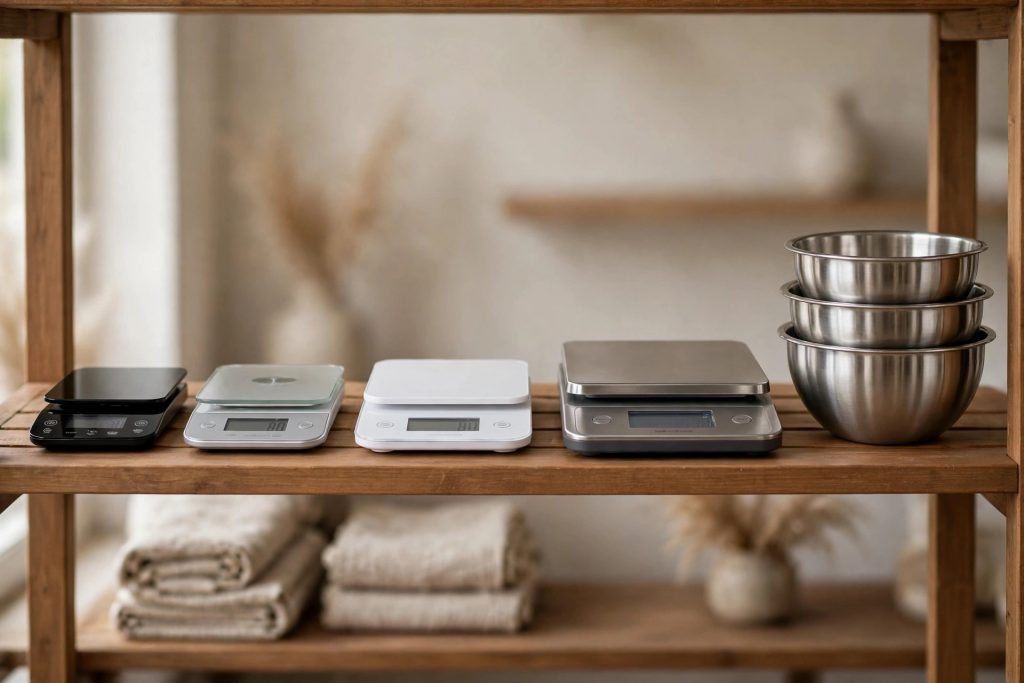
Shops that work with wholesale kitchen scales suppliers stock a line that home cooks trust, and a range that covers the sizes and styles cooks ask for most will sell steadily through the year. Wholesale buyers who choose their range with care can serve both new cooks and cooks who are replacing a worn out tool, and a supplier who delivers on time keeps the shelves full. This guide explains why kitchen scales sell well, what a good wholesale range covers, how to choose a supplier you can trust, how to price and order for your shop, and how to display kitchen scales so they sell more.
Shops that sell kitchen tools need stock they can trust, and kitchen scales are the kind of everyday item that cooks buy without a long think, so the range must be ready when they ask. A good range suits the homes in your area, fits the space on your shelves, and covers the price points your shoppers expect, so choosing it is worth a little thought.
Why Wholesale Kitchen Scales Sell Well
kitchen scales sell well because they solve a small daily problem that every home cook meets, and a tool that solves a real problem needs little selling. A shopper who has struggled with a poor tool knows at once what a good one is worth, and a shop that stocks a good one earns that sale with ease.
Baking is a weekly habit in many homes, and a shop that stocks scales bakers trust will see the same shoppers come back each time a bake is planned. A scale is a modest buy that solves a real worry, since a heavy cake or a soft biscuit starts with a wrong measure, and a tool that answers that worry sells itself. Shops near homes that bake often will find this line moves steadily, and a range that covers compact and larger platforms gives every baker a choice.
A line that sells steadily is a line a shop can plan around, since steady sales mean steady orders and shelves that are never empty. Shops that keep kitchen scales in stock will find the line brings shoppers back for other kitchen tools too, and a shopper who trusts one buy is more likely to trust the next.
What a Good Wholesale Range Covers
A good wholesale range covers the sizes cooks ask for most, since a range that is too narrow sends shoppers elsewhere. Stock the common sizes first, then add the less common ones once the line is moving, so the shelf grows with the sales.
A good range covers scales with platforms in more than one size, with displays that stay easy to read under a full bowl. Stock a compact model for small kitchens and a larger model for keen bakers, so the shelf covers both the first buy and the replacement buy. A range that covers these choices lets a shop serve every baker who walks in.
A range should also cover the styles that suit different kitchens, since a cook with a small kitchen wants a tool that stores flat, while a cook with a large kitchen wants a tool that hangs well. Keep the range tidy, with each model easy to tell apart, so shoppers can choose without a long think. A tidy range sells better than a crowded one, and a shop that keeps it tidy will find shoppers choose faster.
Choosing a Supplier You Can Trust
Choosing a supplier starts with trust, since a supplier who delivers late or sends poor stock will cost a shop more than a low price can save. Ask for samples before you order, and check the build, the finish, and the packing with your own hands, since a sample tells you more than a picture ever will.
For shops building a kitchen range, Skyrocs offers a helpful starting point, and the wholesale range covers everyday kitchen tools in bulk. When you compare suppliers, look for clear terms, steady stock, and honest answers, since those signs point to a partner that will serve your shop well. A supplier that is easy to reach and quick to answer will save your shop time when an order needs a change.
Delivery matters as much as the goods, since stock that arrives late leaves shelves empty and shoppers unhappy. Ask how long an order takes from payment to arrival, and how the supplier handles a late or damaged delivery, since the answer tells you how the supplier treats a shop when things go wrong. A supplier who is plain about delivery times and quick to fix a problem is a partner a shop can plan around.
Pricing and Ordering for Your Shop
Pricing starts with the cost of the goods and the cost of keeping the shop open, and a price that covers both with room to spare is a price that lasts. Keep the price fair for the shopper and fair for the shop, since a price that is too high slows the line and a price that is too low leaves nothing for the next order.
Ordering starts small, since a first order that is modest lets a shop test the line without filling the store room. Order more of the models that sell and less of the ones that sit, and reorder before the shelf runs dry, since a gap on the shelf is a sale lost to another shop.
A good order also leaves room for the season, since kitchens change with the year and a line that suits one season may slow in the next. Plan the order around the meals your shoppers cook most, and keep a little stock in hand for the busy weeks, so the shop is ready when shoppers come.
Displaying Wholesale Kitchen Scales to Sell More
Displaying kitchen scales well starts with placing them where shoppers can see and touch them, since a tool that is handled is a tool that is bought. Put the range near the goods it belongs with, so a shopper buying pots finds the tools that go with them, and keep the shelf tidy so each model stands out.
A small display that shows the tool in use can sell more than a shelf of boxes, since shoppers buy what they can picture in their own kitchen. Set one model out of its packing where shoppers can pick it up, and keep the rest of the stock neat behind it. A display that is clean and easy to reach invites shoppers to stop, and a shopper who stops is a shopper who may buy.
Keep the display fresh by turning the stock and moving the best sellers to the front, since a display that never changes is a display shoppers stop seeing. Wipe the shelf and the models now and then, so the range looks cared for, and replace a worn display model before it looks tired.
Frequently Asked Questions
How do wholesale kitchen scales suppliers help a kitchen shop?
They help by giving the shop a steady line that cooks buy without a long think, since kitchen scales solve a small daily problem in every kitchen. A shop that keeps the range in stock will see shoppers return, and a line that brings shoppers back is a line worth keeping.
What should wholesale kitchen scales suppliers offer in a range?
They should offer sizes and styles that cover the cooks in your area, with a sturdy everyday model and a finer model for keen cooks. A range that covers these choices lets a shop serve every shopper who walks in, and a tidy range sells better than a crowded one.
How do I choose among wholesale kitchen scales suppliers?
Ask for samples and check the build with your own hands, then compare delivery times and terms before you order. A supplier who sends good samples, answers plainly, and delivers on time is a partner worth trying, while one who dodges questions is one to leave alone.
What should a shop order first from wholesale kitchen scales suppliers?
Order the common sizes first, in a modest amount, so the shop can test the line without filling the store room. Order more of the models that sell and less of the ones that sit, and reorder before the shelf runs dry, since a gap on the shelf is a sale lost.
Where should a shop display stock from wholesale kitchen scales suppliers?
Display it where shoppers can see and touch it, near the goods it belongs with, with a clear label that names the size and the use. A display that is clean and easy to reach invites shoppers to stop, and a shopper who stops is a shopper who may buy.