
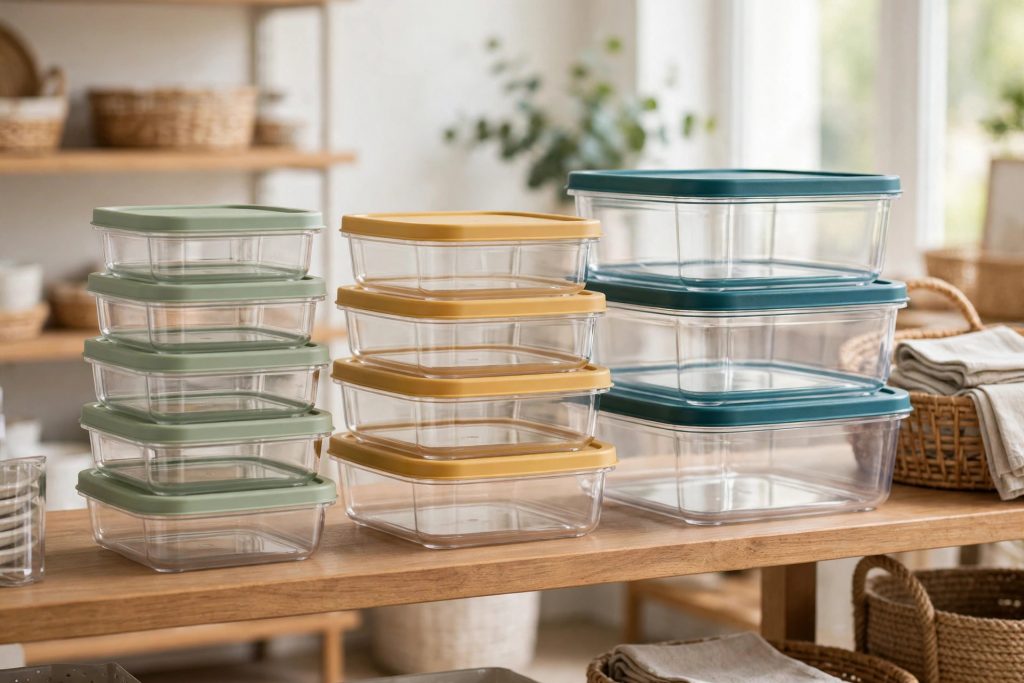
Wholesale food storage containers suppliers help kitchen shops stock a box that turns a messy fridge into a tidy shelf, since a container with a tight lid keeps air out and flavour in. Many cooks throw away food that has gone soft or stale, because an open bowl in the fridge dries out fast and picks up smells from other foods. A container that seals well takes that worry away, and food that stays fresh gets eaten instead of thrown away. For a shop, that mix of clear use and daily need makes the container a steady seller, since buyers can see at once how it works and how it cuts waste. This guide explains why food storage containers sell well, what a good wholesale range covers, how to choose a supplier you can trust, how to price and order for your shop, and how to display the range so buyers stop and look. A shop that shows a container beside fresh vegetables helps buyers picture it in their own fridge at once.
A container is light, stacks well, and suits every kitchen, which makes it a friendly item for shops of every size, from a market stall to a full kitchen store.
Why Wholesale Food Storage Containers Sell Well
Wholesale food storage containers sell well because they solve a problem that many cooks know, and the fix is easy to show in the shop. A buyer who has thrown away stale leftovers will pick up a container, press the lid down, and hear the seal click, and that simple test often closes the sale. The container suits a wide range of buyers, from parents packing lunch before school to cooks who like to cook once and eat well all week, and it works for salads, soups, and leftovers alike, so one box covers many meals. Shops like stock that moves across seasons rather than spiking once and fading, and food storage is needed all year, from summer salads to winter stews.
A container is a modest price item that buyers add to a basket without thinking hard, which makes it a useful extra at the till as well as a shelf item. A buyer who came in for a lunch bag may leave with a set of boxes too, and those small extras add up across a week of trading.
What a Good Wholesale Range Covers
A good wholesale range covers the sizes and styles that real kitchens need, rather than a single box repeated in one size. Shallow boxes suit salads and sandwiches, deep boxes suit soups and stews, and small boxes suit snacks and single lunches, so a range that spans all three covers most meals. Material matters too, since glass lasts longer and does not stain, while plastic is lighter and safer for a lunch bag. Some containers have a vent in the lid for warming food, while others have dividers that keep different foods apart, and a range that offers both gives buyers a clear choice. Colour also plays a part, since a clear box lets buyers see the food inside, while a coloured lid makes a set easy to spot.
Some containers nest together for tidy storage, which suits buyers with small cupboards, and a range that includes nesting sets gives those buyers a reason to buy. A set of several sizes in one pack suits a family, so a range that covers sets serves gift buyers as well as daily cooks.
Choosing a Supplier You Can Trust
Choosing a supplier you can trust starts with the quality of the sample, since the container you hold in your hand tells you more than any catalogue page. Ask for a sample before you order, press the lid down several times, and check that the seal holds all the way around and the box does not flex. A good supplier answers questions clearly, gives honest lead times, and packs stock well so containers arrive clean and undamaged. Look for a supplier that keeps steady stock of the sizes you sell most, since a shop that runs out of a popular size loses sales to the shop next door. Clear terms matter too, so check the minimum order, the delivery time, and the way damaged stock is handled before you place a large order. For shops building a kitchen range, Skyrocs offers a helpful starting point, and the wholesale range covers stock for shops that want a steady supply. A supplier that grows with your shop is worth more than a cheap price from a seller who disappears after one order.
A supplier that offers more than one size lets a shop serve cooks with different fridges and lunch bags, from small snack boxes to deep stew boxes. A supplier who keeps the same sizes in stock lets a shop reorder with confidence instead of starting over each time.
Pricing and Ordering for Your Shop
Pricing and ordering for your shop starts with knowing what your buyers expect to pay for a kitchen box, since a container is a modest purchase and a sharp price can put buyers off as fast as a high one. Set a price that leaves a fair margin after delivery and packing, and keep the price steady across the range so buyers can compare sizes without confusion. Order in small batches at first, so you can learn which sizes move fastest and which lid styles buyers reach for, and then order more of the winners. A container is light and stacks well, so delivery costs stay low, and that lets you order more often in smaller batches without eating into your margin. Watch the seasons too, since new home buying and back to school lift demand, and a little extra stock before those peaks avoids empty shelves.
Keep an eye on which sizes sell out first, since the fastest seller tells you what to order more of next time. A container that sells steadily through the year needs no deep discount to move, so hold the price and let the usefulness do the work.
Displaying Wholesale Food Storage Containers to Sell More
Displaying wholesale food storage containers to sell more is mostly about letting buyers press the lid and hear the seal click, since the tight seal is the feature that sells it. Keep a container open on the shelf so buyers can see the box, and place a filled container beside it so the result is clear at a glance. Put the display near the lunch bags and picnic goods, or beside fresh food, so buyers connect the box with the meal it holds. A short note on the shelf that says the lid seals tight to keep food fresh helps buyers who are in a hurry, and a small stack of boxes at the till catches buyers who want a useful extra. Keep the shelf tidy and full, since a half empty shelf looks like a shop that has given up on the range, while a full shelf invites buyers to browse.
A container displayed beside a lunch bag helps buyers see the whole job, from fridge to packed lunch, and that picture is what turns a look into a sale.
Frequently Asked Questions
How do wholesale food storage containers suppliers help a kitchen shop?
They give a shop steady access to containers in several sizes and materials, so the shelf stays full and buyers can find the size they need. A good supplier also keeps stock ready, so a shop can reorder fast when a size sells out.
What should wholesale food storage containers suppliers offer in a range?
A good range covers shallow, deep, and small boxes, glass and plastic, vented lids and dividers, and sets that nest together, so a shop can serve many cooks and many kinds of meal.
How do I choose among wholesale food storage containers suppliers?
Ask for a sample first, press the lid down several times, check that the seal holds all the way around, and look for clear terms, honest lead times, and steady stock of the sizes your buyers want most.
What should a shop order first from wholesale food storage containers suppliers?
Start with a small batch across shallow, deep, and small sizes in glass and plastic, learn which sizes move fastest, and then order more of the winners, so the shelf reflects what buyers actually buy.
Where should a shop display stock from wholesale food storage containers suppliers?
Keep a container open on the shelf near lunch bags and fresh food, let buyers press the lid and hear the seal, and add a small stack at the till for buyers who want a useful extra.