
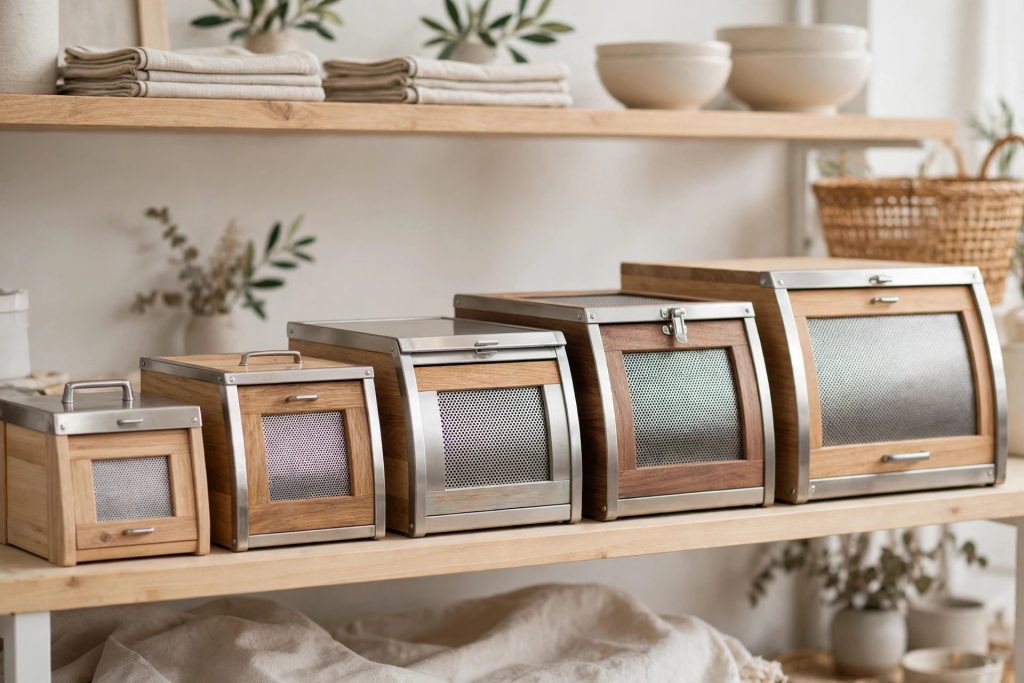
Shops that work with wholesale bread boxes suppliers stock bread boxes well, since bread boxes are a kitchen staple that every home with bread needs, and a shop that stocks them well picks up steady sales from home bakers. Bread boxes are a small item with a steady demand, and a shop that carries them in a good range picks up sales week after week. This guide explains why bread boxes sell well, what a good wholesale range covers, how to choose a supplier you can trust, how to price and order for your shop, and how to display stock so it sells more.
A good range is not the largest range, it is the range that suits your shoppers, fits your shelves, and turns over at a steady pace. A supplier who is steady and honest matters as much as the stock itself, since late deliveries and poor packing cost more than a small saving on price. The advice here suits a small kitchen shop as well as a larger home store, and it starts with knowing your shoppers.
Why Wholesale Bread Boxes Sell Well
Bread boxes sell well because bread boxes are a kitchen staple that every home with bread needs, and a shop that stocks them well picks up steady sales from home bakers. They suit keeping sliced loaves, crusty rolls, and home baked bread fresh, and they fit into daily cooking without fuss, which is why shoppers buy them without much thought. A shop that stocks them in a few sizes and a few colours gives shoppers a real choice, and a real choice leads to more sales.
A bread box is a gift as well as a staple, so it sells to shoppers who are setting up a home as well as to bakers who bake every week. A shop that keeps bread boxes in stock through the year also builds trust, since shoppers learn that the shop always has the basics they need. Steady basics are the base of a healthy shop, and bread boxes are a steady basic that earns its shelf space.
A shop that sells bread boxes well also learns what its shoppers truly value, since shoppers who buy a basic that works come back for the next basic too. Keep the best sellers in stock, listen to what shoppers ask for, and let the range grow from real demand rather than from guesswork.
What a Good Wholesale Range Covers
A good wholesale range covers the sizes and styles your shoppers ask for most, in sturdy wood or metal with a lid that closes well and a little airflow to stop damp building up. It should cover small sizes for a single cook and larger sizes for a family kitchen, in plain colours that suit any home. A range that is too narrow misses sales, while a range that is too wide ties up money in slow lines that sit on the shelf.
A good range covers compact boxes for small kitchens and larger boxes for family loaves, in wood and in metal, with lids that open wide. A good range also covers spares and simple extras, so a shopper who buys one item can add another at the till. Ask your supplier what sells best in shops like yours, and let those lines lead your range.
Review the range each season, since a range that is checked often stays fresh, and a fresh range keeps shoppers interested. Move slow lines to a new spot, try a new colour, and cut the lines that no longer earn their shelf space.
Choosing a Supplier you can Trust
Choosing a supplier starts with trust, since a supplier who is honest about stock, price, and delivery time saves you trouble later. Check that the supplier packs well, answers messages fast, and ships on the day promised, and start with a small order to test the service before you order more. A supplier who is easy to reach is a supplier you can rely on when a line sells out fast.
A supplier who answers fast, packs well, and ships on time is worth more than a supplier who is cheap yet slow and hard to reach. For shops looking for a steady source, Skyrocs offers a helpful starting point, and the wholesale range covers stock for shops that want a wide choice in one place. Compare a few suppliers before you commit, and choose the one whose service feels steady and whose stock feels solid.
Keep a note of how each supplier performs, since a record of late deliveries and broken packing shows which supplier is truly steady. A supplier who improves after a problem is worth keeping, while a supplier who repeats the same fault is worth replacing.
Pricing and Ordering for Your Shop
Pricing bread boxes starts with knowing your costs, since a price that is too low leaves no margin and a price that is too high leaves stock on the shelf. Set a price that covers your costs and leaves a fair margin, and check it against similar shops so your price feels fair to shoppers. A clear price on the shelf helps shoppers decide fast, and a fair price brings them back.
Start with a small order across a few styles, watch which ones sell, and then order more of the winners and fewer of the slow lines. Order little and often at first, since small orders keep cash free and shelves fresh, and reorder fast when a line sells well. Keep a simple record of what sells and what does not, and let that record guide your next order.
Watch the margin on each line, since a line that sells fast yet earns little can still be worth stocking if it brings shoppers in, while a line that earns well yet never sells ties up cash. Balance the two, and let the record of sales guide the next price you set.
Displaying Wholesale Bread Boxes to Sell More
Displaying bread boxes well starts with placing them where shoppers already look, since stock that is hidden is stock that does not sell. Keep the display tidy, with the sizes in order and the price clear, so shoppers can compare and choose without asking for help. A tidy display also shows that the shop cares, and shoppers trust a shop that looks cared for.
Place bread boxes near baking trays and bread boards, since a shopper who is buying for bread is already thinking about keeping it fresh. Put a sample where shoppers can touch it, since a bread box that feels solid in the hand sells itself. Refresh the display when stock runs low, and move slow lines to a new spot before you cut them from the range.
Change the display now and then, since a display that never moves becomes invisible to regular shoppers. A fresh spot, a new sign, or a simple pairing with a matching tool can lift a slow line without any extra cost.
Frequently Asked Questions
How do wholesale bread boxes suppliers help a kitchen shop?
They help by giving the shop a steady basic that shoppers buy often, in sizes and styles that suit many kitchens, so the shop picks up regular sales and builds trust with home cooks.
What should wholesale bread boxes suppliers offer in a range?
They should offer a range that covers small and large sizes, in sturdy wood or metal with a lid that closes well and a little airflow to stop damp building up, with plain colours that suit any home, so a shop can stock the lines its shoppers ask for most.
How do I choose among wholesale bread boxes suppliers?
Start with a small order, check that the supplier packs well, answers fast, and ships on time, and choose the supplier whose service feels steady and whose stock feels solid in the hand.
What should a shop order first from wholesale bread boxes suppliers?
A shop should order a small range across a few sizes and styles, watch which ones sell, and then order more of the winners and fewer of the slow lines, so cash stays free and shelves stay fresh.
Where should a shop display stock from wholesale bread boxes suppliers?
A shop should display stock where shoppers already look, near the tools and foods that go with bread boxes, with sizes in order, prices clear, and a sample where shoppers can touch it.