
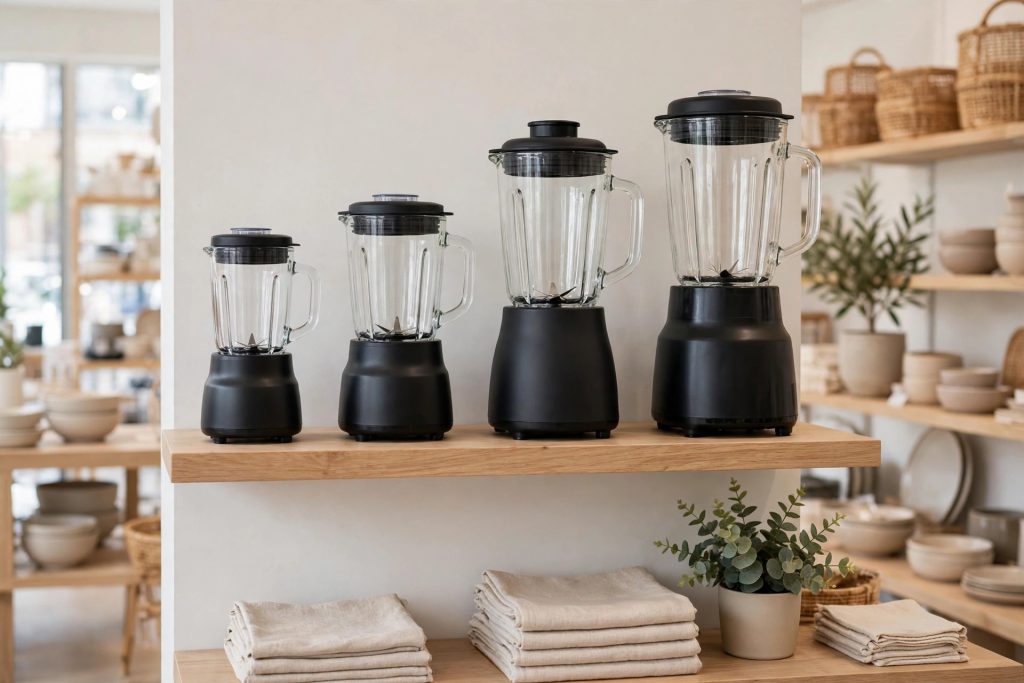
Shops use wholesale blenders suppliers to stock blenders that home cooks trust, and a steady range of good blenders can anchor a kitchen shelf for years. Customers who cook at home want tools that work well and last, and they come back to shops that stock models they can rely on. A shop that chooses its range with care earns a name for honest stock, and honest stock brings repeat visits and kind words. This guide explains why blenders sell well, what a good range covers, how to choose a supplier, how to price and order, and how to display stock so it sells. A shop does not need the widest range in town, since a tidy range of trusted models often outsells a crowded shelf of mixed quality. The aim is simple: stock blenders that work, price them fairly, and keep the shelf full, and the sales will follow.
Why Wholesale Blenders Sell Well
Wholesale blenders sell well because nearly every home needs one, and a blender is the kind of tool that cooks buy, use daily, and replace when it wears out. Customers trust a shop that stocks blenders they have heard good things about, and a trusted model sells itself once it sits on the shelf. A blender is also an easy gift, since cooks buy one for a new home, a wedding, or a friend who is learning to cook. When a model works well, buyers tell their friends, and word of mouth brings new customers who already want the same blender. Shops that keep blenders in stock through the year gain steady sales, since demand for kitchen tools never rests on one season alone.
A blender suits many budgets, since a shop can stock a plain model for tight budgets and a feature rich model for cooks who want more. Display stock also helps, since a blender on the shelf catches the eye of shoppers who came in for something else. A shop that pairs blenders with matching tools, such as bowls and utensils, helps customers see a full set and buy more than one item. Returns stay low when the models are sturdy, and low returns protect the shop name and its margin.
What a Good Wholesale Range Covers
A good wholesale range covers the sizes and styles that local cooks actually buy, and not every model a maker can offer. The range should hold a plain model for everyday use, a mid range model with extra settings, and a feature rich model for keen cooks. Sizes matter too, since a small blender suits a single cook while a large one suits a family that cooks in big batches. A range that covers more than one colour or finish helps the shop match the tastes of different homes. Spare parts earn a place where they make sense, since a spare jug can save a customer from buying a whole new blender.
The range should also suit the space the shop has, since a shelf crowded with slow models hides the best sellers. A supplier who keeps the range fresh, with new models when tastes change, helps the shop stay ahead of the shop down the road. Shops should ask their own customers what they cook, since local tastes shape which blenders sell fastest. A range that is too wide ties up cash in slow stock, while a range that is too narrow sends customers elsewhere.
Choosing a Supplier You Can Trust
Choosing a supplier starts with honest answers, since a shop needs to know what is in stock, when it will arrive, and what it will cost. Look for a supplier who shares clear stock lists and delivery times, and who answers questions quickly instead of going quiet. Ask for a sample before a large order, since a sample shows the build, the finish, and the feel of the blender in the hand. Check the jug and the speed settings on the sample, since small flaws there show up in every unit the shop sells. A supplier who checks quality before shipping saves the shop from returns and unhappy customers.
For shops building a kitchen range, Skyrocs offers a helpful starting point, and the wholesale range covers stock for shops that want a steady supply. Ask how the supplier handles faults, since a clear path for faulty stock protects the shop when a model fails. A supplier who has served other shops for years is a safer bet than a new name with no record to check. Keep the first order small, and grow it once the supplier has shown they can deliver on time and in full.
Pricing and Ordering for Your Shop
Pricing starts with knowing the full cost of each blender, from the supplier price to the cost of getting it onto the shelf. A shop should price each model so the shelf earns a fair return while the price still feels fair to the customer. Plain models can carry a gentle price that brings shoppers in, while feature rich models can carry a higher price for cooks who want more. Order in small batches at first, and grow the order once a model shows it sells. Keep the best sellers in stock at all times, since an empty shelf sends a buyer to the shop down the road.
Watch which blenders move fastest, and reorder those before they run out, rather than waiting for the shelf to stand empty. A tidy stock list helps, since it shows at a glance what is selling, what is slow, and what needs a reorder. Seasonal demand matters too, since some blenders sell faster when families cook more at home. A shop that plans its orders around steady sellers spends less time chasing stock and more time serving customers.
Displaying Wholesale Blenders to Sell More
A good display starts with light and space, since a blender hidden behind boxes will never catch the eye of a shopper. Place blenders where shoppers can see and touch them, near the entrance or beside matching tools. Keep the best sellers at eye level, since shoppers look there first and reach there first. Leave space around each blender, since a crowded shelf makes every model look the same. A short card beside each model can note what it suits, since shoppers buy faster when they see the use at a glance.
Group blenders with the tools that go with them, such as bowls and utensils, so customers see a full set. A small demo at the counter can turn a curious shopper into a buyer, since seeing a blender work beats reading about it. Keep the display tidy each morning, since dust and crooked boxes tell shoppers the stock is not cared for. A display that invites touch and shows clear uses will sell more blenders than a shelf that only stores boxes.
Frequently Asked Questions
How do wholesale blenders suppliers help a kitchen shop?
They help a shop by offering a steady range of blenders in sizes and styles that local cooks want, so the shop can fill its shelves without hunting for stock from many places. A good supplier also keeps the range fresh, so the shop can add new models when tastes change.
What should wholesale blenders suppliers offer in a range?
A good range covers small and large blenders, plain and feature rich models, and spare parts where they make sense, so the shop can serve both tight budgets and cooks who want extra features. The range should also suit the space the shop has for display.
How do I choose among wholesale blenders suppliers?
Look for clear stock lists, honest delivery times, and a supplier who answers questions quickly, since a shop needs to plan its shelves around stock that arrives on time. A supplier who checks quality before shipping saves the shop from returns and unhappy customers.
What should a shop order first from wholesale blenders suppliers?
Start with the sizes and styles that sell best in your area, and add a few feature rich models for cooks who want more, so the shelf covers the main needs without tying up cash in slow stock. A small first order also lets the shop test quality before ordering more.
Where should a shop display stock from wholesale blenders suppliers?
Place blenders where shoppers can see and touch them, near the entrance or beside matching tools, so the display catches the eye and invites a closer look. Keep the best sellers at eye level and the boxes tidy, so the shelf looks inviting rather than crowded.