
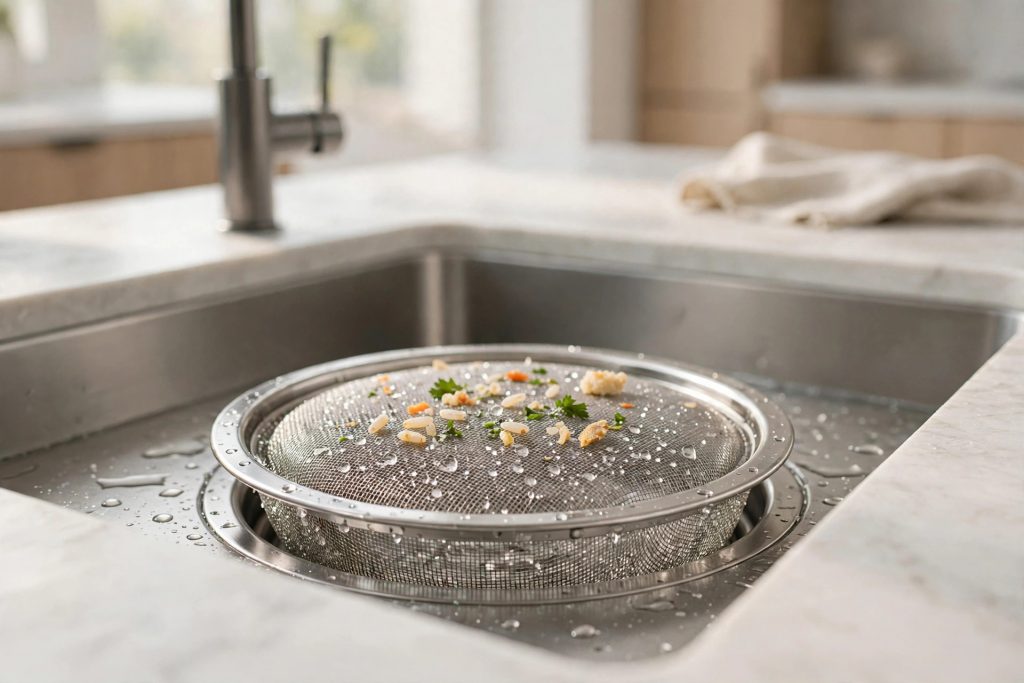
A sink strainer for clean drains turns a small daily chore into a simple habit, since it it catches food bits and hair before they slip down the plughole. Many home cooks rinse plates and pans each day, and the bits that wash down the drain slowly build into a blockage, and the mess that follows takes time to clear away. A sink strainer takes that worry away, since the fine mesh sits across the drain and lets water through while it holds back the bits that cause trouble. The result is a sink that drains fast and stays fresh, which makes the kitchen feel calmer and easier to keep tidy. This guide explains why clean drains matter, how a sink strainer works, what to look for when you buy one, how to use it well, and how to keep it clean and ready for the next use.
A blocked drain is a slow annoyance that grows into a real chore, since water that drains slowly leaves the sink cloudy and the kitchen smelling stale. A strainer stops the trouble at the start, and it costs little and asks for almost no effort in return. Lift it out, tip the caught bits into the bin, rinse it, and set it back in place, and the whole job takes only moments. Cooks who use a strainer find that the drain stays clear for months, and the plunger stays in the cupboard where it belongs.
Why Clean Drains Matter
Clean Drains matter because the kitchen is used many times a day, and small messes build up fast when nothing catches them early. A sink strainer steps in at the point where the mess starts, so the work stays small instead of growing into a chore. Food bits, tea leaves, and hair are the usual culprits, and each one is small alone yet together they form a mat that slows the water to a trickle. When the kitchen stays tidy with little effort, cooks feel more willing to cook at home, and the room stays pleasant for everyone who uses it.
A tidy kitchen also saves time across the week, since a cook who can find a clear bench and a clean sink starts cooking sooner. A sink that drains well also smells better, since water that sits in the basin turns stale fast, while water that flows away leaves the sink fresh. Guests notice a tidy kitchen too, since a clear sink and a neat bench make the whole room feel cared for. A sink strainer is a small tool, yet it earns its place by cutting the daily tidy up into quick moments instead of long sessions.
Clean drains also protect the pipes themselves, since a blockage that sits for weeks can harden and need far more work to clear. A sink strainer that is easy to reach gets used every day, while one that is buried at the back of a cupboard is soon forgotten. That is why the best choice is often the simplest one, a sink strainer that fits the space, feels sturdy in the hand, and does its job without fuss.
How a Sink Strainer for Clean Drains Works
A sink strainer works by sitting snugly in the drain opening and letting water pass through fine holes while it traps solids on top. The mesh is fine enough to catch rice, crumbs, and hair, yet open enough that water flows through without pooling in the basin. The design is simple on purpose, since a tool with few moving parts is easy to understand, easy to clean, and hard to break. Once you have used it a few times, the motion becomes quick and steady, and the job takes far less time than doing it by hand.
Most sink strainers are made from stainless steel mesh or soft silicone, which suits daily kitchen use and wipes clean with little effort. Some strainers have a small handle or a rim that lifts out easily, so emptying the caught bits into the bin takes only a moment. A sink strainer that fits well stays in place while you work, and one that is sized right for the space never feels in the way. Good fit matters more than fancy features, since a tool that sits well does its job quietly every time.
A strainer with a snug rim will not slip or tilt while you wash, and a flat base keeps it steady under running water. With regular use, the routine becomes second nature, and the kitchen stays tidier without anyone having to think about it. A sink strainer does not ask for attention, and that is part of its charm, since it works in the background while you cook, wash, and tidy.
Choosing the Right Sink Strainer for Your Kitchen
Choosing a sink strainer starts with the space where it will live, since the size and shape must suit the sink or bench you have. Measure the space first and pick a sink strainer that fits without crowding the area around it, and check that it sits flat and steady. Check that the rim matches the drain size, since a strainer that is too small will slip through and one that is too large will not sit flat. A sink strainer that matches the space looks neat and feels natural to use, while one that is too large or too small soon becomes a nuisance.
The material matters too, since stainless steel mesh resists rust and wipes clean, while soft silicone grips the drain and lifts out with a gentle pull. Look for a finish that wipes clean and a shape with no awkward corners where grime can hide. For cooks looking for everyday kitchen tools, Skyrocs offers a helpful starting point, and the pet supplies range covers daily items for homes that share their kitchen with a cat or a dog.
A mesh strainer suits most kitchens, while a silicone one suits a sink that needs a soft touch around the drain. A sink strainer that comes in a plain colour blends into the kitchen, while a bright one is easy to spot and easy to find in a drawer. Either way, pick the one that suits your kitchen and your habits, since the best sink strainer is the one you reach for every day.
Using Your Sink Strainer for Clean Drains
Using a sink strainer well starts with putting it in place before the work begins, since a tool that is ready gets used and one that is stored away is forgotten. Set the strainer in the drain before you start washing, and leave it there until the last rinse is done.
Empty the strainer after each wash, since a full strainer slows the water just as surely as a blocked drain.
Rinse the mesh under the tap after emptying it, so crumbs do not dry onto the holes and block the flow next time.
Cleaning and Storing Your Sink Strainer for Clean Drains
A sink strainer earns its place when it is easy to clean, since a tool that is left dirty soon stops working well.
Avoid harsh scourers on the sink strainer, since scratches catch grime and make the next clean harder.
Store the sink strainer where it is easy to reach, rather than buried under heavier pans that could bend it or crack it.
Frequently Asked Questions
Is a sink strainer for clean drains needed in every kitchen?
It is not strictly needed, yet it keeps drains clear with almost no effort, so kitchens that wash a lot of dishes will find it worth the small space it takes.
How does a sink strainer for clean drains work?
It sits in the drain opening and lets water pass through fine holes while it traps food bits, hair, and crumbs on top, so you can lift it out and tip the bits into the bin.
Can a sink strainer for clean drains fit any kitchen?
Most strainers suit standard kitchen sinks, yet it is wise to measure the drain first, since a snug fit keeps the strainer steady and stops bits slipping past the rim.
How do I clean a sink strainer for clean drains after use?
Lift it out, tip the caught bits into the bin, rinse it under warm water, clear the mesh with a soft brush, and dry it before you set it back in place.
What should I look for when buying a sink strainer for clean drains?
Look for a size that matches your drain, fine mesh that catches small bits, a rim that sits flat, a material that resists rust, and a handle or rim that lifts out easily.