
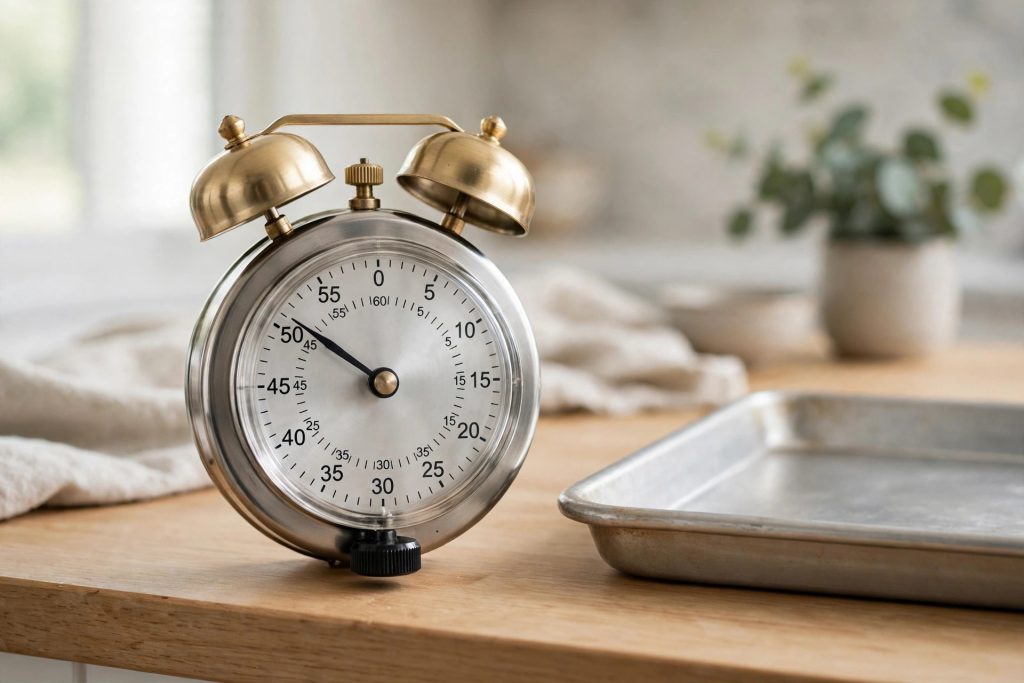
A kitchen timer for perfect timing brings calm and control to a busy kitchen, since it rings clearly when the time is up, so nothing overcooks while you attend to other jobs in the kitchen. Many home cooks know the feeling of a dish that is nearly right yet spoiled by a small slip, and a good kitchen timer takes that worry away. A kitchen timer suits roasting a joint, baking a cake, boiling eggs, steeping tea, and resting dough, and it fits into daily cooking without fuss or learning. This guide explains why perfect timing matters, how a kitchen timer for perfect timing works, what to look for when you buy one, how to use it well, and how to keep it clean and ready for the next meal.
A good kitchen timer is simple to use, easy to clean, and sturdy enough for daily use, and it suits cooks of every level, from a first kitchen to a busy family home. It does one job well and does it every time, which is why cooks reach for it again and again. When the tool is right, cooking feels calmer, meals turn out better, and the kitchen stays tidier through the day.
Why Perfect Timing Matters
Kitchen timer matters because good timing is the line between a dish that is done and a dish that is spoiled, and a timer keeps that line in sight. A cook who can trust the tool can focus on flavour and timing instead of worry, and that calm shows in the food on the plate. A kitchen timer also suits cooks who are learning, since it gives a clear guide where guesswork used to rule, and it suits busy cooks, since it keeps a routine moving without stops.
A cook who trusts the timer can step away from the stove to set the table or prepare a salad, and still return at the right moment. A kitchen timer also cuts waste, since food that is handled well is food that is eaten, not thrown away, and a kitchen that wastes less is a kitchen that costs less to run. When a tool makes cooking easier, cooks cook more often, and a simple tool earns its place on the bench. A tool used daily is worth choosing well.
How a Kitchen Timer for Perfect Timing Works
A kitchen timer for perfect timing works because it counts down from the time you set and rings a clear bell when it reaches zero, so you can hear it from another room. It is made from sturdy plastic with a clear dial, bold marks, and a loud bell, and the design is simple on purpose, so there is little to go wrong and little to learn. Once you have used it a few times, the motion becomes quick and steady, and the job takes far less time than doing it by hand or by guess.
A timer with a large dial is easy to set with damp hands, and a timer with a strong magnet sticks to the fridge where it is always in view. A kitchen timer that is built well feels solid in the hand, and the parts move smoothly without sticking or wobbling. Good design shows in small things, like a grip that stays firm, a lid that shuts tight, and a shape that sits steady on the bench. Simple design lasts, with few parts to wear out.
Choosing the Right Kitchen Timer for Your Kitchen
Choosing a kitchen timer starts with the job you do most, since the tool must match the work or it will sit unused in a drawer. Think about the size you need, the material you prefer, and the space you have to store it, and pick a kitchen timer that fits all three. The material matters too, since sturdy plastic with a clear dial, bold marks, and a loud bell will last longer than a thin copy that bends or cracks under daily use.
A loud bell matters in a noisy kitchen, and a clear face matters when you glance at it from across the room. For cooks looking for everyday kitchen tools, Skyrocs offers a helpful starting point, and the pet supplies range covers daily items for homes that share their kitchen with a cat or a dog. Compare a few options before you buy, and choose the one that feels right in the hand and suits the way you cook. Take your time, since daily tools should feel right.
Using Your Kitchen Timer for Perfect Timing
Using a kitchen timer for perfect timing well starts with a clean bench and a clear plan, since a tool that is ready to hand is a tool that gets used. Take a moment to set it up right before you start, and work at a steady pace rather than rushing through the job. Set the timer as soon as the dish goes in, since a timer set late can only guess at the time that has passed. A steady pace gives better results than a fast one, and a little care at the start saves fixing later.
Keep the kitchen timer where you can reach it easily, and put it back in the same place after use, so you always know where it is. Use it for the job it was made for, and do not force it, since a tool that is forced will wear out fast and may break at the wrong moment. With a little practice, using it becomes second nature, and the job feels easy. A little care at the start makes the job smoother.
Cleaning and Storing Your Kitchen Timer for Perfect Timing
A kitchen timer for perfect timing earns its place when it is easy to clean, since a tool that is hard to clean will be left dirty and will spoil the next job. Wipe it clean with a damp cloth and keep it dry after use, and check the parts now and then to make sure they still move well and shut tight. Avoid harsh scourers, since scratches catch food and make the next clean harder.
Wipe the case with a damp cloth after cooking, and keep the dial free of grease so it turns smoothly. Store the kitchen timer in a drawer or hang it on a hook where it is easy to reach, rather than buried under heavier pans that could bend it or crack it. A dry kitchen timer stores best in a cool cupboard away from heat, since heat can warp thin parts over time, and a clean tool is always ready for the next meal. A clean tool stored well is always ready.
Frequently Asked Questions
Is a kitchen timer for perfect timing needed for home cooking?
It is not needed, yet it makes the job far easier and the results far more even, so cooks who cook often will find it worth the space, while cooks who cook rarely can manage without it. A kitchen timer also helps when cooking for guests, since a larger job takes far less time with the right tool.
How does a kitchen timer for perfect timing work?
It counts down from the time you set and rings a clear bell when it reaches zero, so you can hear it from another room, and the simple design means there is little to learn and little to go wrong, so a new cook can use it well on the first try.
Can a kitchen timer for perfect timing help with baking and roasting?
Yes, it suits baking and roasting well, since both rest on exact times, and a clear ring tells you when to check the oven, turn the dish, or take it out.
How do I clean a kitchen timer for perfect timing after use?
Wipe it clean with a damp cloth and keep it dry, and check the parts now and then to make sure they still move well. Avoid harsh scourers, since scratches catch food and make the next clean harder, and dry it fully before you store it.
What should I look for when buying a kitchen timer for perfect timing?
Look for a size that suits your kitchen, sturdy plastic with a clear dial, bold marks, and a loud bell, a design that feels solid in the hand, and a shape that stores easily. A kitchen timer that is easy to clean and easy to reach for is the one you will use most.