
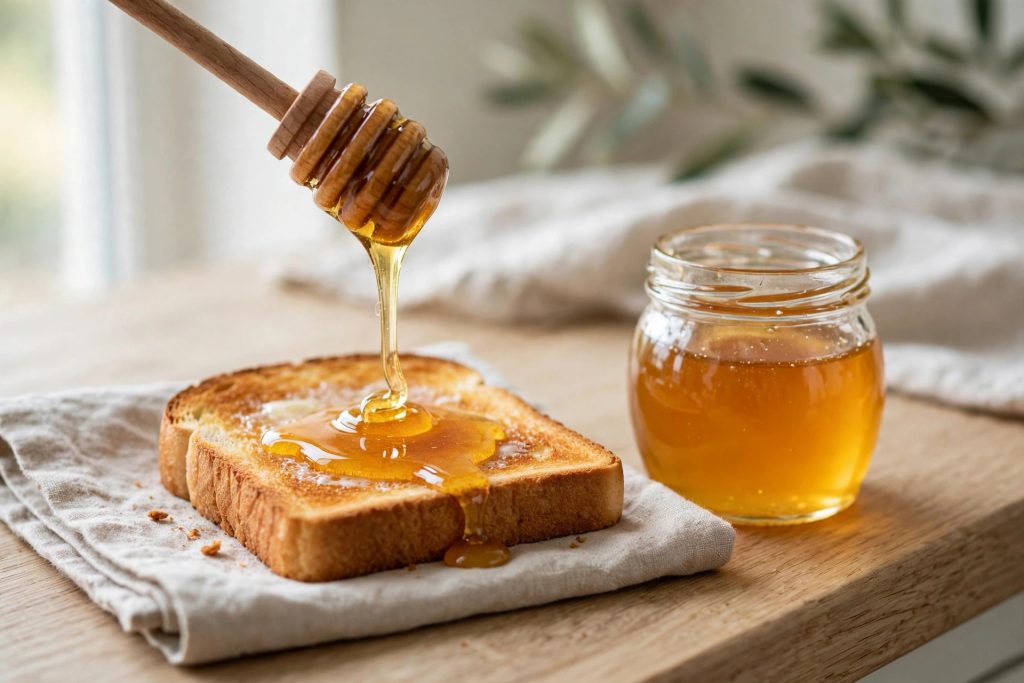
A honey dipper for sweet drizzles turns a sticky spoon into a neat ribbon of honey, since the grooved wooden head holds honey in its ridges and lets it fall in a slow even stream. Many cooks love honey on toast, in tea, or over warm porridge, yet reach for a spoon instead, because a spoon drips on the bench and leaves a sticky trail across the table. A dipper takes that worry away, since the honey stays in the grooves until you turn the handle over the cup or the toast, and the drizzle lands just where you want it. The result is a neat serving with no mess, whether you like a light drizzle or a generous pour. This guide explains why sweet drizzles matter, how a dipper works, what to look for when you buy one, how to use it well, and how to keep it clean and ready for the next breakfast. A dipper also helps you serve honey at the table, since guests can drizzle their own.
A dipper suits every kind of cook, from a parent sweetening porridge before school to a host drizzling honey over warm bread for friends. It costs little, takes up almost no space, and asks for no skill, yet it lifts a daily sweet from a sticky job to a neat pleasure.
Why Sweet Drizzles Matter
Sweet drizzles matter because honey is a small daily pleasure that is easy to spoil with mess, and a dipper turns it into a neat serving you can count on every time. A slow ribbon of honey over warm toast tastes as good as it looks, while honey dripped across the bench leaves a sticky trail that takes time to clean. A dipper holds the honey until you want it, so the serving lands just where you planned. Honey also suits many foods, from tea and porridge to warm bread and fruit, so a cook who can serve it neatly can use it often without worry. A dipper helps cooks who are new to honey too, since it replaces a dripping spoon with a simple tool that anyone can use.
A neat drizzle also cuts waste, since honey served with a dipper lands on the food instead of on the bench or the tablecloth. A family that can serve honey neatly can share the jar at the table without a sticky mess, and that makes breakfast run more smoothly. A dipper also helps when you serve guests, since a neat ribbon of honey over warm bread looks cared for and tastes as good as it looks.
How a Honey Dipper for Sweet Drizzles Works
A honey dipper for sweet drizzles works by holding honey in the grooves of a round wooden head while you lift it from the jar, then letting the honey fall in a slow stream when you turn the head over the food. You dip the head into the jar and twist it gently, so the grooves fill with honey, and lift it out while the honey stays trapped in the ridges. Hold the dipper over toast, tea, or porridge and turn it slowly, and the honey falls in a neat ribbon that you can stop by twisting the dipper back. Most dippers are a single piece of turned wood with a long handle, and the head is shaped with deep grooves that hold a generous amount.
A dipper works best when the grooves are deep and the wood is smooth, since deep grooves hold more honey and smooth wood lets it fall evenly. A dipper with a long handle reaches into a deep jar without sticky fingers, while a short handle suits a small jar on the table. Most dippers suit every kind of honey, from runny to thick, since the grooves hold each kind well.
Choosing the Right Honey Dipper for Your Kitchen
Choosing the right honey dipper starts with the jar you use most, since a long handle suits a deep jar while a short handle suits a small pot on the table. Check that the grooves are deep and even, since shallow grooves hold little honey and give a thin drizzle. A dipper made from smooth hardwood lasts longer than one made from soft wood that splinters, and a finish that is safe for food keeps the honey tasting clean. Look for a handle that feels comfortable in your hand, since a dipper that is easy to hold is easy to twist, and a head that is round and even gives a steady stream. A dipper with a rest or a small dish keeps drips off the table when you set it down. For cooks looking for everyday kitchen tools, Skyrocs offers a helpful starting point, and the pet supplies range covers daily items for homes that share their kitchen with a cat or a dog.
Size matters too, since a small dipper suits a single cup of tea while a larger dipper suits serving honey at the table for the whole family. Some dippers come as a set with a small pot, which keeps the honey and the dipper together on the shelf. Think about how you serve honey most days, and pick the style that fits that routine rather than the one with the most features.
Using Your a Honey Dipper for Sweet Drizzles
Using your honey dipper for sweet drizzles starts with warming the honey a little if it has gone thick, since warm honey flows more easily and gives a neater ribbon. Dip the head into the jar and twist it gently so the grooves fill, then lift it out slowly and let the first drips fall back into the jar. Hold the dipper over the toast or the cup and turn it slowly, so the honey falls in a steady stream, and twist it back to stop the flow when you have enough. Place the dipper on its rest or a small dish so drips stay off the table, and enjoy the food while the honey is still warm. Rinse the dipper at once, since honey left to dry on the wood is harder to clear later.
Keep the twist slow and steady, and do not rush the pour, since a slow turn gives a neat ribbon while a fast turn can splatter. If you serve honey at the table, let each guest drizzle their own, since a dipper makes sharing the jar a pleasure rather than a mess.
Cleaning and Storing Your a Honey Dipper for Sweet Drizzles
A honey dipper earns its place when it is easy to clean, since dried honey on wood will spoil the next drizzle. Rinse the dipper under warm water as soon as you finish, and rub the grooves gently with a soft cloth to clear the honey. A little mild soap helps with sticky honey, and the dipper should be dried at once with a clean towel, since water left on wood can dull the finish over time. Avoid soaking a wooden dipper for a long time, since soaked wood can swell and crack. Rub a little food safe oil into the wood now and then to keep it smooth, since oiled wood resists stains and stays looking fresh.
Check the grooves now and then to make sure they are still deep and even, since worn grooves hold less honey. With a little care after each use, a dipper will serve you for years and keep your honey coming out in a neat golden ribbon.
Frequently Asked Questions
Is a honey dipper for sweet drizzles needed for home cooking?
It is not needed, yet it makes serving honey far neater, so cooks who use honey often will find it worth the small space it takes, while cooks who use honey rarely can manage with a spoon.
How does a honey dipper for sweet drizzles work?
It holds honey in the grooves of a wooden head while you lift it from the jar, then lets the honey fall in a slow ribbon when you turn the head over the food.
Can a honey dipper for sweet drizzles handle thick honey?
Yes, it suits runny and thick honey alike, as long as the grooves are deep, and warming thick honey a little helps it flow in a neater ribbon.
How do I clean a honey dipper for sweet drizzles after use?
Rinse it under warm water at once, rub the grooves gently with a soft cloth, dry it fully, and rub in a little food safe oil now and then to keep the wood smooth.
What should I look for when buying a honey dipper for sweet drizzles?
Look for deep even grooves, smooth hardwood, a handle that fits your jar and your hand, and a size that suits one cup or a family table.