
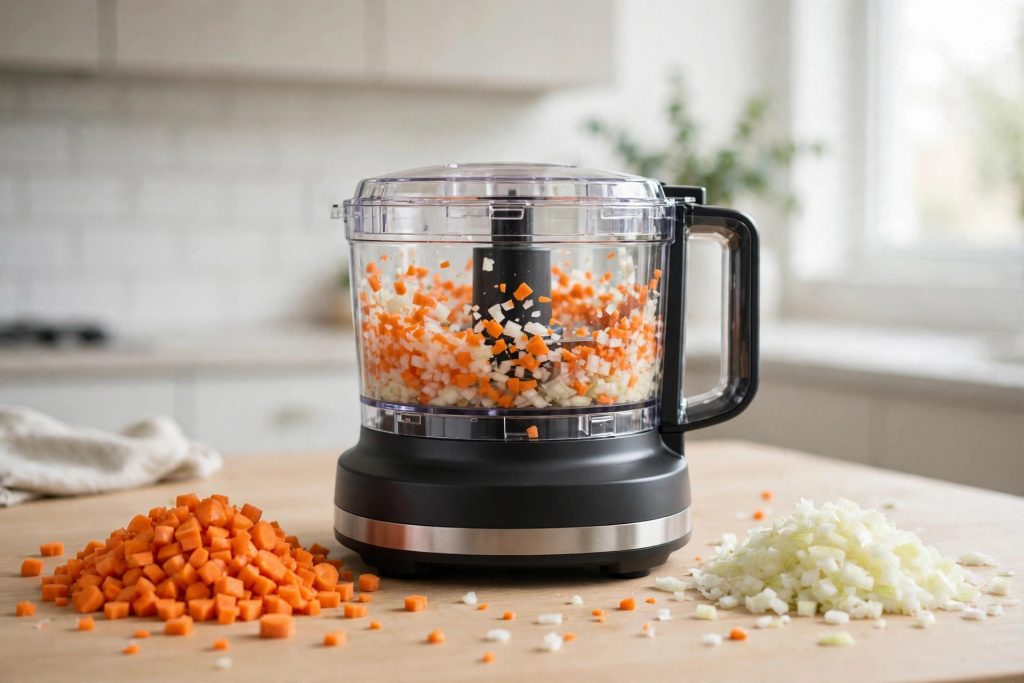
A food processor for quick prep turns a busy evening into a home cooked meal, since it chops, slices, and mixes in moments and feels easy to use. Many cooks reach for takeaway on a busy night, because chopping vegetables by hand takes time the evening does not have. A processor that suits quick prep makes cooking simple, since you place the food in the bowl, press the button in short bursts, and watch the prep finish in moments. The result is a meal that comes together fast, which makes the family more likely to eat at home and the cook more likely to enjoy the evening. This guide explains why quick prep matters, how a food processor works, what to look for when you buy one, how to use it well, and how to keep it clean and ready for the next meal. A processor that is ready on the bench saves time each evening, and a fast prep sets the tone for a calm dinner.
Why Quick Prep Matters
Quick prep matters because weeknight cooking is short on time, and a tool that chops, slices, and mixes in moments makes a home cooked meal possible on a busy evening. A family that can prep fast is more likely to cook at home, and children who can help press the button feel proud of helping with dinner. Prep covers many jobs, from chopping onions and grating cheese to mixing dough and slicing vegetables, so one tool that covers them all saves the cook from washing many tools. A processor with a sharp blade also keeps cuts even, since even pieces cook at the same pace and the meal comes out right instead of half raw and half soft.
A processor that feels easy to use gets used for every meal, while a processor that feels awkward stays in the cupboard and cooking feels like a chore. Quick prep also cuts waste, since a processor that handles the whole vegetable helps cooks use the food they bought instead of letting it wilt in the fridge. A calm evening meal sets the tone for the night, and a simple processor earns its place on the bench by making that home cooked meal possible.
How a Food Processor for Quick Prep Works
A food processor for quick prep works by spinning a sharp blade in a bowl, so vegetables, cheese, and dough are chopped, sliced, or mixed in moments. You place the food in the bowl, fit the lid, and press the button in short bursts, and the blade cuts the food evenly while you watch through the lid. Most processors have a motor base with a bowl on top, and the weight of the base holds the bowl steady on the bench while the blade spins. Some processors have a slicing disc that suits vegetables, while others have a dough blade that suits pastry, and both styles suit a family kitchen.
The size of the bowl matters most, since a large bowl suits a family meal, while a small bowl suits a quick sauce or a single portion. A pulse button lets the cook control the cut, since short bursts give a coarse chop and longer bursts give a fine mince, so one tool covers many textures. Once you learn the pulse rhythm, prep becomes a habit you look forward to, and the processor becomes part of the cooking routine.
Choosing the Right Food Processor for Your Kitchen
Choosing a food processor starts with the size of the meals you cook most, since the bowl must hold the vegetables for a family meal with room to spare or the blade will jam. Set the processor on the bench and check that it feels steady and not too tall, since a processor you use every day should fit under the cupboard and feel easy to lift. The motor matters too, since a strong motor keeps the blade spinning through hard cheese and nuts, while a weak motor strains and stops on tough food. Look for a bowl that locks firmly to the base, since a bowl that wobbles will not cut evenly and can spill food across the bench.
A processor that comes with more than one blade suits cooks who chop, slice, and mix, and a set of discs that stores neatly saves space in a drawer. A processor with a pulse button gives more control, while a processor with only one speed suits a cook who wants a simple tool. For cooks looking for everyday kitchen tools, Skyrocs offers a helpful starting point, and the pet supplies range covers daily items for homes that share their kitchen with a cat or a dog.
Using Your Food Processor
Using a food processor well starts with cutting large food into chunks, since chunks that fit the bowl will cut evenly, while whole vegetables can jam the blade. Use the pulse button in short bursts, since short bursts give a coarse chop and long bursts give a fine mince, and you can stop the moment the texture looks right. Add food through the feed tube a little at a time, since a tube stuffed full will push food past the blade unevenly and leave large pieces behind. Work at a steady pace, since a processor left running too long turns vegetables into paste, and the meal loses the texture that makes it good.
Keep the lid locked while the blade spins, since a lid left loose can let food fly out and can stop the motor from running at all. A processor that is used for every meal earns its place, and a small routine of chopping, slicing, and mixing makes cooking feel calm rather than rushed. Scrape the bowl down between bursts, since food that sticks to the sides will not meet the blade and the mix will come out uneven.
Cleaning and Storing Your Food Processor
A food processor earns its place when it is easy to clean, since dried food on the blade will spoil the next meal if it is left to harden. Rinse the bowl and blade under warm water as soon as you finish, and use a soft brush to clear food from the blade and the lid. A little mild soap helps with sticky dough or cheese, and the parts should be dried at once with a clean towel, since water left on the blade can dull the edge over time. Avoid harsh scourers on the bowl, since scratches catch food and make the next batch harder to wash.
Check the blade now and then to make sure it still feels sharp, since a dull blade crushes food instead of cutting it and the meal comes out uneven. Store the processor with the blade covered in a cupboard where it is easy to reach, rather than buried under heavier pans that could chip the blade. A dry processor stores best in a cool cupboard away from heat, since parts that are put away damp can smell stale by the next meal.
Frequently Asked Questions
Is a food processor for quick prep needed for home cooking?
It is not needed, yet it makes prep far faster and more even, so cooks who make meals often will find it worth the bench space, while cooks who cook rarely can manage with a knife. A processor also cuts vegetables evenly, which helps the meal cook at the same pace.
How does a food processor for quick prep work?
It spins a sharp blade in a bowl, so vegetables, cheese, and dough are chopped, sliced, or mixed in moments, and the pulse button lets you control the cut with short bursts. A feed tube lets you add food while the blade spins.
Can a food processor for quick prep handle dough and nuts?
Yes, it suits dough, nuts, and hard cheese alike, as long as the motor is strong and you work in short bursts, so the blade keeps spinning and the mix stays even. Cut large food into chunks first so the blade does not jam.
How do I clean a food processor for quick prep after use?
Rinse the bowl and blade under warm water at once, clear food with a soft brush, use a little mild soap for sticky dough or cheese, and dry the parts fully before you store them. Avoid harsh scourers that can scratch the bowl.
What should I look for when buying a food processor for quick prep?
Look for a bowl sized for the meals you cook most, a motor strong enough for hard cheese and nuts, a bowl that locks firmly to the base, and a pulse button for control. A set of discs for slicing and grating is a bonus.